Be cautious regarding the multi-point inspections offered for your vehicle, as they may primarily benefit the dealership rather than you. Often, these inspections are just a method for dealers to upsell services that you could easily perform yourself at a fraction of the cost. While initial equipment purchases may be slightly higher, handling basic vehicle maintenance at home can save you significant money.
You Can Change Your Air Filters Without a Mechanic
Swapping Your Cabin and Engine Filters is Quick and Easy
During oil changes, mechanics often display old cabin air filters, creating unnecessary alarm. It’s worth noting that a gray appearance can be completely normal for some filters, and many people choose charcoal-infused versions for improved air quality. Regardless, you can replace these filters without professional help.
Helpful tip: Utilize online platforms where you can input your vehicle details to confirm part compatibility, making your shopping experience simpler.
Engine air filters typically cost around $20, while cabin air filters can be found for about $10.
Your cabin air filter is generally located behind the glove compartment within the HVAC system. Though it may seem complicated, numerous instructional videos are available to assist with the replacement process.
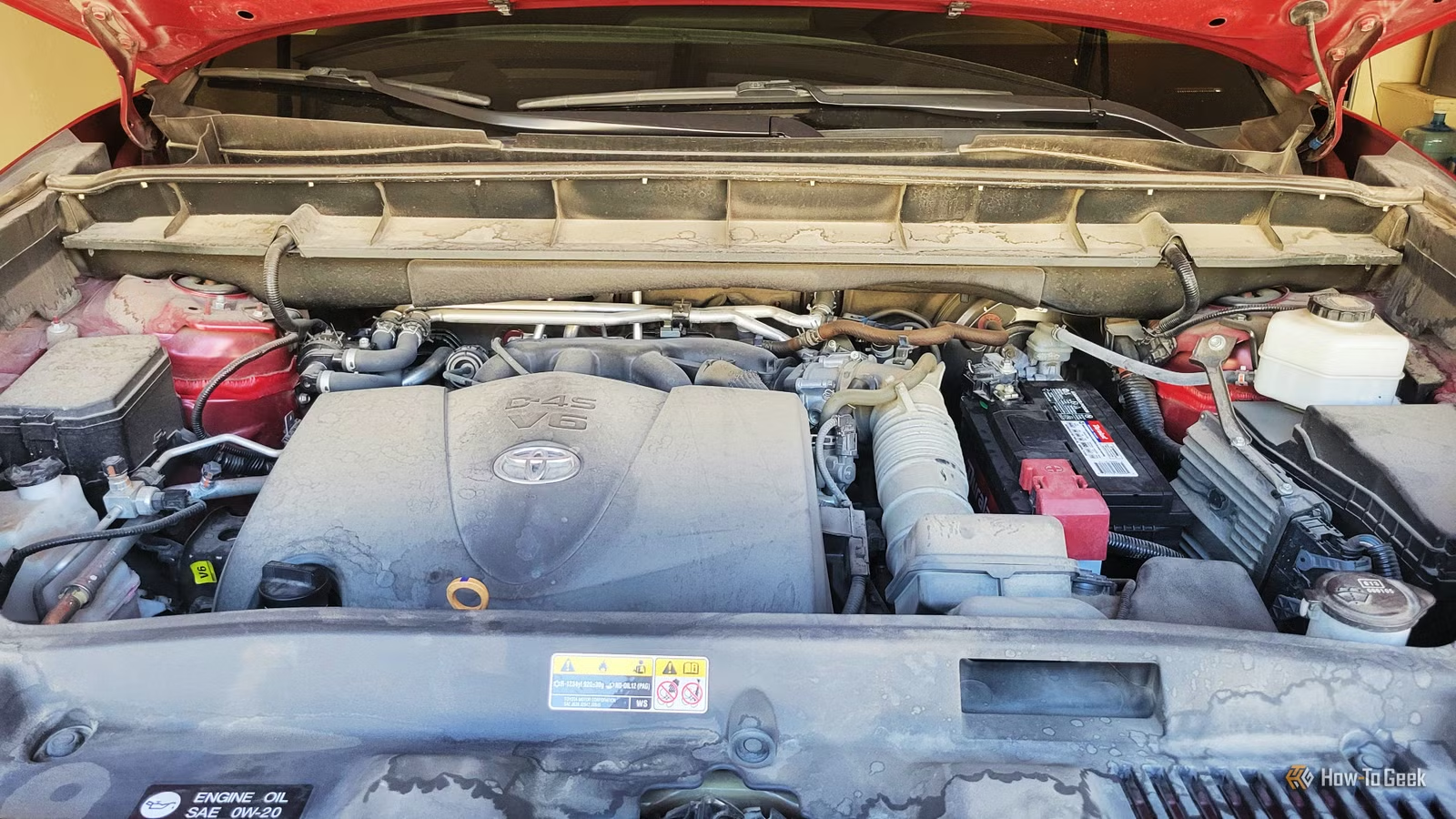
The engine air filter can be accessed in a plastic housing under the hood, typically near the front. Simply detach the clips or screws securing the lid, remove the old filter, and replace it with the new one. It’s as straightforward as that.
Avoid Paying For Wiper Blade Replacement
Changing Wiper Blades is a Quick Task
Do not let a dealership or mechanic replace your wiper blades unless it’s at no cost to you. A good pair of wiper blades can be purchased for approximately $40, often cheaper than the labor charges at a shop.
To replace a wiper blade, lift the metal arm away from the windshield, orient the blade to form a T-shape, then either press the locking tab or push the previous blade down to detach it. Slide the new blade onto the hook until it clicks. The initial time may take about five minutes, but it will take less than two minutes during subsequent replacements. Watch out for streaks, as poor-quality blades can leave marks on your windshield.
Make sure to purchase the correct blade for your vehicle model, as using an incompatible blade may result in damage.
Fluids: Easy to Check and Refill Yourself
Monitoring and Topping Off Car Fluids Takes Minimal Effort
I often get my fluids topped off for free at local services, but many places may charge for this. Refilling your vehicle’s fluids is simple enough for anyone to do. While it might cost a bit upfront to buy larger containers of each fluid, it’s much more economical in the long run.
Tip: Always clean around any caps before opening to prevent dirt from contaminating the fluids.
Windshield washer fluid is the simplest to manage, as the translucent reservoir under the hood is clearly marked. Just pour the washer solvent until it reaches the indicated fill level.
Engine coolant refilling requires a cautious approach; never open the radiator cap when the engine is hot to avoid burns. Wait until the engine cools, then check the plastic expansion tank and fill it as needed. Be aware that not all coolants are the same—purchase the appropriate type for your vehicle.
Save Money by Performing Your Own Oil Changes
Changing Oil and Filters is More Manageable Than You Think
Many encourage doing your own oil changes but often overlook mentioning the upfront costs if you have to buy the necessary tools. I recommend using synthetic oil, which requires less frequent changes. Ensure you also have at least two heavy-duty jack stands for safety; using just one can be dangerous.
To begin, warm up your engine for about two minutes, as it makes draining the oil easier. Remove the oil filler cap before loosening the drain plug, positioning your drain pan correctly beneath it to catch the old oil.
After the oil drains completely, take out the old oil filter with the rubber gasket attached. Before installing the new filter, apply a small amount of clean oil to its rubber seal, tighten it by hand, and then give it a final turn. Clean your plug and replace it with a new washer, threading it back in gently to avoid cross-threading.
Rotating Tires Prevents Uneven Wear
Tire rotation tops the list of easy vehicle maintenance tasks, requiring only basic tools. This was one of the first things I learned in automotive school. Simply switch front tires with those on the back; it’s that easy.
Ensure your vehicle is parked on a flat surface and secure it with the parking brake. Loosen the lug nuts on each wheel slightly before placing the car on jack stands. For front-wheel drive, move the front tires straight to the back while shifting the rear tires diagonally forward. In rear-wheel drive vehicles, the opposite applies. For all-wheel drives, employ an X-pattern while rotating all four tires.
No Mechanic Expertise Required
While I have some automotive education and frequently maintain my own car, you don’t need extensive mechanical knowledge to perform these tasks. Simple steps can be easily followed, and taking your time with the first attempt—especially when working beneath your vehicle—can be worthwhile. Watching instructional videos tailored to your specific make and model can also make an ample difference, making the process feel much simpler the next time around.