The conversation surrounding AI safety is heating up, especially after Anthropic’s CEO Dario Amodei introduced a strategy to “pace the frontier.” Meanwhile, Nvidia’s CEO Jensen Huang has dismissed reports of an AI backlash as unfounded and argues that regulations are not necessary.
In a recent episode of TechCrunch’s Equity podcast, hosts Kirsten Korosec, Sean O’Kane, and I examined whether tech leaders like Amodei and OpenAI’s Sam Altman genuinely aim to decelerate advancements in AI.
I was surprised to find many industry figures supporting Amodei’s initiative, although Sean pointed out that the proposal lacks substantial detail.
Kirsten raised the question of whether current regulations combined with market dynamics could sufficiently protect consumers. Sean responded, “Our federal government doesn’t seem enthusiastic about enforcing regulations across the board, especially in this area.”
He also emphasized, “There isn’t strong consumer choice pushing this market. If a company falters, it’s unclear if that would lead to significant repercussions in terms of customer abandonment.”
Below is a summary of our discussion, condensed for clarity.
Anthony Ha: Sean, do you think we’re really going to “pace the frontier” as suggested?
Sean O’Kane: It sounds like something out of a movie. Frankly, I don’t believe we are heading for any slowdown, largely because these companies are organized in a way that doesn’t facilitate that.
This marks a shift from my previous stance a week ago. Hearing Dario from Anthropic and Sam from OpenAI, as well as Elon Musk to an extent, makes me reconsider, but I still see a lack of specifics. We need clearer explanations regarding the dangers they claim to address and what they mean by slowing down.
Anthony, you’ve been following these developments lately. What’s your take on their intentions?
Anthony: I also have my doubts. What struck me was how rapidly industry members rallied around this idea. Even before Amodei released his blog post, I noticed several people endorsing similar concepts.
These safety suggestions have been circulating for a while and are not merely Amodei’s innovation. It’s somewhat encouraging to see this consensus, but I remain skeptical about whether it will lead to significant changes.
Kirsten Korosec: Consensus can be positive, but it may also hint at the formation of a cartel among frontier AI labs, which is critical to consider.
While the details are still murky, the overall idea involves independent evaluators assessing safety practices within companies like Anthropic and OpenAI. Additionally, there are proposals for collaboration on safety protocols among leading AI firms in democratic nations, along with international coordination.
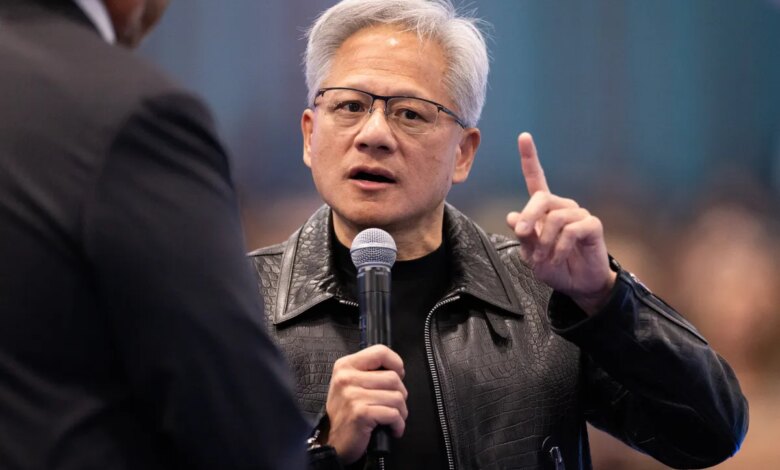
Notably, there has also been considerable opposition, including from individuals I didn’t expect, like Nvidia’s CEO Jensen Huang, who made some striking remarks during a conversation with Donald Trump at a major conference.
Sean: Jensen is now seen as a responsible figure in this discourse. A year ago, many would have pointed to Microsoft’s Satya Nadella for that role. However, Microsoft has lost that status for various reasons.
Jensen seems to recognize that he needs to please a wide spectrum of stakeholders. His recent call with the president at a significant event illustrates his role as a key bridge between the AI sector and the administration.
Kirsten: While he may take on this diplomatic role, I can’t help but feel his appearance was somewhat staged and underscored Nvidia’s vested interest in the rapid progression of AI technology.
Anthony: Huang’s comments align with Trump’s interests, and I sense he knows what to say to appeal to that audience.
It’s intriguing that both Altman and Amodei mention “slowing down,” but they often prefer the term “pace.” The outlined proposals could hypothetically lead to a slowdown in development, but they’re careful not to commit to that explicitly.
Kirsten: Sean, could you argue that in a free market, existing regulations and competition would compel companies to maintain safety, thereby ensuring their viability? Or do you disagree with that notion?
Sean: In an ideal market unaffected by external pressures, that could hold true. However, our current federal administration shows little willingness to enforce broad regulations, let alone specific ones in this realm.
We also face a curious situation where consumer choice plays a limited role. With companies adopting enterprise models, it’s difficult for users to easily switch providers if one makes a misstep.
With significant investments backing these firms, any customer backlash might not severely impact them. It’s a promising idea in theory, but in practice, that accountability seems largely absent.