Why the iPhone 18 Pro Falls Short of Its $1,200 Price Tag—Thanks to the Pixel 11 Pro

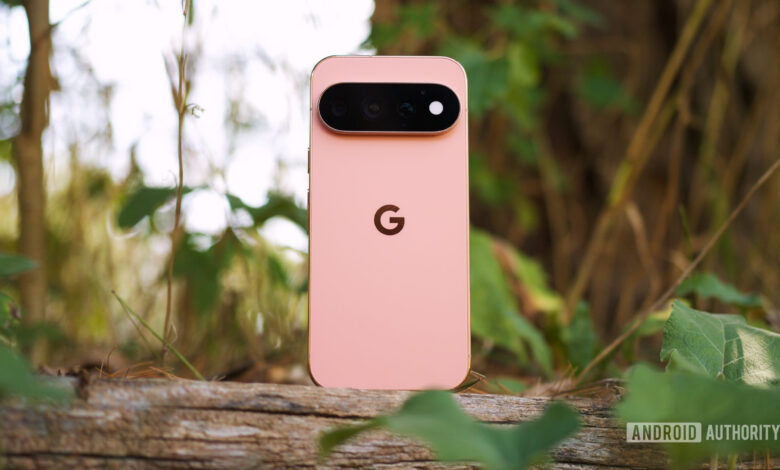
Photo by Joe Maring
While Apple’s latest iPhone Duo has garnered significant attention, it’s the standard iPhone 18 Pro that’s projected to drive the bulk of Apple’s sales. On the surface, it appears similar to its predecessor, the iPhone 17 Pro, yet Apple’s announcements highlighted numerous internal enhancements, including improved battery life and a new adjustable camera aperture.
These features may be appealing, but I would personally choose the Pixel 11 Pro over the iPhone 18 Pro, as it offers greater value for money.
Which flagship makes more sense to you?
292 votes
Price Matters

The tech industry is witnessing continuous price hikes, largely due to increasing memory costs associated with AI advancements. While Pro models are generally priceier than standard models, the current pricing trends are becoming outrageous. The iPhone 18 Pro now starts at $1,200 for a modest 256GB of storage, with escalating prices up to an astonishing $2,400 for the 2TB option, not to mention an additional $100 for the larger Pro Max model.
This pricing is excessive, especially when we once deemed the $1,400 Galaxy Ultra costly.
In contrast, the Pixel 11 Pro has removed the base 128GB option, making the 256GB version available at $1,099 — a $100 increase compared to last year’s price. The savings are even more apparent as you ascend storage tiers, where users can save over $200 compared to the iPhone.
For someone considering a budget over $1,000, the Pixel 11 Pro offers better value than the iPhone, without sacrificing quality. In fact, it excels in several pivotal areas.
The Superior Smartphone: Pixel 11 Pro

Photo by Joe Maring
Although iOS has seen significant enhancements in recent years, I still find its peculiarities challenging. For example, transferring files requires tedious workarounds due to its restrictive file management, whereas Android simplifies the process considerably.
Historically, Android has offered superior customization options and greater freedom in device usage. I frequently rely on sideloaded apps, which iOS currently restricts. Moreover, iOS still does not permit the selection of third-party apps as defaults in many areas, which seems overly limiting compared to Android’s flexibility.
The benchmark for modern smartphones increasingly revolves around AI capabilities. Apple is attempting to enhance its AI features with improvements to Siri, and some advancements are starting to materialize.
Meanwhile, Google’s AI platform, Gemini, has made remarkable progress, allowing for interactive capabilities within Workspace apps that I use daily. Gemini has already succeeded at conversational interactions and visual tasks long before Apple caught up, and I anticipate Google will maintain its lead in innovation.
Camera Features

Photo by Shimul Sood
While the adjustable aperture on the iPhone 18 Pro is a notable advancement, I find Google’s focus on computational photography more intriguing. Features like Add Me simplify common photography challenges by utilizing AI innovations.
Although my colleague Joe Maring is not as impressed with the new Magic Capture feature on the Pixel 11 Pro, I believe it adds significant utility. It allows me to capture cherished moments without being riveted to the phone screen, effectively combining my experiences with photography.
Such thoughtful improvements in usability are what make me appreciate Google’s application of AI in resolving daily inconveniences.
Pixel 11 Pro: The More Convenient Choice

Photo by Dhruv Bhutani
The Pixel 11 Pro stands out as significantly lighter compared to the iPhone 18 Pro. This difference is crucial for me, especially when I’ve got the phone equipped with various accessories. It’s an advantage I feel every time I handle the device.
Additionally, I often find it annoying to lift the iPhone to unlock it using Face ID, despite its convenience. The Pixel’s combination of fingerprint and face unlock features allows for flexibility in any orientation, highlighting Android’s inherent adaptability.
While the iPhone 18 Pro isn’t a bad phone — in fact, it performs wonderfully and represents a solid upgrade over its predecessor — I still prefer the Pixel 11 Pro for its blend of performance and cost efficiency. The savings can be diverted toward premium accessories, a valuable perk.
Thank you for engaging with us. Please review our community guidelines before commenting.