2027 Chevrolet Bolt Review: Farewell to the Undisputed Champion of Affordable Electric Driving

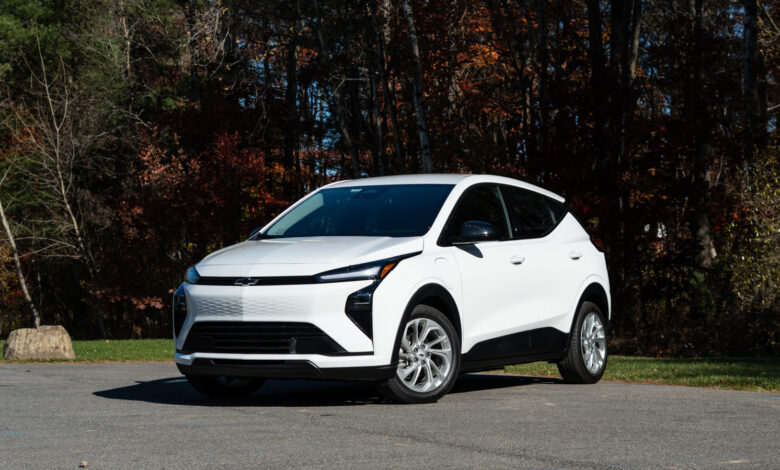
The Chevrolet Bolt makes a comeback, but its future remains uncertain.
RATING : 8 / 10
- Cost-effective
- Spacious
- Decent performance
- Lacks smartphone integration
- Minimal features
- Short production run ahead
Since its introduction ten years ago, the Chevrolet Bolt has been a practical option for budget-conscious electric vehicle (EV) buyers. The 2027 model starts at $28,995, making it the most affordable EV on the U.S. market today—about $10,000 cheaper than the original model, presenting an excellent value.
However, this value proposition may be short-lived. Despite having returned from a significant recall and production halt, the Bolt is set to disappear once again in just a few months. It’s unfortunate, as it represents a fantastic example of straightforward, emissions-free driving.
Historical Context
The Bolt is a notable addition to Chevrolet’s legacy of electric vehicles, which began with the EV1 in 1996. The 2010 Volt signaled Chevrolet’s commitment to affordable, innovative transportation solutions.
When the Bolt debuted in 2016, it compelled industry experts to rethink electric vehicles, offering a sub-$40,000 price point that combined performance with practicality. The 2021 release of its second-generation model further improved upon this appealing package.
However, the brand faced setbacks when safety concerns led to a major recall, undermining the progress they had made.
Current Edition
The halt in Bolt production was so severe that I doubted we would see it again. Yet here it is—the 2027 model—featuring updates that provide a fitting farewell to this impactful, yet troubled vehicle.
The most significant enhancement is a new lithium iron phosphate battery, offering 65-kilowatt-hours and an EPA-rated range of 262 miles for the LT version tested. With a single motor producing 210 horsepower and 169 pound-feet of torque, it may not be the fastest EV, but it still offers an enjoyable and responsive drive.
Now equipped with a NACS port, it supports fast charging options while addressing earlier battery issues. The design remains practical, akin to numerous crossovers available today.
Essential Features
The latest Bolt is quite basic, with its only optional feature being a $995 Comfort Package, which adds heated seats and a steering wheel—items that seem like they should be standard at this price.
Material quality is lacking, with hard plastics prevalent, but I appreciate the aesthetic detailing in the door panels and upholstery. The rear seats are spacious enough for three passengers, and folding down the seats provides up to 56.3 cubic feet of storage—comparable to some compact SUVs.
The front seating is generous as well. I found ample headroom, and while the absence of a sunroof in the test vehicle might disappoint some, I found it unnecessary.
The 11.3-inch touchscreen, a reasonable size for modern vehicles, still retains physical buttons that enhance the user experience, from accessing heated seat controls to enabling assistive driving features.
Technology and User Experience
The infotainment system integrates Android Automotive, featuring Google Maps and access to the Play Store for app installation. However, it lacks both Android Auto and Apple CarPlay, limiting mobile phone connectivity options, which is a notable drawback.
The software can feel sluggish at times, and while built-in Google assistance is helpful, I wish it could be accessible via my phone as well.
Driving Experience
The driving experience is enjoyable, with various modes available. While the differences between Normal and Sport modes may not be immediately apparent, the Bolt remains fun to drive, especially around city streets.
Although it’s not a high-speed performer, the Bolt provides ample power and decent handling, making it comfortable on roads in various conditions.
The adaptive cruise control and auto-dimming headlights function well, but the lane-keep assist feature leaves much to be desired, often struggling to keep the vehicle centered in its lane.
For those seeking more advanced features, hands-free Super Cruise is an option but is bundled with expensive packages, making it less accessible compared to other models.
Officially rated for 262 miles on a single charge, my testing confirmed a range of around 260 miles, indicating its efficacy.
Conclusion
While the lane-keep assist issue and lack of smartphone integration are significant drawbacks, the Bolt is nevertheless a reliable vehicle overall. It brings back memories of previous experiences with its intuitive driving feel.
Its comfort, simplicity, and affordability stand out, especially when compared to the average new car price nearing $50,000. The 2027 Bolt is indeed a bargain, and it’s likely to retain its value in the used market.
Regrettably, production of the Bolt will conclude early next year, just as it starts to feel fully developed. However, the market for affordable electric vehicles is not over. New models, such as the Slate Truck and Ford’s Fathom, will soon emerge, promising a brighter future for budget-friendly EVs.