Welcome to TechCrunch Mobility, where we explore the future of transport and the increasing influence of artificial intelligence. Subscribe for free to receive updates directly to your inbox — just click on TechCrunch Mobility!
A significant challenge for creators of autonomous vehicles, regulatory bodies, and the general public is establishing when self-driving technology is considered roadworthy. Up until now, it has been primarily the industry’s responsibility to answer this critical question, with companies developing technologies for self-driving trucks, robotaxis, and potentially personal vehicles in the future.
Currently, there is no universally accepted evaluation for assessing the real-world performance of automated driving systems. While humans must successfully pass driving tests to obtain licenses, no such framework exists for autonomous vehicle technology.
So, how can we determine if an autonomous vehicle is a competent driver? The National Highway Traffic Safety Administration (NHTSA) is currently working towards an answer.
Existing federal motor vehicle safety standards (FMVSS) regulate the vehicles available on the market today. However, these regulations were not created for futuristic vehicles like the Tesla Cybercab or Zoox robotaxi, which do not incorporate traditional features such as pedals, steering wheels, or even necessary components like side and rearview mirrors.
The NHTSA is in the process of developing a comprehensive federal automated vehicle framework that prioritizes safety without hindering innovation. As Administrator Jonathan Morrison eloquently noted this week, the goal is not to engage in a game of “whack-a-mole” with policy choices or to anticipate future technological developments—a challenging balance to achieve.
Recently, a notable step was taken as the NHTSA partnered with SAE to initiate ASCEND, a joint government-industry effort designed to expedite the establishment of data-driven standards for autonomous vehicle performance.
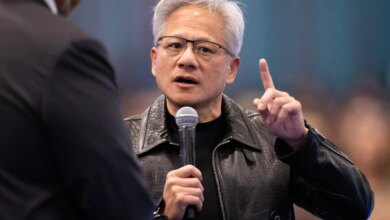
“A core focus for this consortium is assessing autonomous driving system competency, which will help fast-track our federal safety standards,” Morrison stated at the AI Horizons Summit in Pittsburgh. “Ultimately, our performance regulations for autonomous driving systems are expected to provide federal leadership in this domain. By establishing an AV competence framework, we aim to unify the diverse state and local requirements while encouraging American innovation and the safe rollout of these vehicles.”
Although no set timeline exists for the consortium’s development of autonomous driving standards, the industry is likely already providing input.
To listen to Morrison’s full remarks, find the AI Horizons Summit video around the 04:36:00 mark.
A little bird
We’ve got several projects in the pipeline, though nothing is ready for release just yet. Remember, you can always send us tips!
Email Kirsten Korosec at kirsten.korosec@techcrunch.com or contact Sean O’Kane at sean.okane@techcrunch.com.
Deals!

Will investors on Wall Street support a dedicated robotaxi enterprise? We’re about to discover the answer.
Autonomous vehicle firm May Mobility intends to go public through a merger with ACP Holdings Acquisition Corp., potentially securing over $300 million at a valuation of $1.4 billion.
There are also other companies making strides in autonomous vehicle tech, such as Aurora and Kodiak, which concentrate on self-driving trucks; Rivian and Tesla; while Waymo and Amazon’s Zoox aren’t publicly listed yet.
However, May Mobility, which currently operates autonomous Toyota Siennas in three locations, claims it will be the U.S.’s first public company entirely focused on autonomous ride-hailing services. Senior reporter Sean O’Kane observes that this venture will also test May Mobility’s asset-light and partnership-driven model for achieving autonomy.
Other deals that caught my attention include:
Autonomous vehicle firm Beep has merged with Freebee, a Miami-based on-demand public transport provider. The new entity will retain the Beep name, led by co-founder Kevin Reid as chair and CEO, with Freebee co-founders Kris Kimball and Jason Spiegel joining as COO and president respectively.
Lucid Motors has partnered with the European platform Bolt to deliver at least 25,000 fully autonomous vehicles based on its upcoming more affordable midsize electric vehicle framework.
Notable reads and other tidbits

Cybersecurity teams from the U.S. Coast Guard and FBI intervened on two oil tankers bound for the U.S. after hackers reportedly infiltrated at least one ship’s networks, compromising its navigation, propulsion, and cargo systems.
GM has introduced a new user interface for its full-size pickup lines, Chevy Silverado and GMC Sierra, which now features picture-in-picture displays for Apple CarPlay and Android Automotive.
An aircraft utilizing technology developed by Joby Aviation successfully flew over 3,100 miles across the U.S. without any human pilot intervention. This accomplishment should be considered significant beyond just a publicity stunt.
ShinyHunters, a hacking group, released a trove of files from a Florida state database containing vehicle and driver data.
U.S. automakers might soon be mandated to include AM radio in new vehicles following overwhelming approval of the AM Radio for Every Vehicle Act, responding to the challenges electromagnetic interference from electric motors poses to AM reception.
Volkswagen has unveiled a new prototype electric vehicle boasting unprecedented efficiency.
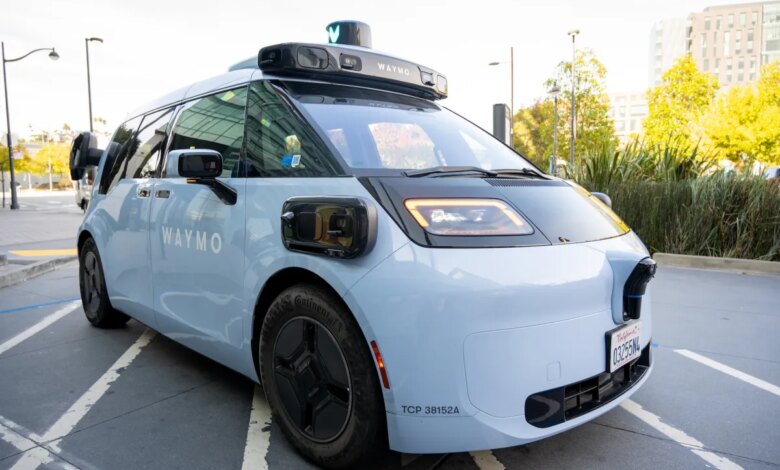
Waymo has resumed its robotaxi services in San Antonio, Texas, five months after one of its vehicles was lost during a flash flood. The company also launched a new robotaxi service in Las Vegas and revealed plans to expand to Singapore for mapping and testing its AV technology.
Wayve appointed Elisa de Martel as their new CFO; she brings a wealth of financial experience from several top tech companies, including Waymo.
Zoox is currently operating under a limit of 100 vehicles in Las Vegas, its only market for commercial service. This cap is set to lift on September 25, allowing the Amazon-owned entity to expand its fleet of tailored robotaxis.
When you click on links in our articles, we may earn a small commission. Your support does not influence our editorial decisions.