Brynn Putnam and Tristan Walker have accomplished what many entrepreneurs only aspire to: they have built engaging companies that attracted the attention of larger corporations. Putnam, a former ballerina who established a small chain of boutique fitness studios, founded the connected-fitness brand Mirror and sold it to Lululemon for $500 million in cash in under three years. Walker, who gained experience as an intern at Twitter during his time at Stanford’s business school, created the well-known men’s grooming company Walker & Company Brands, which he sold to Procter & Gamble five years later for an undisclosed amount that sources indicate was between $20 million and $40 million.
That both founders are embarking on new ventures isn’t unexpected; what’s intriguing is that their distinctly different businesses share a common goal: fostering human connection in real-life settings.
Putnam’s latest initiative, Board, features a 24-inch touchscreen table designed specifically for group interaction, allowing physical game pieces and gestures to be recognized, encouraging collaborative play rather than solitary screen time.
Walker’s new venture, Heirloom Craft, aims to acquire and expand traditional craft trade schools, starting with a leatherworking institution in San Francisco that was established by the first American artisan ambassador from Hermès. He is also overseeing Collaborative Holdings, a fund created by Collaborative Fund to allow entrepreneurs to focus more on their ventures.
While a gaming console and a leathercraft school may not seem related, both founders share a vision of addressing the social disconnections that technology has contributed to over the years.
This focus on connection is timely. In June of the previous year, the World Health Organization highlighted loneliness as a critical global health issue, estimating that about one in six individuals worldwide experience this feeling, leading to approximately 870,000 deaths annually.
There is a growing opportunity to tackle this problem for those who are attuned to it. A recent Harris Poll commissioned by Marriott Bonvoy revealed that two-thirds of Americans are prioritizing experiences, such as travel, over material items this year. Additionally, a similar proportion expressed a sentiment that current retail experiences feel too uniform and indistinct.
Currently, entrepreneurs from the East Coast seem to be more inclined toward creating businesses around this theme. In addition to Putnam and Walker, notable founders such as Andy Dunn of Bonobos and Audrey Gelman from the Wing are also launching ventures focused on enhancing human connection.
Dunn’s business, Pie, has evolved from a friend-matching app to an event-discovery platform and is now branded as a “social life operating system,” featuring “Community Homes” that serve as consistent digital venues for social groups like running clubs or movie-watching gatherings.
Gelman is taking a different approach since her previous venture, the Wing, aimed at creating spaces for women but closed during the pandemic amidst criticism about its internal culture. Her new project, the Six Bells Countryside Inn, is a cozy guesthouse in the Hudson Valley that hosts monthly murder-mystery dinners, where actors mingle with guests, and a playful murder mystery unfolds. This entertaining dynamic reportedly encourages guests to connect with each other well into the night.
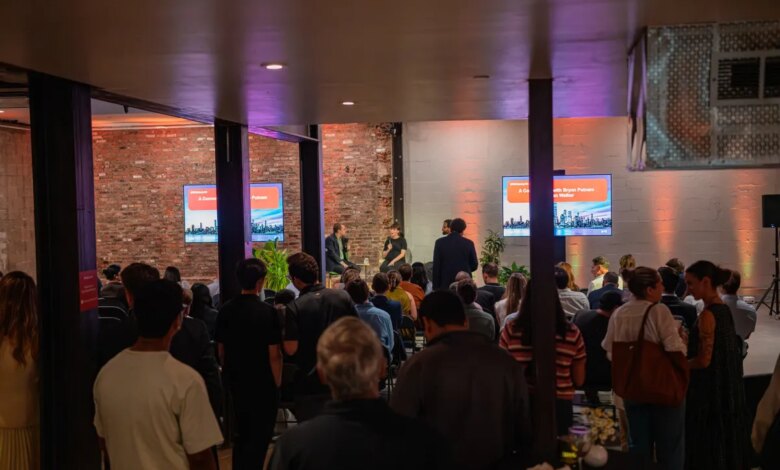
All these fresh ventures stem from both personal experiences and professional aspirations. At a recent TechCrunch event in New York, Putnam candidly explained that Mirror was born out of her own life experiences as a new mother attempting to translate fitness studio engagement to a home environment. She recognized a need for a product that facilitates interaction among people of varying ages and skill levels: “How can we use tech to create a shared experience?” became her guiding question, aiming to foster togetherness rather than isolation.
In contrast, Walker’s motivations are shaped by concerns over how artificial intelligence is reshaping work and community dynamics. He launched Heirloom to counteract the notion of AI “stealing knowledge work” and distancing individuals from one another. He believes that after his previous success, he wanted to create something that would encourage reconnection.
It’s a bold proposition. Walker mentioned that the U.S. seems to have lost its ability to pass on traditional crafts such as leatherworking and other artisan skills. For decades, the continuity of mentorship from masters to apprentices has weakened, often leading skills to be viewed as a fallback option for those unable to enter a four-year college.
Heirloom represents a bet on a cultural shift—Walker noted that about half of Gen Z and Gen Alpha prefer not to pursue a four-year degree. In fact, a majority of participants at Heirloom’s inaugural San Francisco location are young tech employees in search of a “phones-down creative outlet.”
Thus far, the fundraising amounts for these emerging ventures are relatively modest. Putnam has secured $35 million from investors for Board, while Pie has attracted $24 million. The Six Bells has raised approximately $3.8 million. Meanwhile, Heirloom, which is less than a year old, has not disclosed its funding status.
A notable outlier is Adam Neumann, co-founder of WeWork, whose new residential initiative, Flow, also targets loneliness through spatial solutions and has garnered over $450 million in funding, primarily from Andreessen Horowitz, significantly overshadowing other efforts.
At present, it remains uncertain whether “togetherness” can evolve into a substantial investment segment. Facilitating interaction among strangers, while socially beneficial, poses scalability challenges compared to software deployment.
What stands out is the caliber of individuals behind these ventures: Putnam, Walker, Dunn, Gelman, and Neumann have all successfully established reputable brands previously. Their experience facilitates fundraising efforts and boosts investor confidence, suggesting they have acumen in launching products that resonate with consumers. Time will tell if they can replicate this success in a new arena.