Since the start of the year, DDR5 RAM has been hard to come by, with little indication that the situation will improve in the near future. Consequently, new PC builders have started reverting to the more cost-effective but older DDR4 platforms. Unfortunately, DDR4 prices have also surged, with a basic 16GB 3200MHz kit currently priced at approximately $120, while a 32GB kit is around $210. Just for context, I previously purchased a 32GB 6000MHz DDR5 kit for $93.
If current trends persist, DDR4 prices may rise even more, impacting the costs of motherboards and CPUs as well. So, if you have resolved to go with DDR4, which platform and CPU should you select? Let’s explore some options to assist you in making an informed choice.
The AMD Ryzen 5 3600: An Affordable Yet Solid Choice
Still a Viable Option
It may seem unusual to consider the AMD Ryzen 5 3600, a processor introduced in 2019, but it continues to hold its ground in today’s tech landscape. Whether you’re trying to build a budget gaming setup, a basic office computer, or a multifunctional desktop, the Ryzen 5 3600 is one of the most cost-effective AM4 CPUs available today.
With RAM and graphics card prices rising substantially, the Ryzen 5 3600 offers a decent performance without breaking the bank, especially if you’re on a tight budget.
Interestingly, it outperforms the newer Ryzen 5 5500 that many builders are considering, as the 3600 features a larger 32MB L3 cache and supports PCIe 4.0, enhancing compatibility with cost-effective graphics cards.
The main drawback of the Ryzen 5 3600 is its availability. Being an older model, it can mainly be found through resale channels or specialty markets. Ideally, you should not pay more than $80 for it.
The Ryzen 7 3700X is also worth mentioning as a slightly faster option, particularly in multi-threaded tasks, but keep in mind it comes at a higher price.
AMD Ryzen 5 5600: The Budget-Friendly Gem for AM4 Builds
An Outstanding Value
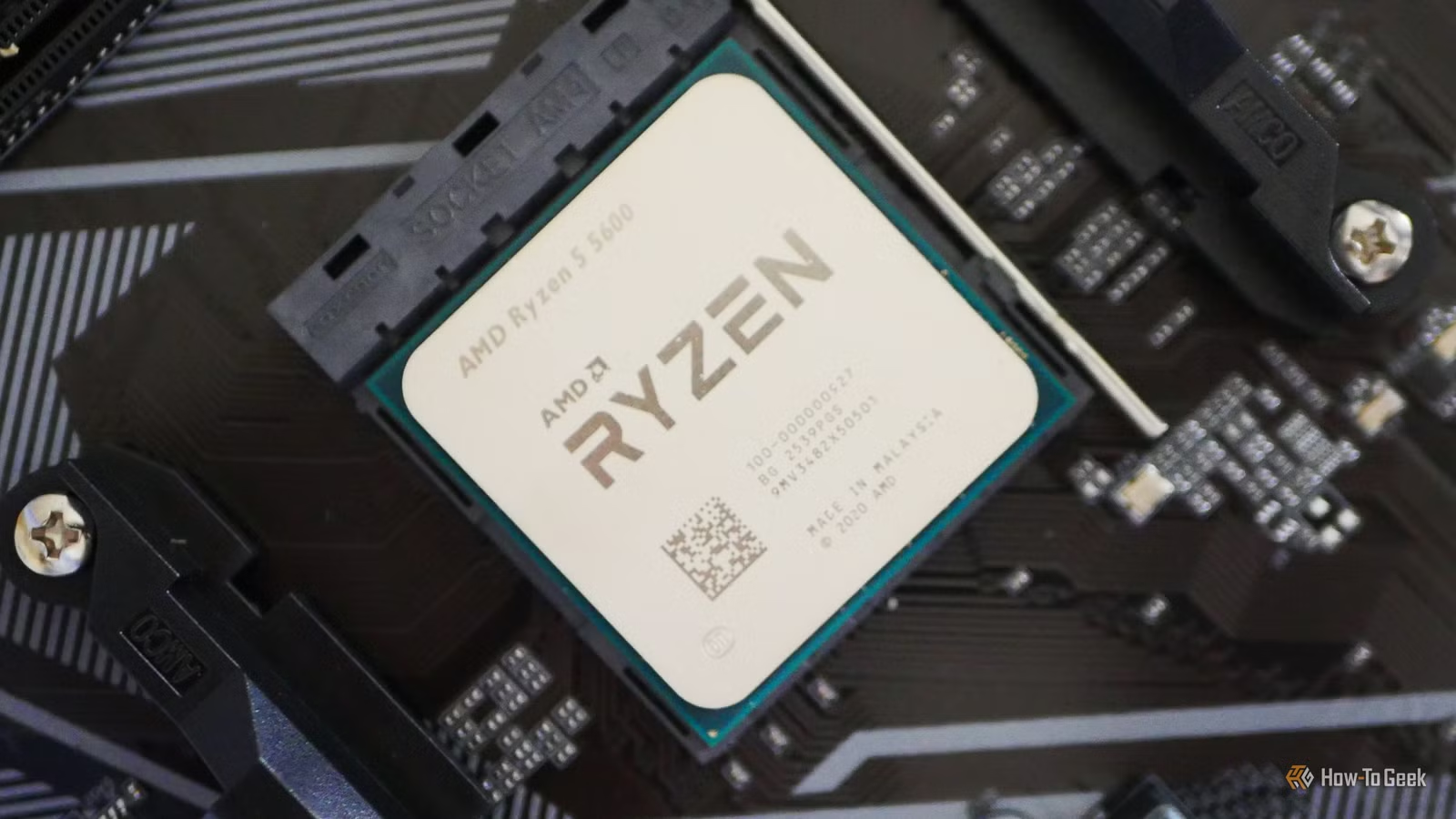
The AMD Ryzen 5 5600 stands just one model number above the Ryzen 5 5500, but it offers far superior features without being a scaled-down version. This makes the 5600 nearly twice as valuable, and consumers are more than willing to pay up for it.
This 6-core, 12-thread processor is crafted from Zen 3 architecture, boasting 32MB of L3 cache and PCIe 4.0 support. When paired with an adequate B550 motherboard and 16GB or, preferably, 32GB of RAM, it forms a remarkable value-focused setup.
While the Ryzen 5 5600 may not receive as much attention as its slightly pricier sibling, the Ryzen 5 5600X, they share many similarities. By overclocking the 5600 using PBO, users can achieve performance levels close to that of the binned 5600X.
Intel Core i5-12400F: The Value Pick When Priced Right
A Great Bargain if You Find a Deal
Many CPU lists tend to focus heavily on AMD, and for good reason, but certain Intel chips remain competitive, especially if you can find a discounted used model or a capable bundle.
The Intel Core i5-12400F is a noteworthy option, as it supports both DDR4 and DDR5, depending on the motherboard used. For budget-conscious builds, pairing this CPU with an economical B660 or B760 DDR4 motherboard is advisable.
Although the LGA1700 socket allows for future upgrades within the Intel lineup, I still favor the Ryzen 5 5600 for its more flexible upgrade potential, particularly for gamers benefiting from 3D V-Cache, unless the Intel option is significantly cheaper.
AMD Ryzen 7 5700X: Affordable Eight-Core Power
Excellent for Multi-Threaded Tasks
While the Ryzen 5 5600 offers exceptional performance per dollar, the Ryzen 7 5700X could be a better fit for some users. With eight cores compared to the 5600’s six, it shares the same boost clock speed of 4.6GHz found in the 5600X.
The additional cores boost performance in multi-threaded applications like video editing and running virtual machines and provide increased frame rates in demanding games.
Though the Ryzen 7 5800X could also be considered, it generally comes at a higher price, offering only a marginally better performance profile with a 4.7GHz boost clock and a 105W TDP against the 5700X’s 65W.
Intel Core i5-14600KF: The High-Performance DDR4 Choice
At the Threshold of Diminishing Returns
Launched in 2023, the Intel Core i5-14600KF is the latest addition to this list. It delivers performance identical to the i5-14600K but is devoid of an integrated GPU, leading to a lower price point.
This processor is versatile, offering support for both DDR4 and DDR5, and is compatible with older LGA 1700 motherboards with necessary BIOS updates. Its design features six performance cores and eight efficiency cores, resulting in 20 threads that enhance its efficacy in both gaming and multi-threaded tasks.
Despite the limitations of DDR4, the 14600KF stands out as a competent choice, typically available for under $250, making it an attractive option in the market. However, considering its support for DDR5, it is wise to disregard that feature if you’re specifically looking to buy DDR4 now, as this chip will soon be outdated once DDR5 prices stabilize.
Do note that Intel’s latest chips have a tendency to produce higher temperatures, so budgeting for a robust cooling solution is essential when opting for this CPU.
AMD Ryzen 7 5800X3D: The Ultimate Upgrade for AM4 Gaming
The Prime Gaming Choice
Ending this list is the recently re-launched AMD Ryzen 7 5800X3D. Honoring a decade of the AM4 platform, it is priced at $349. While this might seem steep for an older processor, it still delivers substantial value in the right circumstances.
If you already own an AM4 motherboard that supports the Ryzen 7 5800X3D, it serves as an impressive drop-in upgrade with competitive performance compared to newer Ryzen variants.
Its 3D V-Cache technology offers a significant advantage in CPU-intensive games and esports, outperforming even the Intel Core i5-14600KF. However, due to its status as a non-upgradable option, I recommend it solely for those committed to developing a top-tier DDR4 gaming rig in the near term and who don’t mind the pricing.
DDR4’s Longevity in the Market
The current landscape of desktop PCs is challenging, primarily due to memory shortages. As the cost of DDR5 continues to escalate, DDR4 also remains a less favorable option than it used to be, and the prices are likely heading up.
Nonetheless, this doesn’t mean older platforms should be entirely dismissed. CPUs for the AM4 and LGA1700 sockets still offer a solid level of performance for various applications, whether for gaming, productivity, or a combination of both.