Kubuntu Focus AR Gen 1 Review: Seamless Linux Experience Hindered by Subpar Hardware

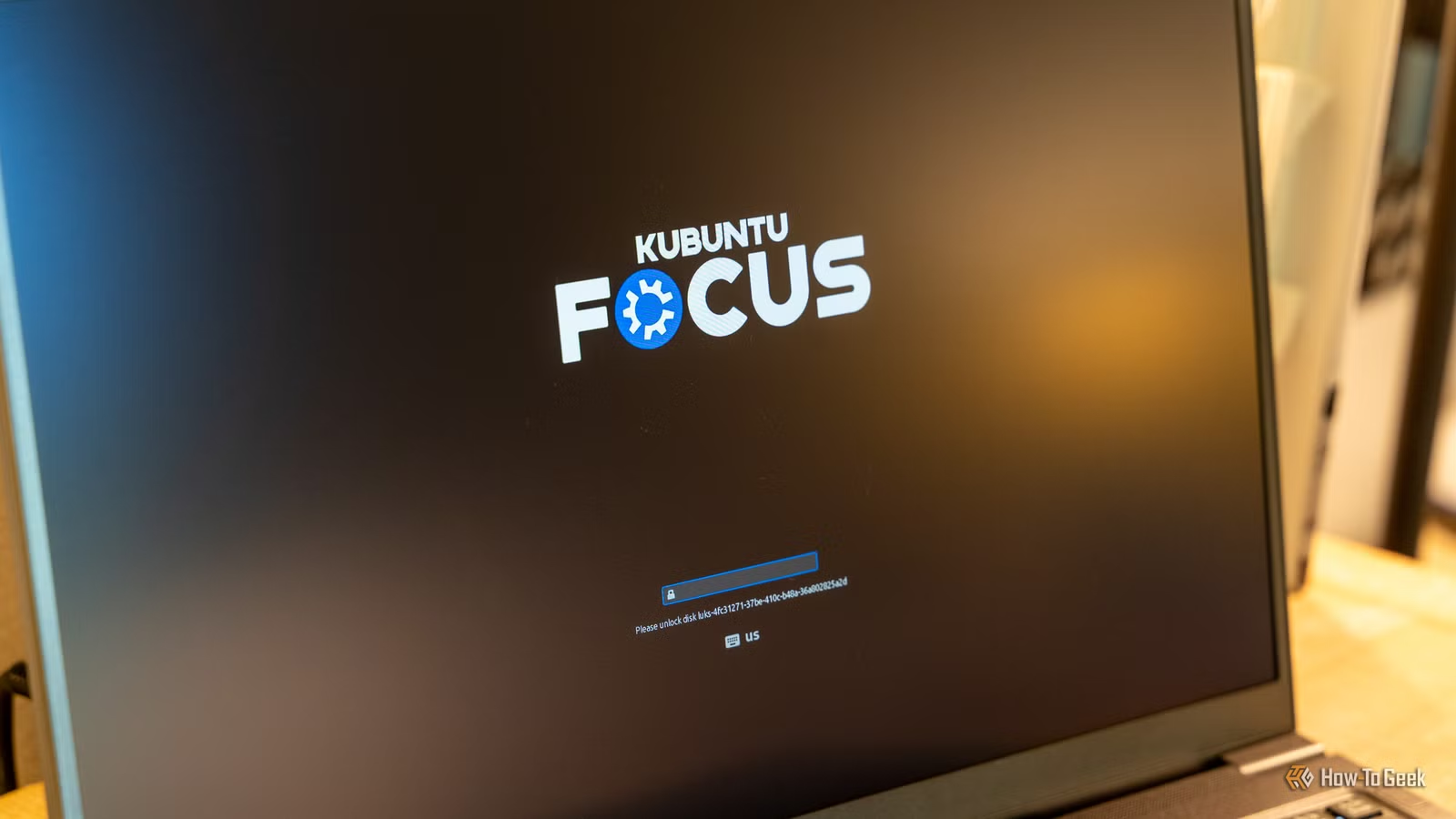
Kubuntu Focus is not just associated with the well-known Linux operating system; it also has a dedicated line of laptops. Recently, I got the chance to use the Kubuntu Focus Ar Gen 1, a device marketed as being pre-loaded and optimized for the Kubuntu OS. Unfortunately, my experience with the hardware did not meet expectations.
- Operating System
- Kubuntu 26.04 LTS with Focus tools
- CPU
- Intel Core Ultra X7 358H
- GPU
- Integrated Intel Arc B390 graphics
- RAM
- 32GB LPDDR5X, not upgradeable
The laptop showcases Intel’s Panther Lake Core Ultra X7 processor and boasts a snappy setup experience. However, the overall build quality feels significantly lacking, as if it were using outdated components.
- High-quality 165Hz matte display
- User-friendly Linux setup
- Reliable performance
- Lightweight and easy to repair
- Fragile chassis and keyboard
- Subpar trackpad
- Questionable value for the price
Pricing and Availability
The laptop is offered in several configurations, with the price starting at $1,950. The specific model I reviewed costs approximately $2,125.
Does the hardware justify the $2,125 price?
Chassis feels outdated
Upon unboxing, the first thing that struck me was how light the Kubuntu Focus Ar Gen 1 is, yet the overall design feels dated, reminiscent of laptops from 2016.
While its featherweight construction is commendable, it doesn’t compensate for several hardware shortcomings. Powering it up reminded me of older devices, and the keyboard quickly disappointed me with its unexpected flex, contrasting sharply with the supposed quality of a premium device.
The trackpad functionality also fell flat. It employs a tilt design that, given the price, I found lacking compared to expected haptic technology. Unfortunately, right-clicking felt awkward and unresponsive.
Overall, the poor build quality of the laptop detracted from its lightweight advantage. The inclusion of a seemingly random “Copilot” key added to my confusion, as it lacks AI functionality and only behaves like a standard key.
The 165Hz display is commendable
Top-notch display quality
Despite my issues with the hardware, the screen itself performed admirably. The matte surface minimizes glare, and the 165Hz refresh rate enhanced the viewing experience.
Its 16:10 aspect ratio combined with a 2560×1600 resolution delivered vibrant colors and clarity, although I wouldn’t recommend it for professional video or photo editing.
Impressive port selection
Better layout needed
Regarding connectivity, the laptop does provide a satisfactory array of ports. It includes two USB-C ports, with one supporting Thunderbolt 4, as well as two USB-A ports, an HDMI port, and a microSD slot.
However, it would be more user-friendly to have USB-C ports on either side. The HDMI only supports 2.0 instead of the more advanced 2.1, which is somewhat disappointing for a device at this price point.
Well-integrated Linux experience
Linux installation is widely accessible
This laptop markets itself on its pre-installed Linux system, which was easy to navigate and set up. The Kubuntu environment offers a great user experience, although it’s important to note that one can readily install Linux on any compatible laptop.
Performance meets expectations
Good performance for its category
Despite some performance discrepancies in benchmarks compared to manufacturer’s claims, the laptop still functioned responsively in daily tasks. The 32GB RAM supports efficient operations, although gaming performance lags behind expectations.
Is the Kubuntu Focus Ar Gen 1 worth buying?
After an extended review period, I cannot wholeheartedly endorse the Kubuntu Focus Ar Gen 1 at its retail price of $2,125. The fragile construction combined with a lack of premium-feeling materials fails to justify its cost. Alternatives, like the Lenovo Yoga Pro 9i, offer greater performance at a similar price point and provide a more robust laptop experience overall.
Ultimately, the Kubuntu Focus Ar Gen 1 had the potential to shine, but its hardware limitations significantly hinder its appeal.