Discover how to optimize your device’s charging capabilities.
Maximizing the battery life of your iPhone or iPad requires more than just monitoring app power consumption. Charging speed is equally important, as it can influence the battery’s lifespan. While a slower charger may be gentler on an aging battery, it can also mean you’ll only gain a small amount of charge during routine moments, like sipping your morning coffee. Conversely, a fast charger can provide sufficient power for a lengthy commute in a short amount of time. Utilizing the maximum charging speed available can be critical when you’re pressed for time.
To leverage these charging speeds, it’s essential to identify what they are. Apple provides inconsistent battery specifications for its devices, which can lead to confusion for users. With the recent decision to exclude charging bricks in the box, many users are likely relying on older, slower chargers for their new iPhones and iPads. To help clarify, we will explore how battery capacities and charging speeds are defined, how they apply to the latest iPad and iPhone models, and how Apple’s accessories may limit your charging efficiency.
Understanding iPhone and iPad Charging Speeds

First, let’s break down charging metrics. A mobile device’s battery capacity is typically measured in milliamp-hours (mAh), quantifying how much power a battery provides within one hour before it needs to recharge. For example, a 1,000mAh battery can deliver 1,000 milliamps for an entire hour. In real-world use, though, battery output varies based on device activity, with many newer smartphones averaging around 5,000mAh and tablets nearing 10,000mAh.
The iPhone 17 Pro Max boasts a battery capacity of 5,088mAh, while the standard iPhone 17 has a 3,692mAh battery. The base model of the iPad 11th Generation comes in at 7,698mAh, and the premium 13-inch M5 iPad Pro features a robust 10,290mAh battery.
Charging speeds, measured in watts, indicate how quickly a battery can boost its charge. Larger devices usually come with higher-capacity batteries and better heat management systems, which allow for greater charging speeds. This explains why your MacBook has a hefty 140W charger and your iPhone relies on a much smaller charger. Nevertheless, advancements like USB Power Delivery (USB-PD) are making rapid charging feasible even for smaller devices. For instance, the recent OnePlus 15 offers a remarkable 120W charging capability. With that context, let’s discuss the top charging speeds for iPhones and iPads.
Current iPhones and iPads Support Charging Speeds of 40 to 60 Watts
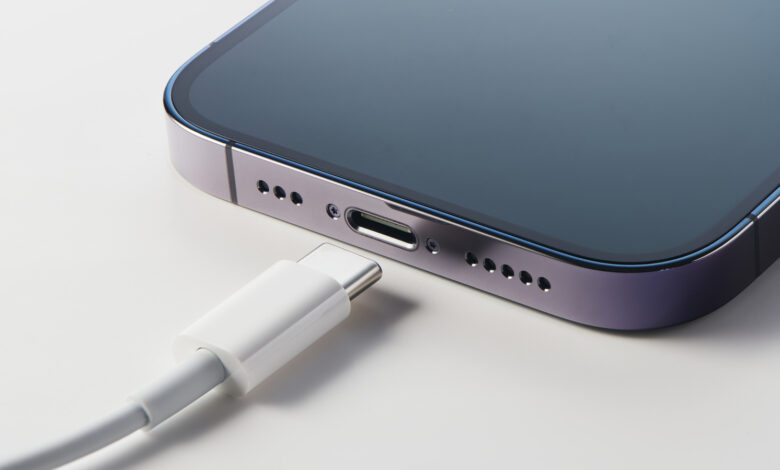
While there have been improvements, Apple’s latest iPhones and iPads haven’t drastically increased their charging capabilities. The iPhone 17 series, including the 17, 17 Pro, and 17 Pro Max, can charge at a maximum of 40W, while the iPhone Air is capped at 20W due to its design constraints. As Apple now excludes chargers from the box, users aiming to reach these top speeds need to purchase an adapter separately. The last included charger was a 5W brick with the iPhone 11, while the 11 Pro had an 18W variant. Anyone still using these older chargers will experience notably slower charging times with newer models.
For iPads, the newly released 2025 base model charges at a commendable 45W, comparable to offerings from brands like Samsung. The latest M5 iPad Pro takes it a step further, offering up to 60W charging. Although Apple continues to include chargers with its iPads, the provided 20W adapter means many users are wasting significant time on charging.
For optimal charging of your iPhone or iPad, consider investing in a charger that can fully support these speeds. In addition to Apple, many reliable options are available from other manufacturers like Anker, Ugreen, and Satechi. Just ensure your charger can deliver speeds on par with your device.