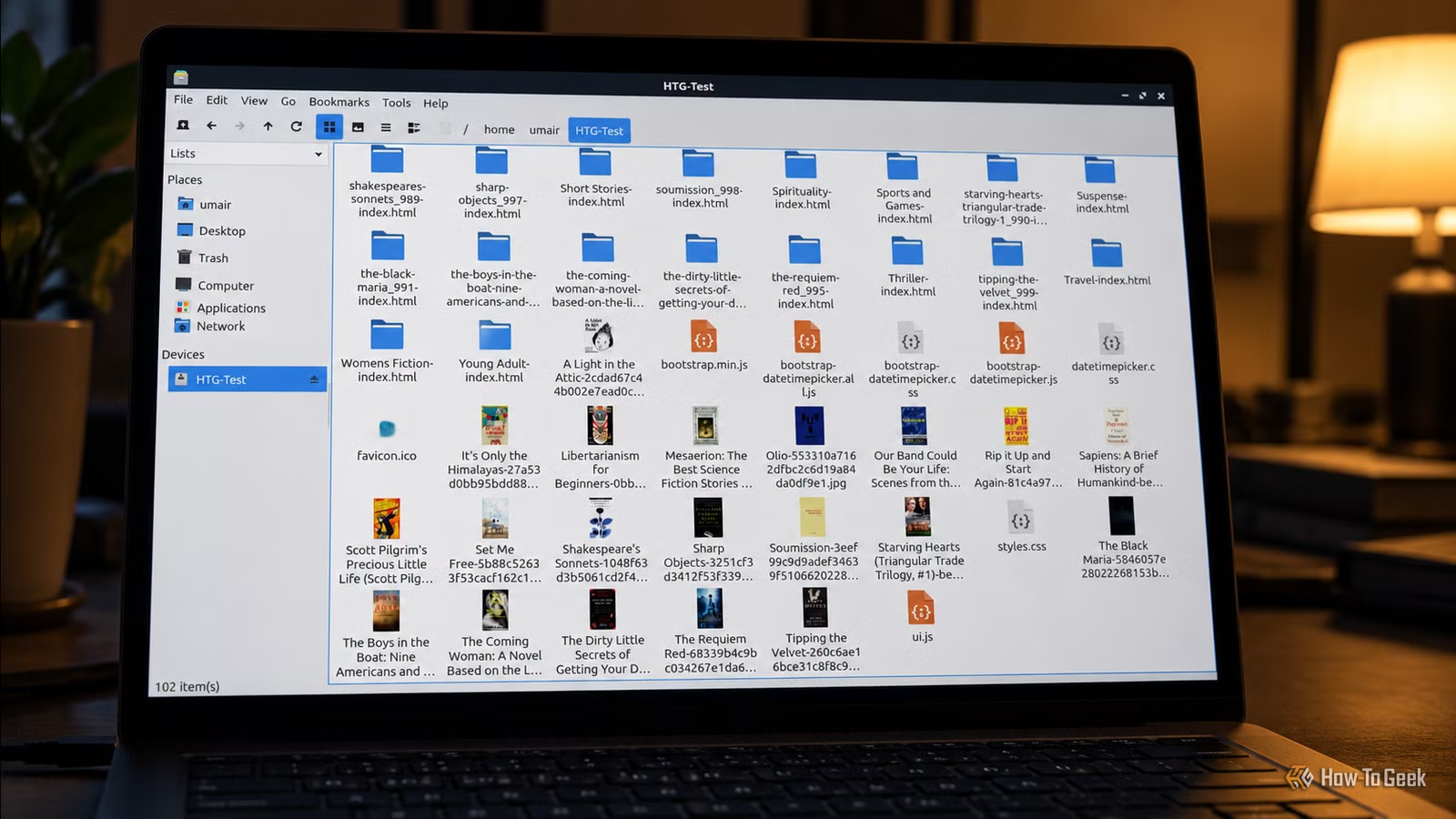
The Linux ecosystem is rich in software options, with frequent new distributions and an increasing number of developers crafting free alternatives to proprietary programs. In contrast, the realm of Linux-compatible hardware is rather stagnant, primarily featuring laptops preloaded with Ubuntu and numerous smartphones attempting to supplant Android—already a Linux-based system.
Enter the Mecha Comet, a game-changing pocket-sized, modular handheld computer that includes a customized, hardware-optimized Linux distribution right out of the box. This is a truly exciting development.
This article is not sponsored. I first discovered the Mecha Comet at CES 2025 and found it intriguing enough to place a pre-order myself. My motivation for sharing this is my genuine belief that it represents a significant advancement for Linux hardware. In fact, this is the opposite of a promotional article.
Introducing the Mecha Comet
A Phone? A Computer? No, It’s the Mecha Comet!
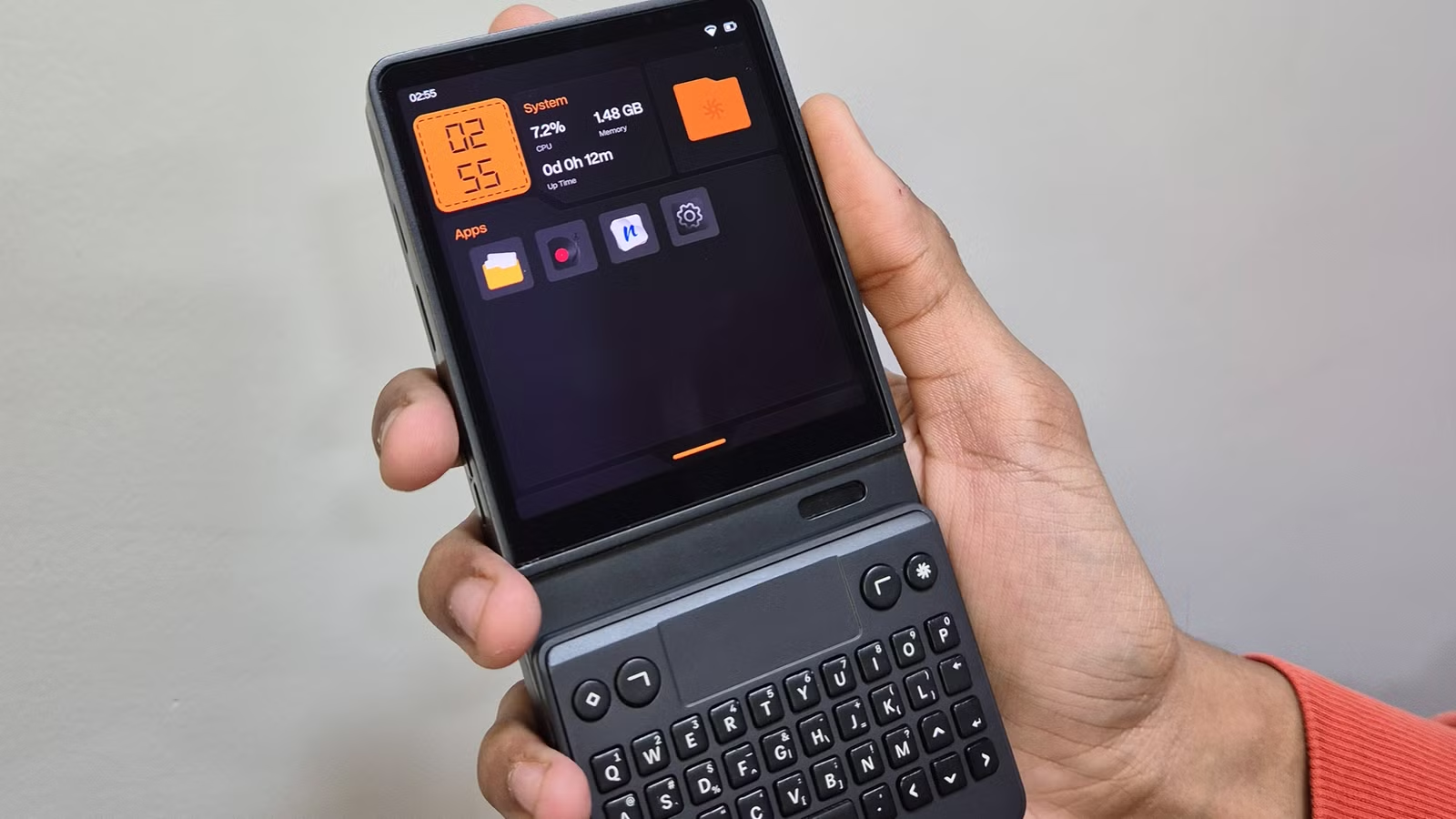
The images displayed are of prototype devices. The final version will feature enhanced modular extensions, which will be elaborated on below.
The Mecha Comet is a handheld device from Mecha Systems that combines features of both a phone and a computer. Unlike most modern smartphones, only the upper section is a display—a 3.9-inch 1080p AMOLED screen comparable to the cover display found on the Samsung Galaxy Z Flip. The lower section includes a 40-pin pogo connector for attaching various extensions. At launch, Mecha is offering three modular extensions:
- A QWERTY keyboard featuring a pointing stick and RGB-backlit keys powered by ZMK firmware.
- A gamepad equipped with a D-pad, an analog stick, shoulder buttons, and an additional pointing stick for camera control—this also includes its own USB-C port, allowing it to function independently from the Comet or be used in multiplayer setups.
- A GPIO breakout board featuring a serial console and CAN bus.
All extensions adhere to open hardware principles, with Mecha providing pin diagrams and design files for those interested in creating their own.
In terms of dimensions, the device weighs around 225 grams and measures 73 x 155 x 14mm, fitting comfortably in most pockets, with the exception of very tight jeans. To put this into perspective, the iPhone 17 Pro Max has dimensions of 78 x 163.4 x 8.8mm and weighs 233 grams.
The extra thickness of the Comet isn’t a result of poor design; it is well-utilized space. The left side features a USB-C 3.0 host port and a USB-C 2.0 port that can function as a display output, supporting 2K at 60Hz. A 3.5mm headphone jack is also available, and there’s an additional USB-C 3.0 port on the bottom capable of PD charging and OTG support.
The back is removable, concealing three kill switches for Wi-Fi, the microphone, and the 8MP camera, along with a detachable 4,100mAh LiPo battery, with the SIM card tray located beneath it—evoking nostalgia for phones from the early 2000s. Additionally, you can power the device via USB PD without needing the battery.
This device combines traditional computer input/output capabilities in a smartphone-like form, all powered by Linux. For many, this could be the most innovative gadget to emerge in the Linux hardware sector for quite some time.
The detailed specifications are available in the full spec sheet.
What Can You Do with the Mecha Comet?
Should You Use It as a Phone or a Computer?
Let’s take a quick look at the processing power behind the device. The Mecha Comet is available in two variants:
- The base model features an NXP i.MX 8M Plus with four ARM Cortex-A53 cores clocked at 1.8 GHz, a Vivante GC7000UL GPU, and a 2.3 TOPS NPU for localized machine learning.
- The upgraded model boasts the i.MX 95, equipped with six Cortex-A55 cores, also operating at 1.8 GHz, paired with an ARM Mali-G310 GPU and a powerful 8 TOPS NPU.
Users can opt for either 4GB or 8GB of RAM and storage options of 64GB or 128GB of eMMC, with the ability to expand through microSD or NVMe SSD.
Performance-wise, it’s comparable to entry-level smartphones, but the emphasis here is not on raw power; it’s about versatility. It’s capable enough to run most Linux terminal applications, which broadens possibilities significantly. The integrated NPU presents opportunities for on-device AI applications, which is not common in budget smartphones.
My personal plan for utilization includes remotely accessing my home computer and lab via SSH, which is why I intend to install the LTE modem into the M.2 slot instead of an SSD—having mobile data access ensures I can manage my machines even without Wi-Fi.
There’s only one M.2 slot, meaning you can have either an NVMe SSD or an LTE modem—not both. The LTE modem is modular, allowing for swaps with different options, though currently, only a Cat 6 4G model is available. Plans for a 5G version are in the works.
I also showed the device to my partner, who saw it as an ideal minimalist option for digital detoxing. With a built-in media player, a basic notes application, and even the capability to run Spotify via the terminal, it could easily serve this purpose. However, using it as a primary phone is more complicated due to the absence of a dedicated earpiece—you’d have to rely on the 3.5mm jack or Bluetooth earbuds. That said, given the prevalence of messaging applications, many people primarily use messaging services over voice calls, and there are CLI options for WhatsApp as well.
On the technical side, the 40-pin I/O connector provides multiple functionalities through the breakout extension, featuring two I2C interfaces, two UARTs, SPI, four ADC channels, and PWM capabilities. This feature opens the door for robotics projects, allowing the Comet to act as a brain for various creations. With its open hardware nature, users can use it as a platform to develop entirely new projects.
Redefining the Linux Phone Experience
Moving Beyond Simple Linux Integration
The ongoing quest for a viable Linux phone has faced numerous hurdles; despite hardware manufacturers and software developers working to create a user-friendly experience, success has been elusive.
This struggle primarily stems from attempts to position Linux as an “alternative” to popular operating systems like iOS and Android. When framed in this manner, Linux loses its inherent advantages and is forced to compete on others’ terms—an unproductive strategy.
In contrast, the Mecha Comet embraces the genuine benefits of Linux and open-source principles. This device provides a portable Linux terminal with mobile connectivity. While I have yet to test the device firsthand, I suspect it will deliver excellent battery performance, thanks to the combination of a sizable 4,100mAh battery with an energy-efficient chip and compact display.
Additionally, the keyboard extension significantly enhances usability; while accessing a Linux terminal on a smartphone is possible, using a virtual keyboard can be cumbersome. The physical keyboard transforms the experience completely.
A Linux Terminal in Your Pocket
If you’re envisioning a dedicated Linux terminal within reach at all times, the Mecha Comet could be your ideal solution. If that sparks excitement and numerous use case ideas, this gadget is tailored for you.
The Mecha Comet is currently available for pre-order, with shipping anticipated between October and November 2026.