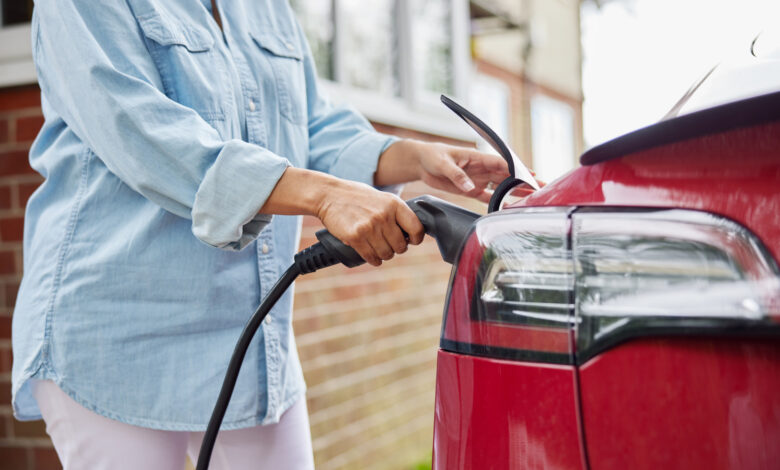
If you don’t frequently travel great distances, Level 1 charging might suffice for your needs.
New electric vehicle owners often discover a variety of charging options for both home use and on the road. The terms Level 1, Level 2, and Level 3 charging may seem standard, but they don’t necessarily convey their respective benefits. Additionally, installing a Level 2 charger can be a significant investment. So, is it worth it?
A Level 1 charger can take over 40 hours to fully charge an EV, while a Level 3 charger can provide hundreds of miles of range in just one hour. Although faster charging may seem advantageous, it’s essential to consider factors like cost and battery health. The ideal choice depends on your charging location, driving habits, and electricity prices in your area.
Understanding Level 1, Level 2, and Level 3 Charging
A Level 1 charger connects to a standard 120-volt outlet, delivering around 1.4kW of power. In contrast, Level 2 chargers utilize 240-volt circuits, facilitating significantly higher charging power—up to 19.2kW depending on the setup. The power output from a Level 2 connector can vary based on the charger’s amperage.
Both Level 1 and Level 2 chargers provide alternating current (AC) to the vehicle, which is converted to direct current (DC) by the car’s onboard charger. This conversion is not fully efficient, generating heat in the process. However, Level 3 chargers convert AC to DC before reaching the vehicle, allowing for direct high-voltage power delivery.
Level 3 chargers typically offer between 50kW and 500kW of power, rapidly recharging an EV battery in an hour or two, particularly for newer models like the Lucid Gravity, which can charge at rates of up to 400kW. Meanwhile, the Tesla Model Y offers varying charging power from 175kW to 250kW based on the specific version.
Choosing Between Level 1 and Level 2 Chargers at Home

If your daily driving is minimal, a Level 1 charger will likely suffice. There’s little need to invest in a Level 2 setup if your vehicle can charge overnight. Utilizing time-of-use energy plans, you can easily charge during off-peak times without any hassle.
According to estimates, Level 1 charging can add roughly 5 miles of range per hour, translating to about 40 miles over a typical 8-hour charging window.
On the other hand, Level 2 chargers are more beneficial for those who frequently drive longer distances. With these chargers, you can swiftly accumulate more than 30 miles of range in an hour, significantly easing any range anxiety.
If you’re contemplating whether to install a Level 2 charger, consider the potential for charging on weekends as well, particularly if your energy provider offers off-peak rates during these times. This can make a Level 1 charger a practical option if your vehicle isn’t in use for most of the weekend.
However, keep in mind that some EV batteries may require heating in cold weather, which can complicate charging with a Level 1 charger. Thus, in winter months, using a Level 2 charger might be more effective.
When Is It Necessary to Use Level 3 Chargers?

Level 3 chargers represent the fastest charging solution available but are seldom found in home settings due to their requirements for a robust electrical connection, often necessitating major upgrades.
They are primarily located in commercial zones such as highway rest areas and provide rapid charging that can grant over a hundred miles of range in just an hour. However, charging speeds can differ widely between various Level 3 chargers.
While the speed of Level 3 charging is appealing, potential costs and battery longevity come into question. To mitigate concerns regarding battery health, sticking with Level 2 chargers might be advisable. Nevertheless, Level 3 chargers can closely replicate the conventional experience of refueling a gas vehicle.
When utilizing public chargers, it’s crucial to check the type of plug. North America is transitioning from older J1772 and CCS connectors to the NACS standard, which was historically used by Tesla. This new standard will soon be the norm for most electric vehicles.
If your vehicle requires a NACS connector but a public charger has a CCS connector, you’ll need an adapter or you won’t be able to charge. Some charging stations do provide multiple connector options, though that’s not guaranteed.
To stay informed about available types of chargers, consider using apps that track charger locations and types. Such tools can also help you determine whether the charging option is Level 2 or Level 3 to find the quickest available station.