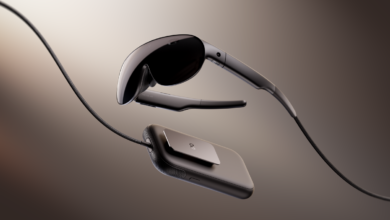
Meta’s Muse Charm: A Modern Twist on Tamagotchi Inspired by the Latest Trends


Meta has recently unveiled the Muse Charm, a device designed to make artificial intelligence more relatable for everyday users. However, the reception has been somewhat divided. Some view it as another potential flop among failed AI gadgets, while others see it as a stylish trend.
This new gadget might resonate particularly well with Gen Z, who, in the era following Labubu’s popularity, have shown a growing interest in decorative items like keychains and embellishments for personal belongings. This reflects a wider trend of kitsch and retro influences in their fashion choices and tech interactions.
Gen Z has actively created a market around dangling items, transforming everyday products such as lip gloss, hand sanitizers, and perfumes into bag charms, primarily aimed at women.
Hailey Bieber’s Rhode lip case, which cleverly attached lip gloss to a phone case, highlighted the notion that beauty items can also serve as fashion statements. The brand reportedly achieved $212 million in net sales, illustrating the profitability of merging beauty and fashion.
The Labubu trend further exemplified this shift, with the quirky monster bag charm significantly boosting the retailer Pop Mart’s revenue, exhibiting a sevenfold increase since 2019. While Labubu’s individual sales may have waned, the concept of bag charms remains strong, with market predictions estimating growth to exceed $1 billion by 2030.
In today’s market, bag charms come in various designs, from character figures to glamorous beauty product replicas, all allowing personal expression similar to traditional fashion choices. In parallel, Meta’s Muse facilitates personal customization through an avatar, making it a reflection of individual identity.
Interestingly, the Muse Charm’s design evokes nostalgia for Tamagotchis, the miniature digital pets that enjoyed immense popularity in the 90s and mid-2000s. Yet, the concept of wearable digital gadgets has evolved, with similar wearable tech, like the Apple Watch, increasingly being used as fashionable accessories rather than just tech devices.
Retail platforms are now flooded with an array of Apple Watch keychains and charms styled to meet diverse aesthetic preferences, with many young women adopting them primarily for fashion rather than for technological utility.
This trend aligns with a broader resurgence of retro technology, as older devices like flip phones and digital cameras are making unexpected comebacks. Many younger individuals are seeking more tactile connections with technology, desiring physical objects in light of their concerns about increasingly digitized, algorithm-driven tech experiences.
This shift suggests that Gen Z prefers devices that foster a deeper connection with technology, offering a sense of personal agency in a technology-saturated environment. Some have even ventured into creating bespoke, portable mini-computers—known as “cyberdecks”—that they customize with personal flair.
Ultimately, despite the Muse Charm’s alignment with these fashion and personalization trends, its success is not guaranteed.
Meta’s history of eroding consumer trust due to privacy scandals raises concerns about its ability to captivate a skeptical audience.
The company has faced scrutiny from multiple government bodies for past privacy violations, including a recent FTC settlement related to consumer data mishandling. Continuous criticisms regarding its impact on minors and a general breakdown of user trust further complicate its standing in the market.
These ongoing issues may hinder Meta’s ambitions to become a preferred choice in consumer AI—unless, of course, users favor familiar risks over unknown threats posed by potential competitors.
Ultimately, if consumers see free AI access from Meta as a viable trade-off for targeted advertising, they might be willing to overlook the privacy concerns and embrace the Muse Charm.