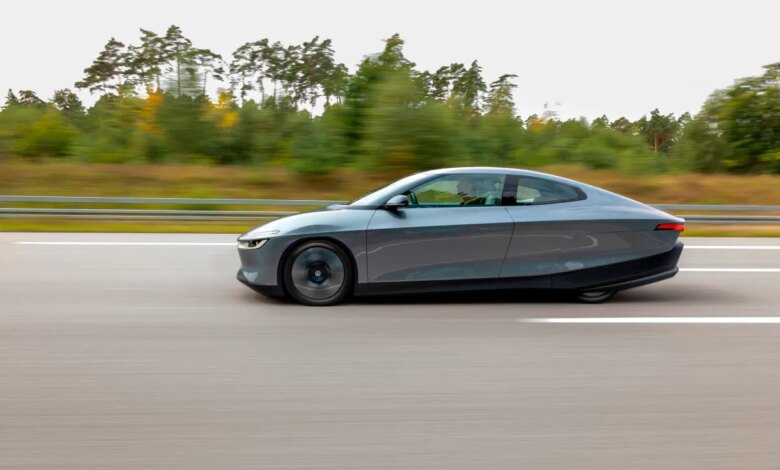
Volkswagen unveiled a new electric vehicle prototype on Monday, achieving an impressive fuel efficiency measurement equivalent to 323 miles per gallon under optimal conditions, placing it among the most efficient vehicles globally.
Automakers often present ambitious concepts with lofty performance claims, but Volkswagen has taken this further by not only designing the EV but also completing an actual drive from its headquarters in Wolfsburg, Germany, to Vienna—a distance of 794 miles (1,278 kilometers). During this journey, the team only charged the Mission Efficiency prototype once, arriving with an impressive 104 miles (168 kilometers) of range remaining. This resulted in a consumption rate of 7.51 kilowatt-hours per 100 miles, translating to around 279 MPGe.
The prototype features a streamlined teardrop shape and utilizes the electric motor and battery from Volkswagen’s ID. Polo, bringing it close to a production-ready state, according to the company’s announcement.
For context, this prototype boasts nearly double the efficiency of the current most efficient production vehicle, the Lucid Air Pure.
Estimates suggest that Volkswagen’s design could achieve over 400 miles on a 54.9-kilowatt-hour battery, although this figure is not officially rated by the EPA. In contrast, the Lucid Air manages 420 miles using an 84-kilowatt-hour battery and is a larger, more practical option.
Volkswagen made strategic compromises for the sake of efficiency.
A key design element is the pronounced roofline tapering soon after reaching the driver’s head, known as a Kammback shape, which optimizes aerodynamics. This design allows Volkswagen to achieve a drag coefficient of 0.158 while keeping the frontal area minimal at just 2.08 square meters.
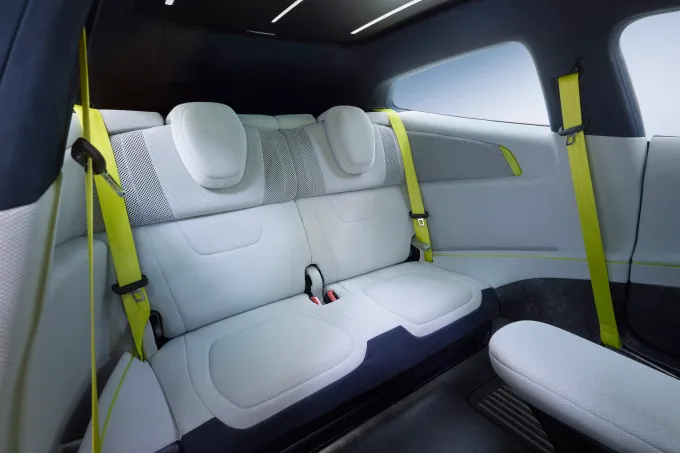
Due to the design choices, the Mission Efficiency is categorized as a 2+2 vehicle. This configuration means the rear seating is impractical for adult passengers, as Volkswagen notes that the back seats are best suited for individuals under 5 feet 3 inches tall.
Volkswagen remarked that the prototype was crafted with the idea of accommodating a small family, though anyone familiar with 2+2 designs might question that practicality.
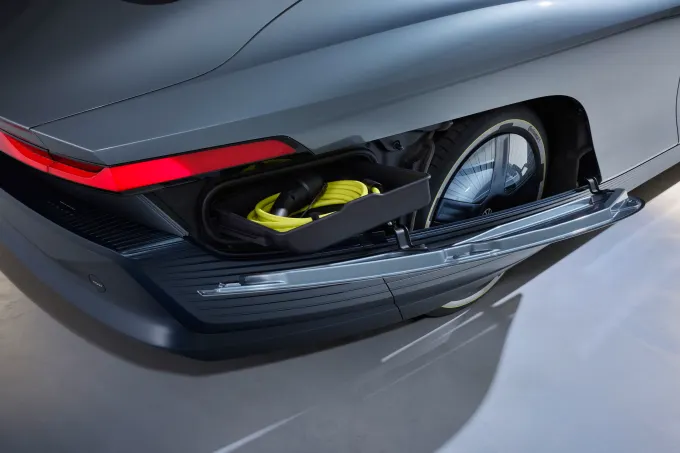
Additionally, to enhance efficiency, the design narrows the space between the wheel arches and the front tires, which might affect ride quality due to reduced mobility for the wheels inside the wheel wells.
While side mirrors typically create considerable drag, Volkswagen opted against transitioning to cameras, as they can impact visibility depth.
Furthermore, the vehicle features solar cells on the roof and trunk lid, providing a supplementary boost of about 18 miles (30 kilometers) on perfectly flat and sunny paths, given a constant speed of 42.25 mph (68 kph).
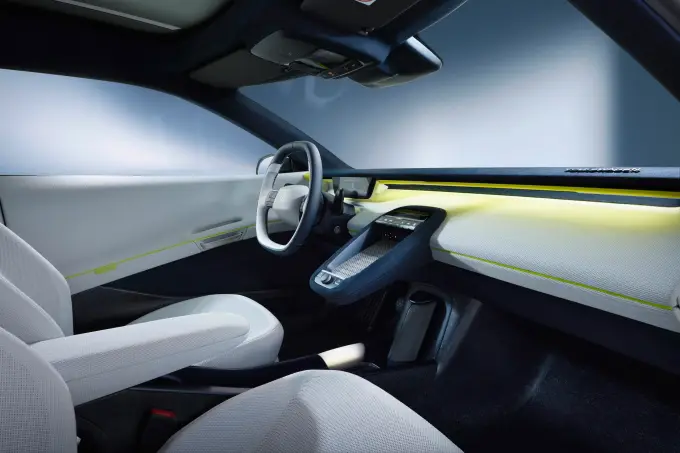
Inside, the car features lightweight materials in its seating, reminiscent of designs from the EV startup Slate Auto. Unlike many vehicles, the Mission Efficiency lacks an integrated infotainment system or speakers and instead offers a portable Bluetooth speaker, encouraging drivers to rely on personal devices.
Volkswagen labels the Mission Efficiency as a “near production” vehicle; however, the company has not confirmed plans for mass production. Previous projects, like the production of 250 units of the XL1—another efficiency-focused model—hint that this prototype could very well see the light of day, especially considering the prior model’s high initial price of €110,000.