Welcome to TechCrunch Mobility, your source for the latest in transportation innovations, especially the role of AI in this evolving landscape. Subscribe for free to receive updates directly in your inbox!
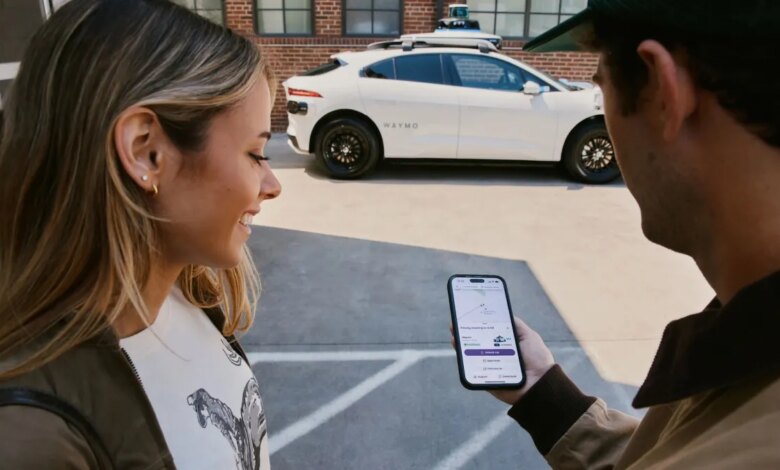
Lyft achieved a significant development this week with the inclusion of Waymo‘s robotaxis on its platform in Nashville. Through this collaboration, Lyft is responsible for managing fleet services, ensuring vehicle readiness and maintenance, along with overseeing infrastructure and depot operations via its subsidiary Flexdrive.
In Nashville, riders can request a Waymo robotaxi using either the Waymo app or the Lyft app, which will assign them to a Waymo vehicle based on availability.
Lyft has explored autonomous vehicle technology extensively, forming partnerships with firms such as Aptiv (now Motional) in Las Vegas, May Mobility in Atlanta, Baidu in London, and Waymo in Phoenix. This week’s announcement is particularly significant as it marks Lyft’s inaugural venture into commercial robotaxi services using fully autonomous vehicles without a human driver.
It’s worth noting that the company invested four years and substantial resources into developing its own autonomous vehicle technology under the Level 5 division. In 2021, Lyft sold its AV unit to Toyota’s Woven Planet Holdings for $550 million, part of a broader trend of consolidation within the developing sector.
After this sale, Lyft shifted its focus back to its core ride-hailing operations but remained open to exploring autonomous options.
In a discussion with Jeremy Bird, Lyft’s EVP of growth, I gathered some insights on this milestone. Bird oversees Lyft’s international growth, luxury services, and autonomous vehicle strategies, sometimes synchronizing across all areas.
When I inquired about the potential for more robotaxis within the Lyft app, he was somewhat non-specific but emphasized the ongoing commitment to partnerships with Waymo in Nashville and Baidu in London, where commercial services have yet to launch. Bird anticipates significant developments in the coming year.
International markets appear to play a critical role in Lyft’s future AV expansion plans. He referred to London as a “fascinating market” and highlighted Lyft’s evolution into a global entity, a notable shift from years focused primarily on the U.S. landscape.
As for Lyft’s next steps, it seems that the company aims to target locations where it can create a hybrid network of autonomous and human-operated vehicles right from the outset.
“We are a global company becoming more global, which is essential for us,” Bird stated. “AVs will inform our vision of the future. For every new market, we consider whether there’s an AV element. A market open to AVs from a regulatory standpoint ranks higher on our list.”
Recruitment Highlights
Notably, Ford has made intriguing recent hires that suggest a strategic push into defense technology. Tomaz Seignemartin, a former Raytheon employee, has been appointed as VP of continuous improvement, while Shirish Srinivasan, formerly with General Dynamics, will serve as chief of staff to Ford’s chief strategy officer. Additionally, Nathan Rigoni, who once led Lockheed Martin’s generative AI team, joins as a senior software engineer.
While these defense tech acquisitions may seem minor in the context of Ford’s large workforce, they reflect an increasing value placed on expertise in defense technology.
For tips or insights, feel free to reach Kirsten Korosec via email or Signal, or contact Sean O’Kane via email.
Investment Updates

The Boring Company, founded by Elon Musk to tackle traffic issues via an underground tunnel network, recently secured $3 billion in funding, primarily from the United Arab Emirates. This latest funding round values the company at $23 billion. The UAE’s investment aligns with The Boring Company’s previous collaboration on the Dubai Loop, with plans to dig an additional 150 kilometers of tunnels there.
Major investors in this round include Andreessen Horowitz, Sequoia Capital, Human Capital, Vy Capital, and Valor Equity Partners.
In the U.S., The Boring Company’s most prominent projects are in Las Vegas, featuring tunnels connecting several hotel casinos with limited operations to the airport, utilizing Tesla vehicles driven by humans.
Additional noteworthy deals this week include:
ARC Ride, based in Kenya, has raised $33.3 million through a round led by Novastar Ventures and Norrsken22. Other investors included IFC, British International Investment, Proparco, Japanese supplier Musashi Seimitsu, and African impact investor Talanton.
Beep, a startup recognized for running autonomous shuttles on campuses and at airports, raised $20 million in a Series B funding round led by Mobileye. Since its inception in 2019, Beep has secured a total of $130 million.
Fryte Mobility, a Munich-based software startup focused on electric truck charging logistics, raised €3.5 million ($4 million) in seed funding, co-led by 4impact capital and Rethink Ventures, with participation from existing investors including Revent, F-LOG, and others.
Porsche finalized the sale of its stakes in Bugatti Rimac and Rimac Group to HOF Capital for approximately 1 billion euros, of which 250 million euros will be allocated to support its pension commitments.
Poseidon Aerospace secured $60 million ahead of its uncrewed cargo plane, Egret, first test flight anticipated by year-end. The funding round was led by TQ Ventures and included new investments from Hanwha Asset Management, G Squared, and JAWS, along with existing backers.
Stoke Space, although not a traditional transport company, caught attention with a $1 billion funding round, led by Point72 Ventures and supported by various notable investors.
Tern, a startup from Austin, Texas, developing an alternative to GPS, was awarded an $11.26 million contract from the U.S. Army, which plans to utilize its technology for military vehicles.
Uber made a $10 million investment in Indian fleet management startup Carrum Mobility during its Series B round, bringing the company’s valuation to approximately ₹16 billion (around $168 million) post-money.
Interesting Reads and Developments

Autonomy, the electric vehicle subscription service founded by Scott Painter, is undergoing a strategic shift by incorporating internal combustion engine vehicles into its fleet after facing near-bankruptcy.
Beta Technologies, Joby Aviation, and Wisk started test flight demonstrations in Texas as part of the FAA’s Advanced Air Mobility eVTOL Integration Pilot Program. This week-long initiative allows these firms to test real-world routes, including connections to Dallas-Fort Worth Airport.
Travis Kalanick’sAtoms is gearing up for aggressive hiring to penetrate the robotaxi industry, as reported.
TechCrunch’s Jagmeet Singh delves into Uber competitor inDrive and its ambitions to broaden its services beyond just ride-hailing.
Final Thoughts
While U.S.-based autonomous vehicle developers dominate the spotlight, significant advancements are happening globally. Recently, Chinese AV developer Pony.ai and Croatia’s Verne began offering fully driverless rides on public roads in Zagreb, while Spain granted its first national AV permits to WeRide and its partners.
In other highlights, the Chinese autonomous delivery service Neolix has commenced tests on a closed course in Japan, and Pony.ai has removed human safety operators from its AV demonstrators in Doha, Qatar, although they still maintain human drivers in their commercial services.