Devin Parekh of Insight Partners Discusses the Firm’s Diversification Strategy Amid the AI Hype Surrounding OpenAI and Anthropic

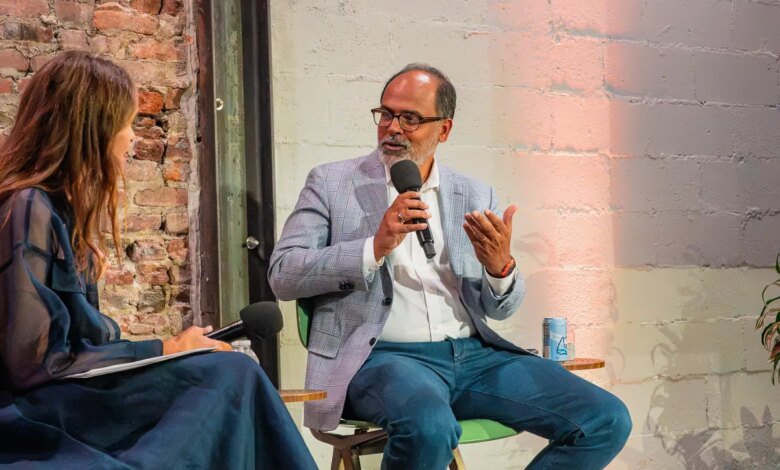
Devin Parekh has been at the helm of investment firm Insight Partners for 26 years. Unlike many venture capitalists who are vocal on social media and podcasts, Parekh and his firm prefer a more understated approach.
During a conversation with TechCrunch at the StrictlyVC event in New York, Parekh openly discussed Insight’s achievements, including significant investments in companies like Databricks, as well as its involvement with OpenAI and Anthropic. He also addressed missed opportunities, like the AI legal-tech startup Legora, and shared his thoughts on conflict of interest in venture capital. Additionally, he explained why Insight continues to favor a diversified investment strategy amid a growing trend towards specialized AI labs.
This interview has been condensed and clarified for readability.
There’s a well-known researcher making headlines this week. Do you view concerns about AI risks as an overreaction, or do you have genuine concerns?
Of course, there’s a risk that a non-state actor could misuse open-source AI to create biological threats. However, I believe the potential benefits, like speeding up drug development and disease treatment, far outweigh the risks. As a board member of NYU Langone, I’ve seen firsthand the incredible ways AI can analyze patient data. For instance, it can assess 50 million patient records to predict a heart attack risk of 25% for a seemingly unrelated patient. Overall, I perceive this as a largely positive development.
Yes, like all technology, AI comes with risks—similar to the new challenges presented by drone warfare. Historically, with each new technology, society has managed to elevate living standards over time. Given that our population is aging and healthcare professionals are in limited supply, AI will be crucial for scaling healthcare services.
Insight manages $90 billion in assets yet appears to be less vocal compared to other firms of similar scale. Is this intentional?
Many venture capitalists now believe they’re experts on various topics—be it epidemiology during the pandemic or geopolitics during conflicts. We take a different approach, allowing our portfolio’s performance to affirm our credibility. We focus on investing in founders and companies, communicating enough for others to recognize us while letting our results do the talking.
Your investment strategy includes early-stage ventures, growth, buyouts, and likely secondaries. What’s the current breakdown?
Our focus isn’t fixed; it’s flexible and based on global opportunities, so there’s variation in early-stage, growth, and buyout investments across our funds. Current market conditions make buyouts unappealing—high-interest rates and low exit multiples have made many buyouts difficult lately. We haven’t executed any major buyouts since 2024.
Presently, venture valuations are climbing at a pace reminiscent of the previous peak in 2021, which didn’t result in positive outcomes. Typically, follow-up rounds provide additional data that justify higher valuations, but the rapid pace of current deals leaves insufficient data, raising risks. This suggests a shift towards earlier investments. With a scale fund, we can make smaller bets—like $20-25 million—rather than committing massive sums upfront, enabling us to invest further in successful ventures. For example, our strategy with Wiz has yielded greater returns by consistently supporting it rather than stopping with just the initial investment.
As a global investor, how much of your portfolio is regionally focused versus concentrated in tech hubs like the Bay Area?
Talent distribution is relatively equal worldwide. We competed for Legora—a startup based in Stockholm—yet lost out to General Catalyst, despite my partner making the trip to pitch. However, AI infrastructure talent remains predominantly in San Francisco. My son, a young VC, believes it’s impossible to invest in AI without being there. Talent does differ by sector; for example, Ramp is primarily centered on financial services talent found in New York, leading to more geographical diversity in vertical-specific AI investments.
Why did General Catalyst win the Legora deal?
I can’t pinpoint the exact reason, but they likely communicated their value proposition more effectively than we did. There are certainly instances where we have succeeded in similar situations. Winning every deal isn’t a necessity in such a vast field.
You have stakes in competitors—OpenAI and Anthropic. This approach was once frowned upon in venture capital. Did this create any internal tension? Was there concern about how founders might react?
The internal discussion primarily revolved around whether we should have entered earlier funding rounds. It often depends on the stage of investment. For instance, Khosla led OpenAI’s initial funding round, ruling out the possibility of investing in Anthropic at that time. At later stages, we focus more on making smart investments rather than driving governance. We viewed OpenAI as a leading consumer-focused entity and Anthropic as a company with a robust enterprise strategy, which is evolving. As these firms seek major funding, exclusivity becomes less practical. At the Series A/B level, we maintain information-sharing restrictions and avoid investing in direct competitors, even if some founders are wary of slight revenue overlaps.
Are you becoming more proactive in the physical AI sector?
Companies focused on physical intelligence largely still resemble experimental projects. There’s potential for future business viability, but investing entails speculation on when robotics will gain mainstream acceptance, and whether it will happen at all. We are monitoring developments but haven’t yet committed in that direction. My son, however, is convinced this space holds immense potential, which is a typical viewpoint for his age.
OpenAI and Anthropic secured about half of all venture capital funding in the first half of this year. Should limited partners (LPs) be concerned about concentration risk?
For us, concentration isn’t a major concern since we maintain a diversified portfolio. As an LP in other funds, I see some that are raising large sums where 35-40% is targeted towards just one of those two companies. While I believe OpenAI and Anthropic will perform well, history shows that long-term success favors a diversified approach. We’re on our thirteenth fund, emphasizing the importance of planning over multiple funds rather than just one. In this moment, holding 25% of our fund in Anthropic could boost immediate returns, but the data shows that overconcentration typically doesn’t yield favorable outcomes. Most LPs prefer to avoid that risk, although successful firms like Founders Fund and Thrive have managed focused strategies effectively.
Given the surge of capital raised from 2021-2023, are secondaries becoming more appealing?
The larger issue at hand is the fact that many funds have raised large amounts yet haven’t provided returns to their LPs. Newer funds may struggle to raise subsequent funding without prioritizing liquidity. I often advise fund managers to capitalize on opportunities, even if they believe a particular investment will triple. LPs want the assurance that investments can be converted into cash, which is ultimately our responsibility.
We have faced this challenge ourselves in the past. As significant LPs in our funds, we sometimes hesitated to sell an asset that we thought might appreciate further. However, the model for LPs dictates that timely sales are crucial. Over the past two years, we have successfully returned over $20 billion to our LPs via strategic exits and IPOs, with more to come. Realizing returns matters, even in our thirteenth fund. Secondaries serve primarily as a liquidity option for early-stage investors, rather than employees. No one complains about a tenfold return that holds steady, but if it declines, people question why we didn’t act sooner.
VC Elad Gill posits that there’s a finite window—perhaps 6 to 12 months—during which a company’s valuation peaks, suggesting founders should sell at that time. Do you discuss this with your founders?
We frequently have those conversations, although founders may not always take my advice seriously, much like my children. Each situation is unique, but when a founder receives an offer at a high valuation, I remind them of the likelihood of a market correction—advice they’d be wise to consider. While they don’t have to sell everything, taking steps to reduce risk by divesting 10-20% can be beneficial.
Right now, valuations are accelerating, leading many to believe this trend will persist. However, it’s unrealistic to assume that a $40 billion company can keep growing at 50% bi-monthly for extended periods—it just doesn’t add up.
Anthropic is expected to file for an IPO soon, possibly followed by OpenAI. What implications will these IPOs have for the industry?
Anthropic is already valued higher than Salesforce, despite its relatively short existence. Thus, its IPO may not significantly impact the larger industry. We could see three major companies—SpaceX, Anthropic, and OpenAI—going public within the next six to eight months, each at valuations exceeding one trillion dollars, which the market has already proven capable of handling. The pressing concern will be the IPOs of the next tier of companies and the benchmarks they establish. If investors witness a rapid valuation increase from the ground up, it will redefine expectations, and even the highest performers will eventually settle into standard growth rates, necessitating public market adjustments. I anticipate more IPOs will emerge over the next year and a half.
With such significant capital tied up, will the influx of LP money sustain the current market excitement?
Human behavior often echoes these scenarios—we tend to remain on the sidelines of an inflated market until it becomes unbearable and then dive in just as we should be pulling back. LPs exhibit similar tendencies on a broader scale; everyone wanted in prior to 2021, then retreated, and now the same investors are eager to return. This boom and bust cycle is difficult to escape. Large venture-growth funds in the $6 to $10 billion range, once uncommon, are now prevalent.
How long do you allow a company with a problematic capital structure before deciding to increase your investment or exit?
The timeframe can vary significantly. For instance, Wonderful, an enterprise AI platform, was founded less than two years ago, and we swiftly increased our investment as it rose to a $5 billion valuation. Conversely, some investments from 2021 may take three to four years to reach product-market fit. This is part of why we conduct periodic portfolio reviews; recently, we assessed 300 companies across three days, not just focusing on major investments, but also identifying those showing promising potential worth additional support or reconsideration.
Our standout example is Armis, a security firm. We initially lost the deal to Sequoia but maintained the relationship, which led to a $5 million follow-up investment from us. Eighteen months later, we managed to acquire the entire cap table, including Sequoia’s stake, and subsequently sold the company to ServiceNow this year for $7 billion. Success can stem from both small and large investments, but our primary goal remains identifying outstanding founders within the right markets.