Why the Galaxy Watch Earned My Loyalty Over the Pixel Watch by Mastering the Essentials

As a dedicated Pixel user since acquiring my Pixel 6a, I have experienced my fair share of Samsung devices through the reviews I handle. This background gives me a solid grasp of mobile preferences. However, my experience with smartwatches was limited until I decided to venture into that territory. After purchasing a few, I was taken aback by the differences.
Even though I was late to the smartwatch scene and started with the Pixel Watch 3 just two years ago, my partner has been using them since 2022 and has leaned towards Samsung’s Galaxy models. She began with the Galaxy Watch 4, moved on to the Watch 6 Classic, and is now using the Watch 9. This provided me with ample opportunities to compare Samsung watches with my Pixel Watch 3, leading me to ultimately switch to the Galaxy Watch 8 Classic this year.
Superior Build Quality of Galaxy Watches
Do You Prefer a Decorative Item or a Functional Device?
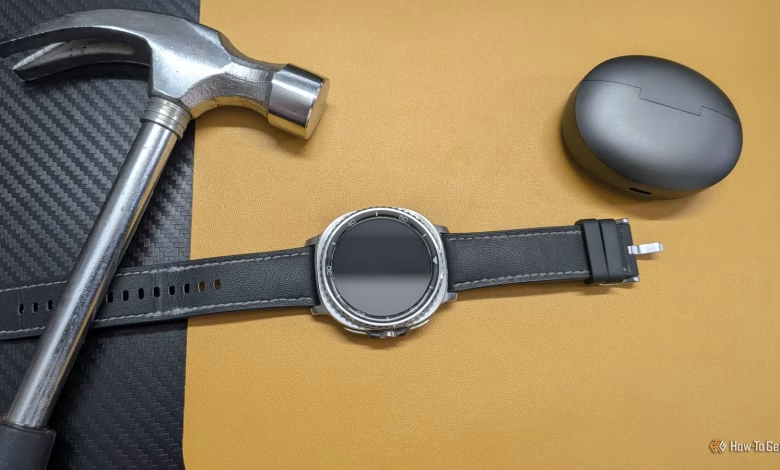
The Pixel Watch boasts a stylish design with its domed glass and sleek profile, giving it a modern appeal. However, I need a practical device that will withstand daily wear, and the Pixel Watch 3 simply didn’t meet that requirement. The aluminum finish scratched and scuffed easily, prompting me to purchase a case and screen protector just to maintain its appearance, which felt counterproductive.
In contrast, the Galaxy Watch 8 Classic features a robust stainless steel casing paired with sapphire glass that resists scratches exceptionally well. In my daily routine, I have no concerns about damaging it, while the premium feel enhances comfort on my wrist. I haven’t found the need to add a case or protector, allowing me to enjoy the watch as intended.
Although the Galaxy Watch 8 Classic weighs approximately 60 grams, I initially worried that it would be too heavy compared to the Pixel Watch. However, after wearing it, the increased weight hasn’t been bothersome at all.
The Rotating Bezel: A Superior Navigation Tool
The “Classic” Experience
While reading about a rotating bezel might not convey its impact, experiencing it firsthand significantly enhances smartwatch navigation. The Pixel Watch requires swiping to traverse its interface, which I find less intuitive. The rotating crown is fine, but I often struggle with the delicate movements required to use it effectively.
Conversely, the Galaxy Watch 8 Classic’s rotating bezel feels much more natural and easier to use. It provides more tactile interaction, making it feel like a genuine control feature rather than an afterthought. Although this feature is limited to Classic models, other versions still allow users to navigate by circling a finger around the bezel, mimicking this functionality.
Another practical advantage of the bezel is reducing the need to touch the screen, which helps keep the display clean, especially when hands may be dirty or oily.
Outstanding Haptic Feedback
You Must Experience It to Appreciate the Difference
I am particularly drawn to excellent haptic feedback. Google Pixel smartphones are renowned for their haptics, providing a premium tactile experience. Strangely, I didn’t find the same quality in the Pixel Watch, even though it’s produced by Google. The Galaxy Watch, however, delivers a much crisper tactile response, especially noticeable with the rotating bezel, where each movement is accompanied by a satisfying click throughout the rest of the interface.
It’s worth noting that refined haptic feedback doesn’t equate to strong vibrations. If you rely on your watch for alerts in noisy environments or as a morning alarm, the vibration might not be robust enough. This was also an issue with the Pixel Watch 3, although subsequent versions like the Pixel Watch 4 and 5 promise stronger motors. However, reviews suggest that the upgrades may not offer a noticeable improvement.
Galaxy Exclusive Features and Compatibility
Currently, I’m using my Galaxy Watch 8 Classic alongside a Google Pixel 10. While this setup means giving up some features exclusive to Galaxy smartphone users, I don’t mind as the hardware quality is my priority. This situation highlights a larger concern about ecosystems; ideally, users should be able to mix and match devices without losing significant functionality. Unfortunately, to fully leverage the potential of a smartwatch, users often end up bound to the same brand for both phone and accessories.