Summary:
- The head of Android indicates that the increasing popularity of foldable devices could motivate developers to enhance their apps for larger screens.
- Many Android applications have yet to fully adapt to foldable formats, but Google confirms that developers are either improving their apps or discussing options with the company.
- Apple’s iPhone Duo might broaden the market for foldable devices, potentially encouraging better app experiences for both iOS and Android users.
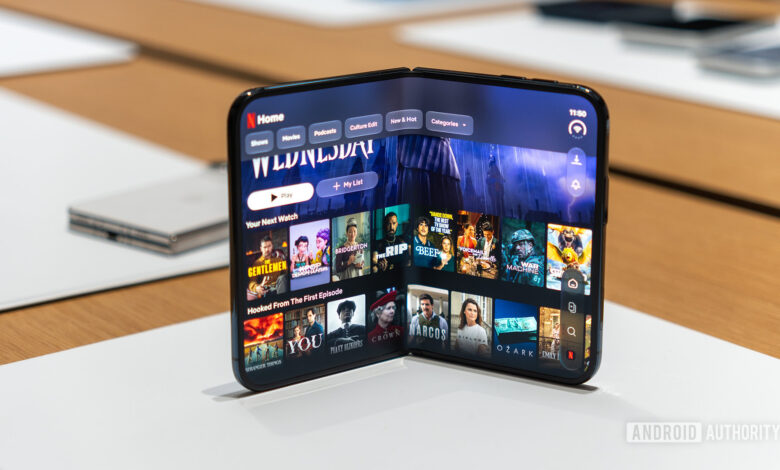
For years, Android foldables have focused on perfecting their hardware, but addressing app compatibility remains a significant challenge. With Apple’s introduction of the iPhone Duo, there may now be an added incentive for developers to genuinely consider foldable design, which could ultimately benefit Android users.
In a recent interview, Sameer Samat, President of the Android Ecosystem, remarked that as foldables gain traction, developers are recognizing the potential value in optimizing for this format. He also acknowledged that while not all applications have made the shift, many developers are either in the process of adapting or are engaged in discussions with Google. He stated:
“As this format continues to grow in popularity, developers realize the increasing importance of investing in it. We have worked to simplify the tools available to facilitate this investment. It is true that some applications have yet to transition, but either they are actively working on it or we are in ongoing conversations with them.”
One of the significant challenges for Android foldables remains app optimization. In initial hands-on experiences with the iPhone Duo, it was evident that Apple currently limits multitasking to two applications when the device is in landscape mode. A pressing question arises: how will third-party applications adjust to this novel screen format, and might they outperform their Android equivalents?
Android has been making strides to improve its situation. Past issues with app support led to the decline of many large-scale Android foldables, with numerous applications still displaying incorrectly instead of utilizing the screen space efficiently. However, the introduction of Android 16 began to eliminate certain orientation and resizing limitations on larger displays. The upcoming Android 17 version is taking this further, making it mandatory for apps to demonstrate adaptive behaviors for those targeting the new release. Moreover, Google Play is starting to spotlight apps designed with larger screens in mind.
The arrival of Apple’s iPhone Duo could introduce a new factor that could drive developer motivation, providing a larger foldable audience and thereby creating greater incentive to build layouts that efficiently respond to varying screen sizes. Samat’s comments imply this shift could benefit Android as well.
In a playful remark, the Android chief emphasized that Android is typically “where you see the future first.” He also endorsed the Galaxy Z Fold 8, stating he relies on it for productivity before transferring tasks to his laptop.
Even though Apple may be entering the foldable arena later than others, its entry could assist Android in resolving a long-standing issue: persuading more developers to invest in creating foldable-specific app experiences.