New doesn’t always equal improvement.
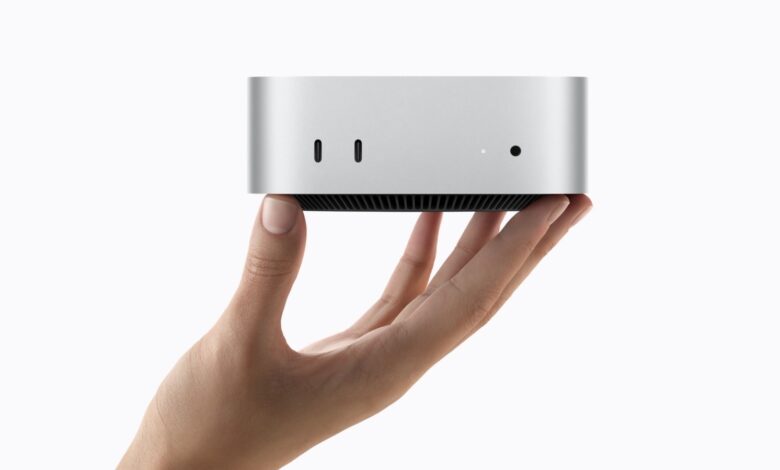
This week, Apple unveiled a noteworthy upgrade to the Mac mini lineup. This compact computer, which is sold without a keyboard or monitor, now features the new M6 chip. This chip is part of Apple’s Silicon family, promising enhanced speed and efficiency compared to its predecessor. However, Apple has also introduced another Mac mini model equipped with the M5 Pro chip, which is priced higher at $1,699, compared to $899 for the M6. This raises the question: Why would someone choose the more expensive M5 chip?
New doesn’t always equal improvement
It’s common to think that “new” equates to “better,” particularly when looking at chips within the same series. However, the M5 Pro belongs to a distinct performance category compared to the M6. Although the M5 Pro has been available since March, it offers a higher performance tier. Apple’s “Pro” chips are designed for demanding applications.
The M6 features a maximum of a 12-core CPU, whereas the M5 Pro allows for either 15 or 18 cores. While the M6 is optimized for power efficiency with its new 2-nanometer technology, the M5 Pro emphasizes performance, boasting five super cores and ten performance cores in its base version, scaling to six super cores and ten performance cores with the 18-core configuration. With more CPU cores, multitasking capabilities improve significantly—a crucial aspect that shouldn’t be overlooked when evaluating chip performance.
Differences in graphics processing units (GPUs) also play a critical role. The M6 Mac mini is limited to a 12-core GPU, while the M5 Pro offers options for 16 or 20-core GPUs. A more robust GPU is essential for handling intensive graphics tasks such as 3D rendering, gaming, or machine learning applications.
Storage and RAM options further justify the M5 Pro’s higher price point. The basic M6 model comes with a 256GB SSD, with upgrade options available. In contrast, the M5 Pro starts at 512GB and can go up to 8TB. Allocating sufficient storage is important to avoid managing constant file deletions later. Regarding RAM, the M6 offers 16GB, 24GB, or 32GB, while the M5 Pro begins at 24GB and can reach up to 64GB. With rising RAM prices, this discrepancy in capabilities contributes significantly to the M5 Pro’s cost.
Should you opt for the M6 or the M5 Pro?

Both chipsets are proficient, but the M5 Pro outshines in several aspects. However, it may not be necessary for every user. When making your choice, consider your usage type. If your needs are basic—web browsing, document editing, or occasional light video work—the M6 is more than sufficient.
On the other hand, if you are engaged in technical tasks that demand higher specifications, the M5 Pro could serve you better. While it may not be the most new chip, it offers superior performance without the much higher cost associated with newer models. For tasks like running AI algorithms or engineering applications, the M5 Pro would be ideal. Both chips have their strengths; the M6 shouldn’t be underestimated just because it’s more economical, and the M5 Pro shouldn’t be dismissed for being older. They cater to different user needs.