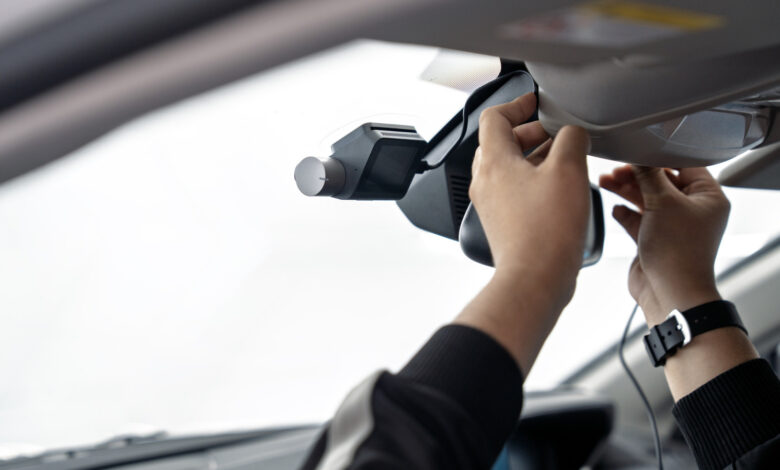
Although aftermarket backup cameras may not match the performance of factory-installed options, they provide a valuable enhancement for older vehicles.
In today’s automotive landscape, many vehicles come equipped with backup cameras, simplifying tasks such as parallel parking and enhancing safety in busy areas. However, if you’re driving an older model and desire improved visibility when reversing, there are options available.
One way to install a backup camera in an older vehicle involves a complex wiring setup, which can be labor-intensive, taking several hours and potentially costing over $600. For a more straightforward and less invasive solution, consider opting for a wireless, vehicle-mounted camera system. These cameras can often be self-installed and, like their wired counterparts, provide real-time video feeds from the back of your vehicle to a monitor inside. But what’s the technology behind these add-on systems? Here’s a breakdown of their functionality, quirks, and installation tips.
Understanding Wireless Backup Cameras
Wireless backup cameras are available for purchase online, with prices ranging from $40 to over $400, and they are designed for easy installation without professional help. Most systems activate automatically when the vehicle is put into reverse, while some models, which focus more on accident prevention, will record video when motion is detected behind the car. The technology used to transmit this video can vary based on the camera’s model and age, utilizing methods such as Wi-Fi or digital radio frequencies, while some older systems may use Bluetooth. Generally, these cameras operate independently, meaning no mobile data is required.
The monitor for these systems usually draws power from a USB port or a cigarette lighter socket, depending on your vehicle’s age. The rear-mounted camera can receive power either by connecting to a light circuit in the car or via a built-in solar battery. If connected to the car’s wiring, the camera activates automatically when the vehicle is reversed. Conversely, battery-operated or solar-powered cameras typically require you to open an app on your smartphone to activate them.
These systems often flip the video feed horizontally, ensuring the image corresponds with what drivers would see through a rearview mirror. Additionally, many feature wide-angle or fish-eye lenses for the best possible viewing experience while backing up.
Challenges with Wireless Backup Cameras
Aftermarket wireless cameras often lack the comprehensive features found in factory-installed systems. Unlike new models that come with an array of backup tools—including visual feeds and parking sensors—aftermarket cameras may not offer similar functionalities. Some models may provide supplementary sensors or advanced features, but you shouldn’t expect them to measure distances or detect obstacles unless explicitly stated. Thus, drivers will rely on visual cues without auditory signals to alert them of nearby obstacles.
Additionally, wireless cameras may experience a minor delay compared to wired systems; however, this is generally unnoticeable for most users. Connecting to an app for viewing backup footage from a battery-operated device can also be less convenient than an automatic setup. Signal stability might be jeopardized by external interference since these systems depend on wireless connectivity. Furthermore, footage transmitted via Wi-Fi may be more compressed, resulting in lower video quality compared to a direct connection.