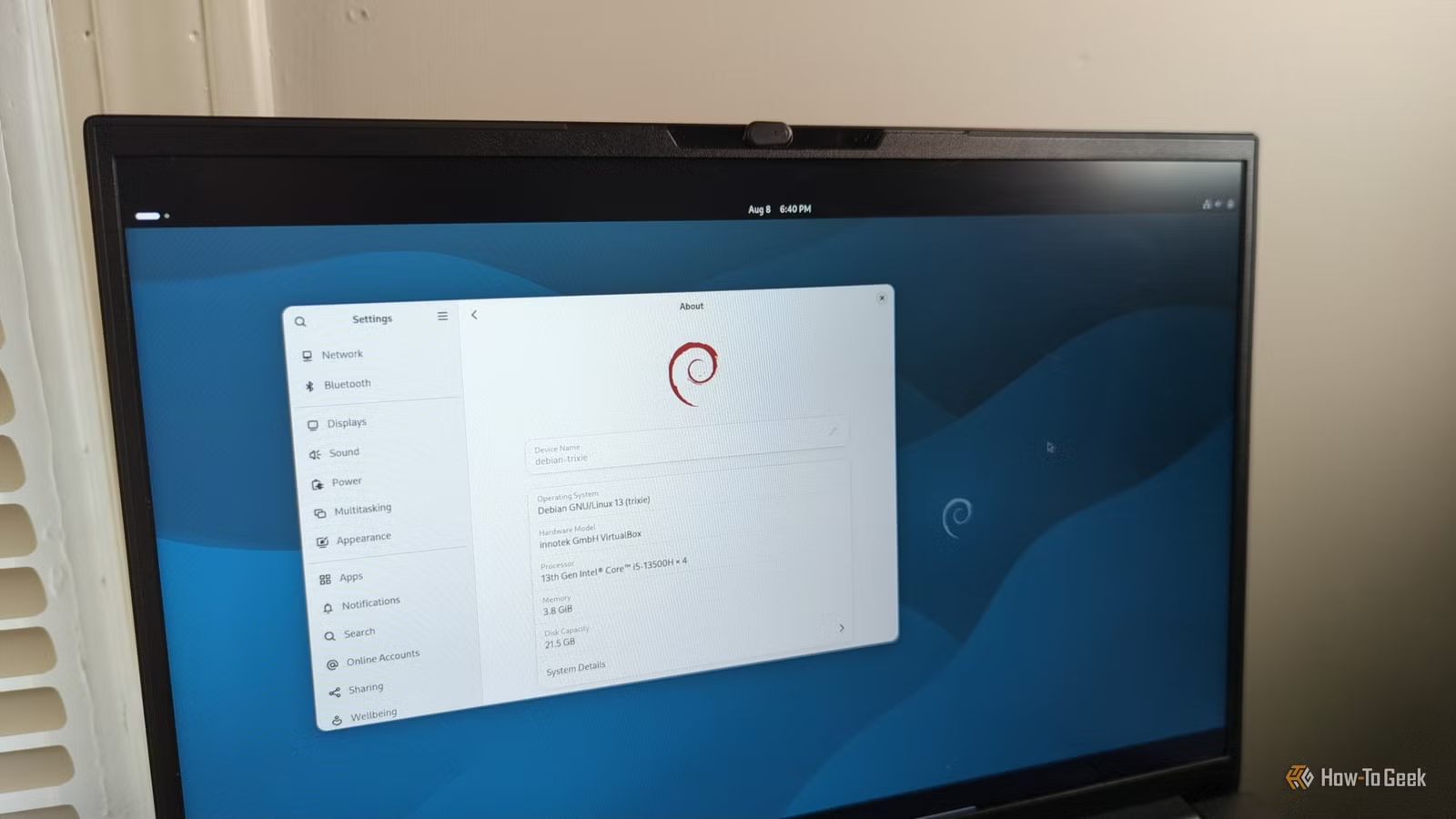
Ubuntu has traditionally been the go-to choice for newcomers to the Linux scene. However, recent discussions have prompted a reevaluation of that stance. While many are now celebrating Fedora as a versatile option, I believe the true all-encompassing distribution should be Debian, aptly dubbed “the universal operating system.”
Installation Made Simpler with Debian
Graphical Installer Enhancements
In the past, Debian gained a reputation for being challenging to install. I recall my own initial experience with installing it on my machine. Although I managed with the text-based installer, many users coming from a Windows background could find it daunting.
Fortunately, Debian now features an optional graphical installer that makes the installation process more user-friendly. While some technical knowledge is still beneficial, particularly regarding disk layout, this enhancement significantly eases the transition for first-time users.
While previously committed to free software only, Debian now accommodates proprietary Wi-Fi drivers during installation, easing setup on laptops and enabling the use of smaller installation images.
Variety of Desktop Environments
Pick Your Favorite Desktop
Unlike other Linux distributions that are closely tied to specific desktop environments, Debian provides a broader selection. During installation, users can opt for GNOME, KDE Plasma, Cinnamon, MATE, and Xfce, with GNOME as the default. Personally, I favor Xfce for its efficiency on older hardware.
Moreover, it’s entirely possible to install Debian without any graphical interface, making it a top choice for server setups. While any desktop can be installed on other distributions, Debian’s flexibility in this regard is why it’s favored by numerous Linux enthusiasts.
Multiple Version Options
Fast or Slow – Your Choice
Debian’s appeal extends beyond merely the “stable” version. While this version is incredibly reliable and compatible with a vast array of hardware, users can also choose from “testing” and “unstable” versions for access to the latest software.
This flexibility attracts both developers requiring up-to-date software for their projects and average users looking for the newest features. Importantly, you won’t need to switch to a different distro to get all this; adjustments in configuration files and package updates will suffice.
With its ability to adapt, Debian stands as a rival not just to Ubuntu but also to Arch Linux, offering many of the same perks while managing behind-the-scenes tasks and simplifying the installation process.
Modern Package Management
Beyond Just APT
Debian pioneered the package management system in the Linux world via APT, streamlining installation processes by automatically handling dependency issues. Although APT remains effective, new alternatives like Flatpak and Snap have emerged, offering more packaged dependencies and appealing to desktop users seeking the latest program versions.
For developers, tools like Anaconda and Pixi facilitate the rapid updating of programming environments. Personally, I prefer Pixi for managing my Python data science setup, making Debian a competitive option against distros like Fedora that prioritize faster updates.
Foundation for Other Distributions
Debian’s Versatile Nature
Ubuntu is perhaps the most recognized distribution derived from Debian, but it is far from the only one. Variants like MX Linux, Linux Mint Debian Edition, and Raspbian also flourish based on Debian. This diverse ecosystem not only showcases Debian’s adaptability but also reflects a continuing legacy as more users customize and share their unique configurations.
Debian retains its reputation as a “hardcore” distro, though installations have become simpler over time. This customizability invites numerous distributions to flourish, offering convenience for those who may not be prepared for a full Debian installation process.
The Reliable, All-Purpose Distribution
Despite its legacy as the go-to choice for hardcore Linux fans and free software advocates, Debian’s versatility allows it to function effectively in various roles, from operating on Raspberry Pi devices to powering robust server infrastructures. As a community-driven project, Debian is poised for longevity in the Linux landscape.