Linux has faced challenges in attracting desktop users, often due to the belief that its interface lacks coherence. Many applications appear visually dissimilar, and some users feel overwhelmed by a command-line culture. The current state of Linux desktop design is deeply rooted in its predecessor, Unix, and certain design principles established during the 1960s, 70s, and 80s.
Unix: Designed for Programmers by Programmers
The DIY Ethos in Computing
Unix originated from a passionate initiative by developers Ken Thompson and Dennis Ritchie at Bell Labs in the late 1960s. These pioneers had previously participated in the ambitious Multics project, a collaborative venture between MIT, Bell Labs, and General Electric aimed at creating a “computing utility” analogous to modern cloud services. Multics distinguished itself through a focus on interactive computing, contrasting with predominant batch modes that relied on punched cards. The ambition was to create a dependable computational resource akin to fundamental utilities like water and electricity.
While some elements of Unix evolved from features in Multics, like interchangeable shells and hierarchical file systems, the project eventually faltered. Bell Labs withdrew support, though Honeywell would later commercialize it. Nevertheless, Thompson and Ritchie still sought to utilize the innovative programming mechanisms from Multics. They leveraged a Digital PDP-7 to craft a new system called Unix.
This development not only cemented the usage of limited hardware but also reinforced the ethos of Unix-like systems being “designed by programmers for programmers.” Although contemporary Linux distributions attempt to incorporate user-friendly graphical interfaces, they excel in technical domains such as programming, engineering, and data analysis.
The Predominance of Text in Unix
Text-Based Solutions in a Pre-GUI Era
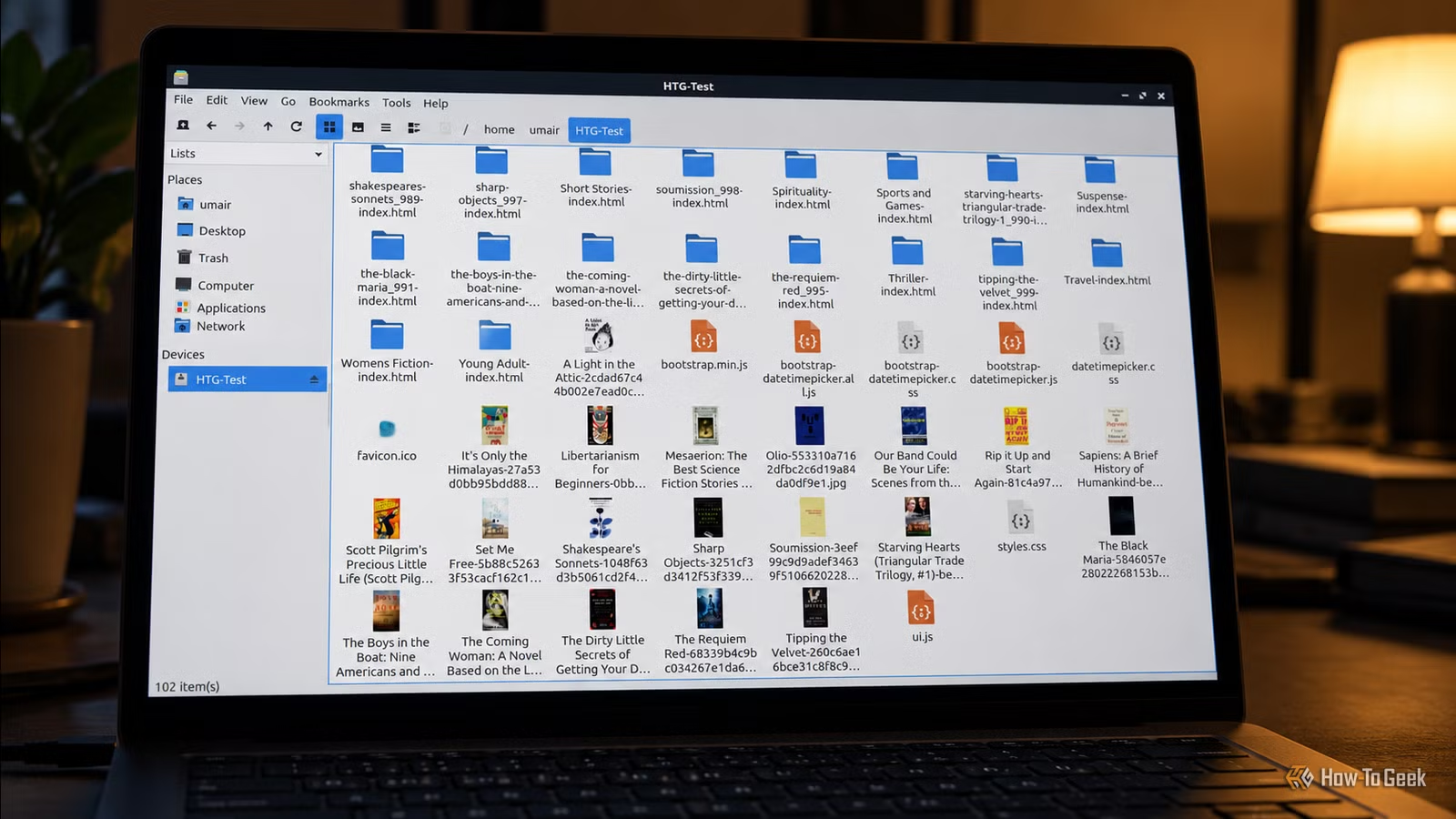
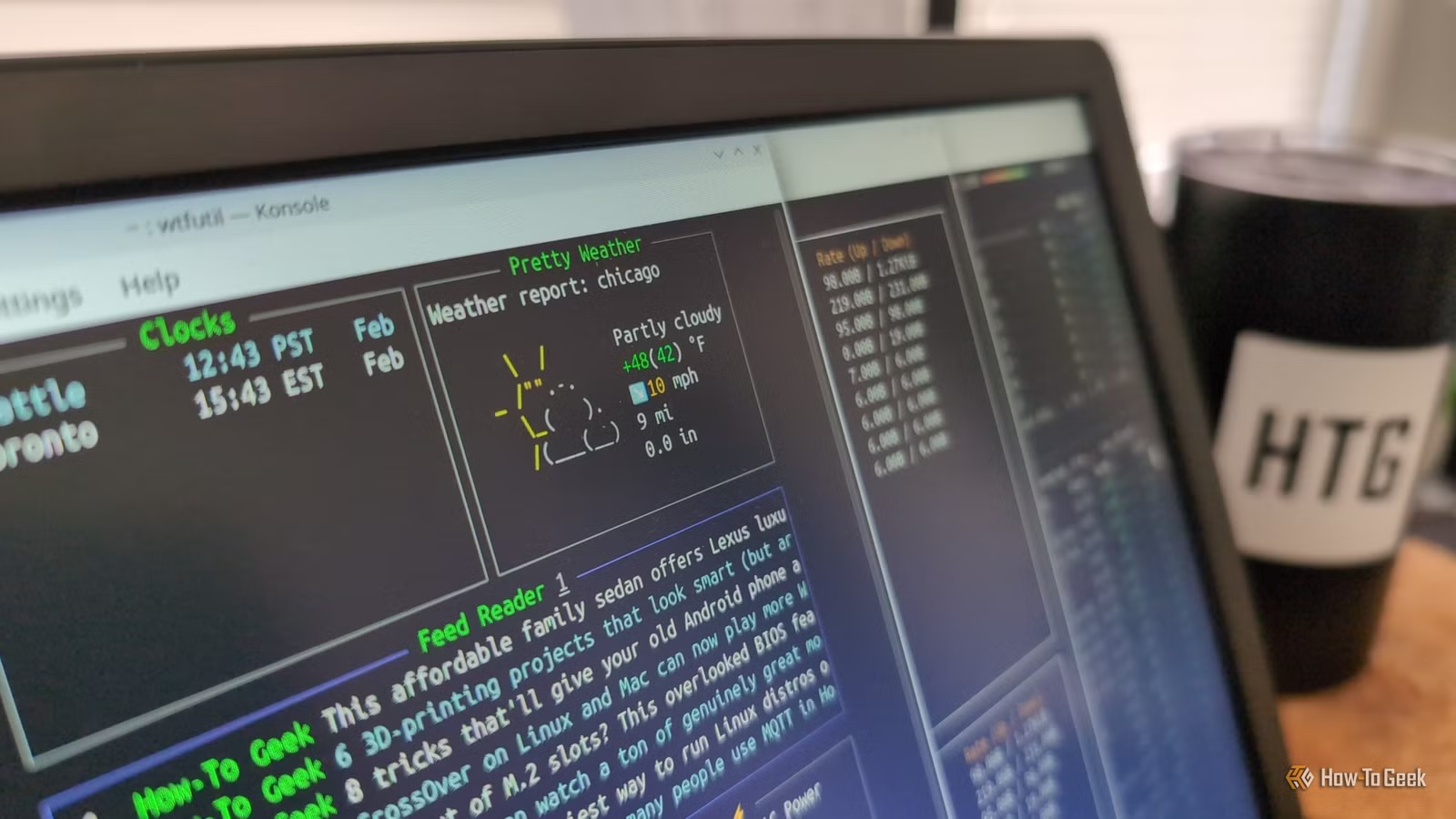
One notable characteristic that can deter potential users from Linux is its strong focus on text. While various desktop systems come with graphical environments, the intricate tasks often require interaction through the command line, a legacy from earlier computing traditions.
This text-centric approach originates from a time when graphical user interfaces were nonexistent during the late 60s and early 70s. Early computing predominantly involved mainframe punch cards, while minicomputers facilitated interactive tasks through teletypes—essentially typewriter machines capable of remote operation. These teletypes were slow, loud, and paper-dependent, until video terminals emerged in the 1970s, providing a screen and keyboard but still maintaining a remote connection to the actual computing unit. Even then, text remained the primary mode of interaction due to terminal limitations.
X Window System: Mechanism Over Policy
Managing Displays Without a Defined UI
In the early 1980s at MIT, Project Athena developers required a system to handle graphics across various workstations. The X Window System arose from this initiative to standardize window management across diverse hardware. Given the variances among machines, X was designed to manage screen output and input devices without imposing specific interface standards.
Jim Gettys, a key contributor, termed this principle “mechanism, not policy.” Eric S. Raymond, in his book about Unix programming, argues that this philosophy is emblematic of Unix-like systems in general, marking a divergence in how user interfaces are developed across different platforms.
Diverse User Interfaces
The Challenge of Flexible UI Designs
As a result of separating system mechanics from interface policies, Linux developers often hold varying views on user experience design. For example, in many systems, clicking a window can activate it, but Linux allows for window focus to shift with the mouse pointer instead. Each desktop environment and window manager emphasizes individual aesthetics, and applications typically utilize toolkits to create their visual identity. Users may notice stark differences when switching between applications created with different toolkits.
The Impact on Modern Linux
The lingering effects of outdated design limitations, such as text interfaces, continue to shape Linux’s architecture. Although graphical desktops are widely available, the persistent emphasis on command-line interaction can deter nontechnical users. However, this fragmented design appeals to more technically inclined users who appreciate the flexibility it offers.