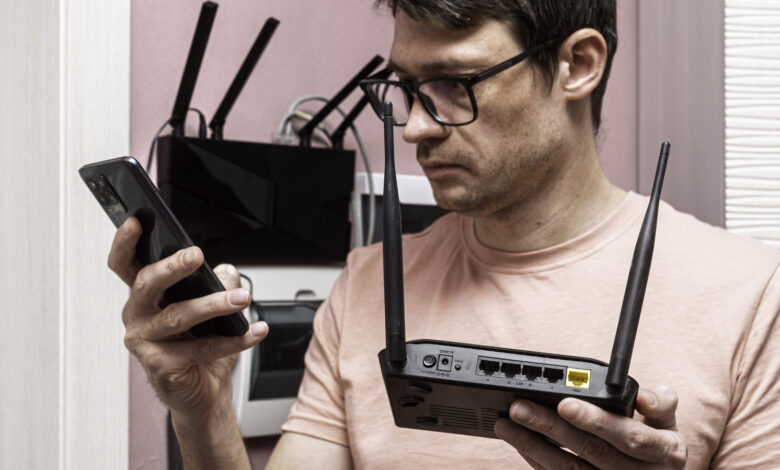
Transform your old router into a valuable asset for your network.
While you might regularly upgrade other electronics in your home, the router often gets neglected. Many routers have a long lifespan, and it’s easy to forget about them when they stop receiving firmware updates or lack support for newer Wi-Fi protocols. This can lead to the dilemma of discarding an otherwise functional device, which feels wasteful.
Lucky for you, your old router has several potential uses even as a secondary device. Although newer models provide enhanced security and better performance, many core networking principles have remained unchanged for years. Here are multiple ways to repurpose an old router instead of tossing it in the trash.
Use Your Old Router as a Wi-Fi Repeater or Mesh Node
If your new Wi-Fi router isn’t reaching certain areas of your home, repurposing your old router as an access point can save you from purchasing a separate wireless extender.
You can connect the two routers either via a wired or wireless approach. A wired connection generally provides more reliable speeds, though setting up Ethernet lines may be impractical for locations far from your main router.
Avoid broadcasting two similar Wi-Fi signals, as this can cause interference and diminish performance. A simple fix is to configure the older router to use the 2.4GHz band while disabling that frequency on the new router, as the 2.4GHz band is better at penetrating walls.
Many routers have built-in features for wireless repeating or bridging, so check your router’s administrator panel for these options. However, note that this method may reduce actual speeds because the secondary router has to share its wireless bandwidth.
Some older routers can also function as a mesh Wi-Fi node, allowing different models to work together within a unified network. If your old router supports this feature, consider pairing it with a new router from the same brand.
Transform It into a Network Switch Using LAN Ports

If your primary router lacks enough Ethernet ports for all your devices—like smart TVs or gaming consoles—consider turning your old router into a network switch. Buying a dedicated switch costs $10-$20, but using an old router can save you money.
To set up a switch, connect an Ethernet cable from your new router to one of the LAN ports on your old router, then link your devices to the remaining LAN ports. Just make sure not to connect anything to the WAN port on the old router.
Many models allow switching modes in their settings, which you can configure via the administrator panel. If your router doesn’t list these options, you may need to manually disable DHCP, firewall, and NAT settings.
For optimal performance regarding wired connections, consider disabling the wireless feature entirely on the old router.
Establish Wireless File and Print Servers

Many routers come equipped with USB ports that are often overlooked. These ports can connect storage devices or printers, enabling you to print from any device connected to the same network wirelessly. This is particularly useful for older printers lacking Wi-Fi capability.
Connecting a hard drive or USB stick transforms your router into a basic storage server, allowing network access to files. This offers a budget-friendly alternative to dedicated network-attached storage (NAS) devices. However, bear in mind that routers may lack the backup or reliability features that specialized NAS solutions provide, and performance can be slower due to router USB ports not being particularly fast.
Once connected, check the USB sharing settings in your router’s admin panel to optimize your experience.
Configure a Dedicated VPN Router
While many routers support VPN features, using them can often route all your traffic through the VPN tunnel. You could install a VPN on individual devices, but that could lead to increased battery drain over time. An effective solution is to repurpose an old router as a dedicated VPN client, keeping it separate from your primary network. This way, you can connect to it whenever needed without impacting the performance of your other devices.
General instructions vary by router and VPN service, but the first step involves connecting your old router to the new one and enabling access point mode. Next, navigate to the VPN settings in the router’s administrative panel, activate the feature, and enter your VPN details.
Install Custom Firmware for Enhanced Functionality

Routers are essentially low-power computers with efficient processors and minimal RAM. They’re designed for specific tasks like routing traffic, but when manufacturers stop supporting them, they can feel restrictive.
Open-source communities have developed custom firmware for routers, allowing for greater flexibility. Projects like OpenWRT enable users to replace factory-installed software, offering more control and the ability to install third-party applications.
This is an excellent solution for maximizing the lifespan of your old router. Many features mentioned earlier can also be set up more straightforwardly using firmware such as DD-WRT or FreshTomato. I personally prefer OpenWRT due to its extensive customization options.
However, not all routers are compatible with custom firmware, so it’s essential to consult the documentation for each project to ensure compatibility with your specific model.