As a regular contact lens wearer who typically resorts to prescription glasses, I’ve often found the Ray-Ban Meta glasses with transparent lenses—non-prescription—less appealing. While I understand that transitional lenses can enhance the functionality of a high-end pair of glasses, I’ve usually favored sunglasses for occasions when smart glasses would be most beneficial.
However, I began to reconsider their value after using the Ray-Ban Meta Optics as my main eyewear for two weeks. These glasses are reminiscent of the second-generation designs but offer several enhancements for improved comfort and ease of use throughout the day.
One recurring issue I’ve encountered with Ray-Ban Meta glasses is the tendency of the oversized frames to slide down my nose. The Optics series addresses this by featuring interchangeable inner nosepads, allowing for a more secure fit. After swapping the standard “universal fit” pads for the “high bridge” variant, I immediately experienced significantly less slippage. Additionally, there’s a low bridge option available if needed.
The “Scriber” style frames I reviewed remained oversized, but they fit my face much better compared to the Gen 2 Wayfarers I tried previously. Additionally, the tips of the glasses can be molded for an even more tailored fit at a Meta store or optician—though I opted not to have this adjustment made. The flexible hinges contributed to overall comfort, preventing any discomfort around my ears, a common problem with other frames.
I also appreciated that the frame designs appeared more understated than earlier models. Although the “Scriber” frames were still larger than what I typically select, the color scheme felt more natural compared to the flashy or overly dark options seen in other Meta collections. Many people commented that they didn’t even realize I was wearing smart glasses instead of traditional Ray-Bans.
In terms of battery performance, Meta has made slight improvements compared to the earlier Gen 2 models. While the previous iteration boasted “up to 8 hours” of battery life, the Blayzer and Scriber frames are now rated for “over 8 hours.” Actual battery performance can vary based on usage, especially when utilizing features that drain power faster. However, I found that I could comfortably wear my Scriber frames for well beyond eight hours without needing a charge, even with intermittent audio streaming and casual use of Meta AI.
 Karissa Bell for Engadget
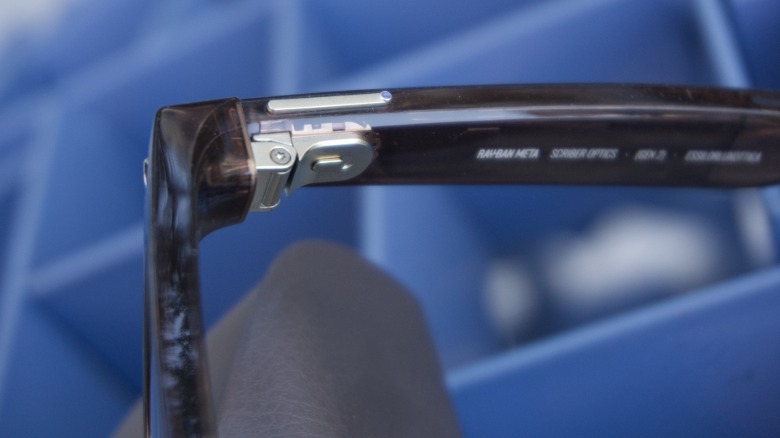
Another significant feature of the optics line is the introduction of an action button, which serves as a customizable shortcut for frequently-used functions. This feature was first seen in the Oakley Meta Vanguard sunglasses, where the button was located on the underside of the frames. On the Optics glasses, it is now a discreet additional button adjacent to the main capture control.
During my time with the Vanguard shades, I struggled to pinpoint a single best use for the button. Yet, after spending more time with the latest frames, I’ve optimized its function. I set the button to “read my latest text message” via the Meta AI app.
This configuration proves useful because, while I value that my glasses can announce incoming texts—similar to how Siri works with AirPods—I don’t always want Meta AI to automatically read them aloud, especially in the middle of a conversation or focused task. The action button allows me to discreetly access my messages with one simple press, eliminating the need to verbalize “Hey Meta.” This approach is even subtler than briefly looking at my phone.