Introducing the Mazda Hybrid: Powered by RAV4 Technology, Minus the Premium Price Tag

The upcoming 2026 Toyota RAV4 is proving to be a top-selling SUV, leading to increased dealer markups. This trend has become commonplace in the hybrid market, especially for highly sought-after models where supply is insufficient to meet demand.
This kind of pricing is not new, but it has intensified in recent years. While Tesla’s direct-to-consumer sales model has changed the game somewhat, many buyers remain at the mercy of traditional dealer pricing practices whenever demand surges.
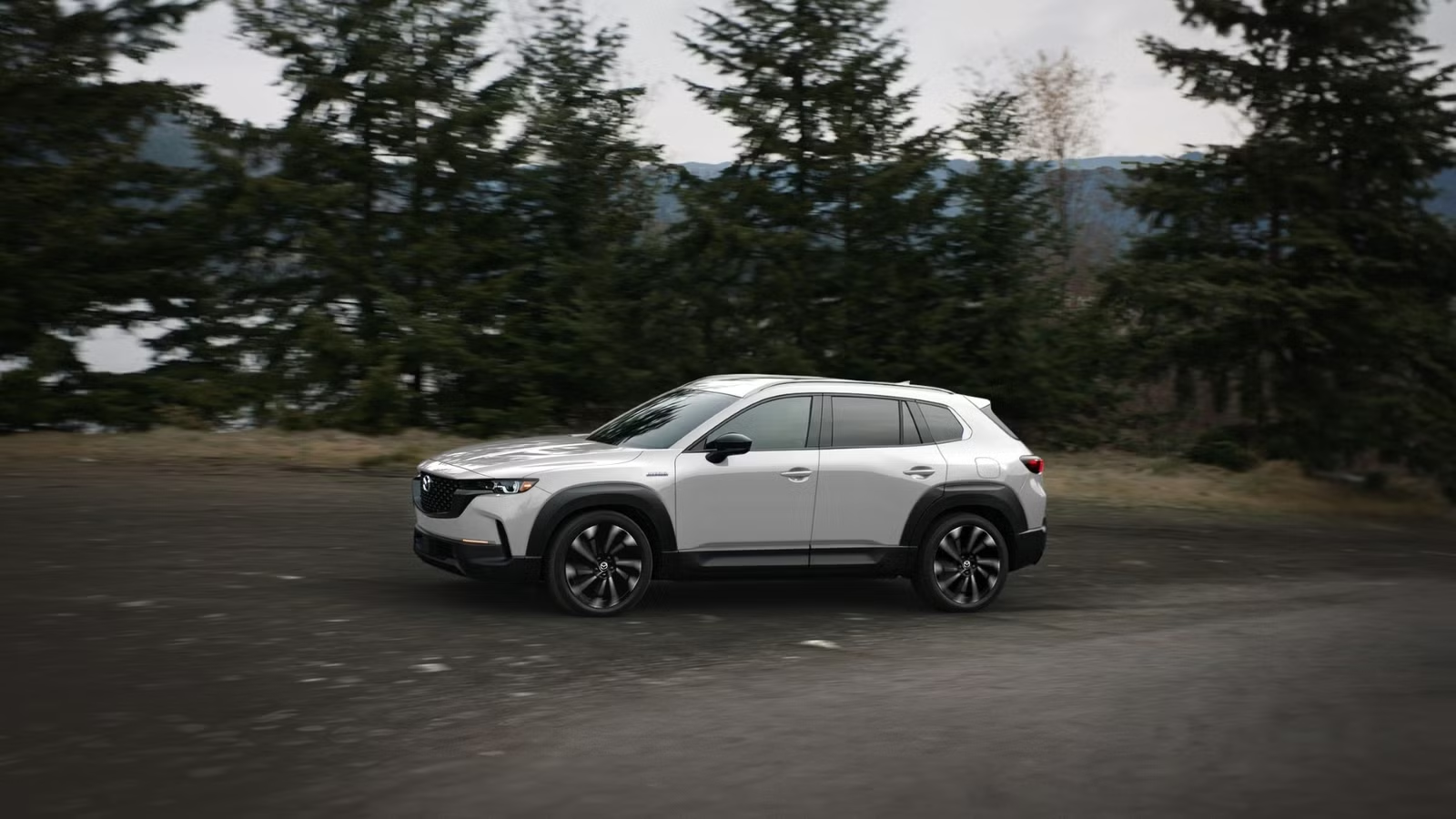
If you’re interested in Toyota’s hybrid technology but want to avoid the usual pricing issues, Mazda may have a solution. The CX-50 Hybrid shares a similar hybrid foundation but offers a more straightforward buying experience. This raises an important question: is it actually a better choice or just a more convenient option?
Mazda and Toyota: A Collaborative Partnership
How Toyota and Mazda Began Their Partnership
The collaboration between Mazda and Toyota is not new. It began in August 2017 when Toyota acquired a 5.1% stake in Mazda, which in turn purchased a small 0.25% stake in Toyota. Since then, both brands have worked together on various projects, resulting in models like the Mazda hybrid SUV.
Shared Technologies and Platforms
This alliance has led to some unique badge-engineering outcomes. For example, in North America, the Mazda 2 was marketed largely as the Toyota Yaris from 2015 to 2020. Conversely, in Europe, the Mazda 2 has effectively taken on the Yaris branding, especially in hybrid form, while conventional gas versions have been phased out to meet strict emissions regulations. This unusual collaboration highlights the two brands sharing both technologies and identities based on market demands.
The partnership has also included discussions around a potential joint sports car venture, although those claims should be taken cautiously, given the publication’s history of over-enthusiasm.
Production Collaboration in the U.S.
Beyond technology sharing, the two automakers have teamed up for vehicle production at Mazda Toyota Manufacturing USA (MTMUS), which was established in 2018 and began operations in 2021. This joint venture employs around 4,000 people and manufactures cars like the Toyota Corolla Cross and the Mazda CX-50. Interestingly, Mazda paint options can be found on some Toyota models and vice versa, showcasing the depth of their collaboration.
Understanding the CX-50 Hybrid
How the RAV4’s Hybrid System Powers the CX-50
The Mazda CX-50 Hybrid is a Mazda-designed SUV that utilizes Toyota’s hybrid technologies. However, it isn’t merely a less sophisticated version of Toyota’s offerings. The CX-50 Hybrid maintains its unique character, enriching its competitive standing.
Mazda’s Character Meets Toyota’s Hybrid Engineering
Significantly, the CX-50 Hybrid features the earlier-generation THS IV hybrid system, which is prevalent in the previous RAV4 model. The CX-50’s hybrid system yields 219 horsepower, while the newer RAV4 pushes out 236 horsepower. While the CX-50 Hybrid may seem less powerful on paper, it excels in its driving dynamics, characteristic of Mazda’s tuning philosophy.
Value Proposition: Different Pricing Stories
On the surface, the CX-50 Hybrid starts at a higher price point of $34,750 compared to the RAV4’s $31,900. However, this comparison changes when you consider the features you get at the respective price ranges. The CX-50 begins at a mid-tier Preferred trim, which comes equipped with desirable amenities such as a panoramic sunroof and synthetic leather upholstery. Additionally, buyers won’t face the same dealer markup issues commonly associated with Toyota models. Mazda also offers incentives like a $2,500 cash rebate, making the overall cost more attractive.
Why the CX-50 Hybrid Still Holds Its Ground
Advantages Over Competitors
Despite being a slightly older model, the 2026 CX-50 Hybrid continues to excel against newer competitors like the RAV4. One of its standout features is a more premium interior feel, although it does offer less space in the rear seat. Overall, many users might appreciate its more upscale interior materials, which lend a boutique experience compared to the more functional vibe of the RAV4.
Distinctive Styling
Styling preferences vary, but the CX-50’s rugged yet refined design is appealing to many buyers. Developed with the North American market in mind, it features an adventurous aesthetic while reflecting Mazda’s clean Kodo design philosophy. The CX-50 presents softer curves, unlike the more aggressive lines found on rivals.
| Mazda CX-50 Hybrid | Toyota RAV4 | |
|---|---|---|
| Engine | 2.5-liter 4-cylinder hybrid | 2.5-liter 4-cylinder hybrid |
| Power | 219 hp | 226 hp (FWD), 236 hp (AWD) |
| Transmission | e-CVT | e-CVT |
| Drivetrain layout | AWD | FWD/AWD |
| Combined fuel economy | 38 mpg | 43 mpg (FWD), 41 mpg (AWD) |
| Total interior volume | 97.0 cubic feet | 98.9 cubic feet |
| Base MSRP | $34,750 | $31,900 |
In summary, the CX-50 Hybrid stands out with its unique charm and collaborative technology backing it, offering an appealing alternative in a highly competitive market.