On Monday, Meta’s Superintelligence Lab unveiled two advanced models named Muse Wonder and Muse Wonder Full, marking the company’s first venture into frontier modeling.
Unlike Muse Spark, which focused on a lightweight design for low latency, the new Wonder models boast increased capabilities, achieving higher benchmark results and excelling in complex tasks, such as coding.
Meta’s evaluations, detailed in the model documentation, indicate that both Wonder and Wonder Full perform comparably to benchmarks set by Fable 5.1 and GPT-6 Astra.
According to a blog post from Meta, “Together, they represent a significant progression on our scaling ladder and a major advancement toward personal superintelligence.”
The pricing reflects this advancement: accessed via the Meta Model API, Wonder carries a fee of $4 per million input tokens and $20 per million output tokens, aligning similarly with GPT-6 Sol or Opus 5.5.
It’s worth noting that Wonder Full will be exclusive to subscribers of Muse Code and will not be available through the API. Both models are also set to support the Muse agent.
In line with Meta’s goal of enhancing personal assistants capable of performing tasks over extended periods, the emphasis is on the models’ ability to retain and synthesize user-provided information, a feature known as “active memory.”
To boost recall capabilities, Meta referenced the MemoryBench benchmark, which evaluates continual learning and memory creation systems. Their testing shows that Muse Wonder outperforms Fable, Opus, and Astra on MemoryBench.
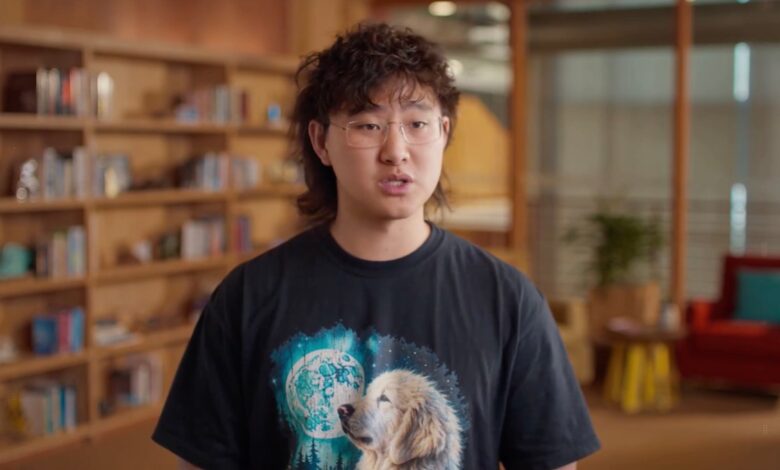
Kavya Kopparapu, a research scientist, emphasized in a launch video, “We invested substantial effort to ensure your model remembers what matters to you over days, weeks, months, and beyond.”
These models represent the first frontier releases since Scale AI founder Alexandr Wang redefined Meta’s AI initiatives in August of the previous year. Following this restructuring, Meta had launched the lighter Muse Spark model and Muse agent, but had not produced the cutting-edge models that entities like OpenAI and Anthropic have been recognized for.
According to Meta, the training for these models was conducted at the Prometheus data center located in central Ohio, which became operational earlier this year.