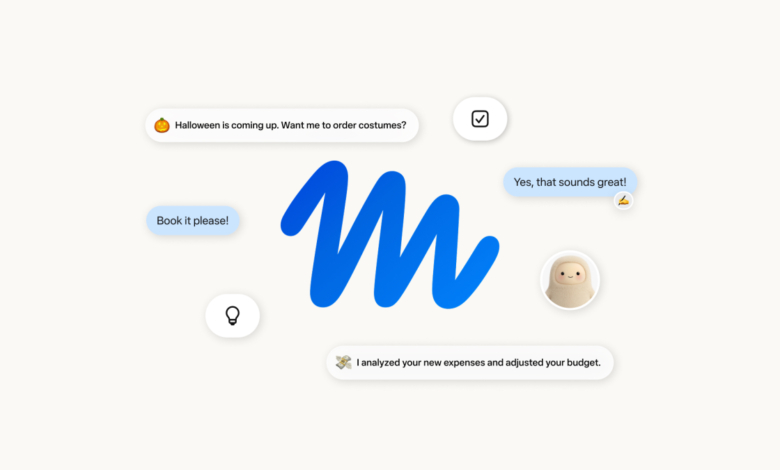
After settling a staggering $18 billion multistate lawsuit concerning consumer issues, Meta has unveiled an ambitious initiative focusing on consumer AI. The company introduced Muse, a new personal AI assistant designed to assist users in the U.S. with daily tasks and projects, emphasizing the need for greater trust than that typically required for social media platforms.
To engage with Muse, users must share more personal information with Meta than ever. The AI assistant connects with various apps and services that users routinely interact with, including email, calendars, payment systems, and utilities for health, fitness, smart home management, dining, shopping, music, and entertainment.
This introduction represents a significant shift beyond the era of AI chatbots like ChatGPT, focusing on an AI capable of actively performing tasks on behalf of the user.
Muse can handle activities such as composing emails, booking travel, reducing bills, filling out forms, planning events, converting recipe videos into shopping lists, sending invitations, and making purchases through Link by Stripe, which offers purchase protections to alleviate concerns about AI-managed transactions. Shopify’s Shop Pay and 1Password integration are expected soon as well.
Users can choose which applications and services to connect to Muse individually, ensuring clearer decision-making about their data sharing. Powered by Meta’s Muse Spark AI model, Muse comes equipped with connectors for multiple services, with aspirations to expand its offerings. If a service doesn’t have a public API, Muse can access it via a web browser.
Initially, Muse will be accessible online at muse.ai, through mobile applications for iOS and Android, and via WhatsApp chats, with plans to eventually integrate with Meta’s AI glasses. The service will be free to use, but subscription plans will be available as users require more extensive features, necessitating a payment card for initial access.
Two subscription tiers will launch: Power, priced at $20 monthly, and Maximum, for $100 monthly. Both options offer increased usage allowances, though most users are anticipated to remain on the free version. A usage meter will inform users of their remaining usage, and notifications will be sent when they approach their limit, along with options to subscribe.
In common with other AI assistants, Muse will continue to function after users leave the app, improving gradually by learning about their preferences through conversations.
The emergence of AI agents is becoming more prevalent, with various companies, large and small, looking to integrate these tools into consumers’ daily routines. Some are experimenting with AI-driven web browsers and others are integrating AI into widely-used messaging platforms like iMessage and WhatsApp.
Despite their potential benefits, these advanced agents present challenges for consumers regarding privacy. Many early adopters of the AI assistant Instinct were alarmed by the app’s requirement for a broad “perpetual and irrevocable” license to access and use personal data, even for AI model training purposes.
Meta asserts that Muse operates on a secure and dedicated virtual machine, Muse Secure VM, ensuring various protections regarding user data. The system is designed such that a separate Sentinel agent runs concurrently but remains isolated from Muse to enhance data security.
This structure means Muse won’t have access to users’ passwords or payment details, and Meta claims that it does not share users’ chats or data with its advertisement systems.
(Technical claims are elaborated further in a separate technical post released concurrently, requiring scrutiny from security analysts.)
Could Past Issues Affect Muse’s Acceptance?
Even with technical assurances, it is uncertain whether Meta can regain consumer trust for its agent’s success.
Meta has a history of inconsistent practices, such as a 2011 settlement with the FTC for allegedly misleading users about their privacy settings. In 2019, it faced a landmark $5 billion penalty from the FTC for multiple privacy breaches, with subsequent charges in 2023 for violating privacy agreements from that settlement.
Technically, Meta has encountered significant issues, including the discovery in 2019 that users’ passwords were stored in plaintext, raising security concerns. The Cambridge Analytica scandal, where Facebook data of millions was improperly harvested, has left a lasting impression on many.
Meta has been consistently called to congressional hearings regarding its measures to protect minors from harm. Amid legislative inaction, the company is now facing numerous lawsuits, similar to the $942 million settlement with New Mexico for child-related harms that just took place.
To address possible consumer anxieties, Meta elaborates on its security measures, providing detailed technical documentation. Additionally, Muse allows users to personalize their experience by choosing a name and avatar, adding a personal touch to their interactions with the AI.
Ultimately, only time will reveal whether this sense of connection and Muse’s functional capabilities can restore consumer trust in Meta.