HiddenLayer Secures $100M Amid Surge of Enterprise Demand for AI Security Solutions

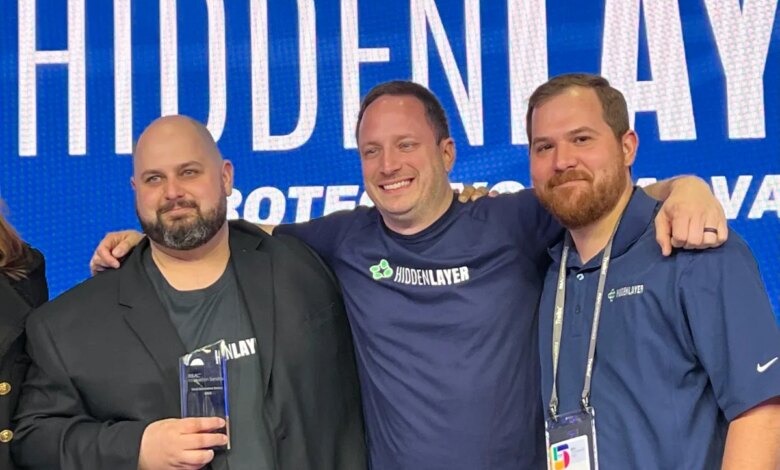
Three years after AI security firm HiddenLayer secured $50 million in its Series A funding round, there were uncertainties about the tangible threats in the AI landscape that warranted such protection. At that time, it was challenging to find substantial examples of large-scale AI attacks.
However, the situation has shifted dramatically. Security firms are now racing to develop solutions that not only oversee AI agents but also monitor the complementary tools and add-ons they utilize. Although incidents involving the exploitation of AI agents are not widespread, the potential for mistakes during production remains a serious concern. Consequently, the market for preventative tools has surged; Gartner predicts that companies will invest approximately $2.83 billion this year on AI security products, a substantial 83% increase from 2025, with an anticipated rise to nearly $4.78 billion next year.
HiddenLayer, which specializes in safeguarding AI models, agents, and workflows from adversarial threats and vulnerabilities, is benefiting from this trend. Co-founder and CEO Chris Sestito mentioned that the firm’s annual recurring revenue has increased more than tenfold within the last year. While he refrained from sharing specific figures, he noted that the revenue is now in the “tens of millions” of dollars, with over 90% of this growth coming from new clients acquired within the past year.
The primary sectors for HiddenLayer currently include financial services and major technology enterprises engaged in AI product development. The startup also holds contracts with the Department of Defense and various intelligence agencies. Notably, one of its clients is described as a “leading frontier model provider” with over “700 million weekly users,” hinting at major players like OpenAI or Anthropic.
To capitalize on this upward trend, HiddenLayer has successfully raised $100 million in a Series B funding round, led by Delta-v Capital and supported by Ten Eleven Ventures, Morgan Stanley, Microsoft’s M12, Booz Allen Hamilton, among others.
While the Austin-based startup continues to sell its core offerings from 2023, Sestito indicated that the most significant adjustment involved expanding its product range — including discovery, runtime protection, attack simulation, and supply chain security — to address challenges like prompt injection, agent manipulation, and misuse of tools.
“Inference remains constant, applicable to traditional machine learning models, Gen AI, and agent-driven workflows. While we haven’t had to pivot drastically, we needed to broaden our focus from traditional modeling to encompass Gen AI and agentic,” he explained.
Sestito emphasized that runtime security has become increasingly critical as AI applications proliferate in businesses, drawing parallels to traditional endpoint detection and response (EDR) solutions, specifically tailored for AI environments.
The startup’s newly developed products reflect this evolution, with Sestito identifying a new risk of exploitation within open-source models. “We scan around 50 different AI file frameworks to ensure that, particularly with open-source, open-weight models, the tool you’re using is genuinely what it claims to be. We examine models that might disguise themselves as something else — essentially hidden models within models,” he mentioned.
HiddenLayer intends to use the fresh $100 million funding to further these initiatives, with a concentrated effort on sales and distribution while also enhancing its engineering and research capabilities. Expansion into Europe and the EMEA region is also on the agenda.
Nevertheless, HiddenLayer might find itself seeking additional resources to thrive. Large cybersecurity firms such as Cisco, Palo Alto Networks, and Check Point often prefer acquisition over development for technologies like this. Meanwhile, startups like Noma and Zenity have raised over $100 million each to tackle similar or overlapping challenges in this field.
Sestito acknowledged that elements of the AI security solutions offered by his company might eventually be integrated into platforms created by enterprises like Microsoft, OpenAI, and AWS. However, he anticipates that AI infrastructure will evolve towards governance features focusing on discovery, identity, and policy controls, rather than the specific types of tools his company produces.
For now, Sestito asserts that HiddenLayer’s mission is to “grow alongside artificial intelligence,” eventually branching out into other areas of cybersecurity that increasingly rely on AI. This ambitious objective will require the startup to demonstrate its ability to transform its initial edge into a sustainable business model before the rest of the industry narrows the gap.