Exploring the Advantages and Disadvantages of eSIMs Compared to Traditional SIM Cards

While eSIM technology offers numerous benefits, it also presents certain challenges.
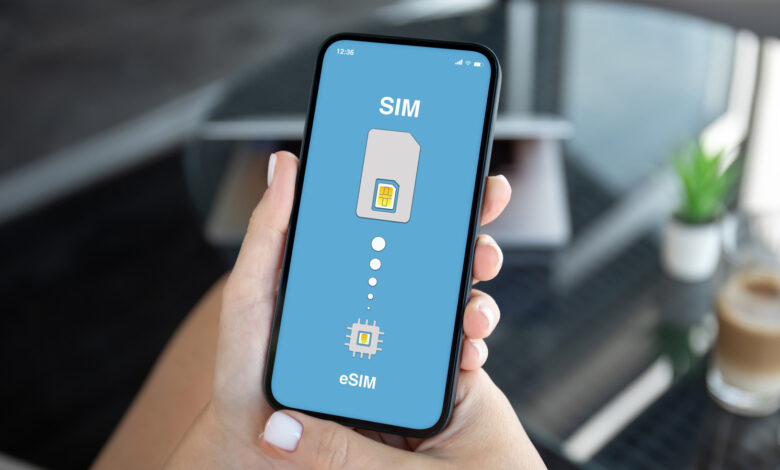
It’s important to note that there is no difference in quality when comparing eSIMs and traditional SIM cards. Both types serve the same purpose, which is to link you to a mobile network, and they offer identical reception and data speeds. The key distinction lies in activation and transferring services: a physical SIM can be removed and replaced, whereas an eSIM relies on onboard hardware and can be activated through a downloadable profile.
One of the main benefits of eSIM technology is its flexibility and ease of use. Unlike physical SIM cards, which require opening a tray or swapping cards when changing phones, eSIMs can be activated directly through an app, a QR code, or the phone’s settings. Moreover, compatible devices can store multiple profiles, allowing users to separate work and personal numbers without needing extra SIM cards.
For frequent travelers, another advantage is the ability to acquire a travel eSIM in advance, avoiding the hassle of finding a physical SIM retailer at your destination. Depending on the plan, this could help save money compared to international roaming charges from your home carrier. Additionally, you can keep the travel plan inactive until it’s needed, reducing the risk of misplacing a physical SIM. However, it’s worth mentioning that an eSIM doesn’t necessarily guarantee better deals, as some domestic plans already include international roaming, making a switch unnecessary.
Moreover, eSIMs provide smaller conveniences, like eliminating the wait for shipping a physical SIM card. Removing the SIM slot from devices also gives manufacturers more space for larger batteries or enhancements in other areas.
Are there any drawbacks to using eSIM?
Every technology has its downsides, and eSIMs are no exception. The most significant drawback is compatibility; both the device and the carrier must support eSIM technology, which may not be uniform across different models and regions. Furthermore, an eSIM cannot override a carrier lock, meaning that you typically need an unlocked phone to switch providers. Testing out Opera’s free eSIM on Android may be a good way to explore this before committing to a purchase.
It’s essential to verify compatibility before buying a travel plan or trying to transfer your number to a new device. Remember, a downloadable profile is only useful if both your device and service provider support its activation.
Some carriers complicate the process of transferring service between devices. While Apple’s eSIM Quick Transfer allows users to shift services without needing customer support, others might require you to use a specific app, obtain a replacement QR code, or contact customer service. Fortunately, the ability to transfer eSIMs between different platforms is improving, as some iPhones and Android devices can now do so seamlessly.
Lastly, users must exercise caution with their carriers while traveling internationally, making it crucial to read the fine print. For instance, you may use your regular phone number for incoming calls even while your travel plan is active, but hidden roaming fees might apply. Ensure your device is set to use the travel eSIM for data upon arrival, and you can deactivate your regular line if necessary. However, be aware that doing so will prevent any incoming calls or texts to that line.
What are the concerns surrounding eSIM adoption?
Many critics express concerns about losing the straightforwardness associated with physical SIM cards. While eSIM offers a solution for switching devices, physically moving a card from one phone to another is often simpler, especially for those who are less tech-savvy. The complications that can arise with app-based QR codes or transfers can detract from the convenience of using an eSIM.
Additionally, physical SIM cards retain greater compatibility with older and simpler phones, catering particularly to those who prefer traditional devices. Even as digital technology evolves, the physical aspect of SIM cards cannot be ignored, as they are not immune to issues like account fraud or SIM-swap scams.
Ultimately, the choice between eSIM and traditional SIM boils down to personal preference for convenience. If your device is compatible with both, you can choose either option. In fact, you can utilize both a physical SIM and an eSIM for different lines, combining the benefits of each technology.