In recent years, General Motors and Ford have significantly shifted their focus on electric vehicles (EVs), moving from major investments to a more subdued discussion with investors.
A recent analysis by TechCrunch, in collaboration with Hudson Labs, examined the earnings calls of GM and Ford over the past seven years, revealing a decline in conversation about EVs compared to pre-pandemic levels.
This trend comes as no surprise given the changes both companies have made in their EV strategies, including canceling or postponing plans for new models, resulting in layoffs and reorganized manufacturing. While both GM and Ford continue to produce and plan new electric models, their overall emphasis has noticeably shifted, as reflected in the findings.
Jim Cain, a representative for GM, emphasized that “quality counts more than quantity,” highlighting their consistent communication about the importance of EVs in their long-term strategy, along with their commitment to developing profitable technologies like lithium manganese-rich batteries.
He pointed out that time in earnings calls is now allocated to discuss various growth opportunities, such as software, services, and autonomous vehicles, alongside addressing complex issues relevant to investors, while still ensuring a substantial portion is reserved for Q&A sessions.
On the other hand, Ford’s spokesperson, David Tovar, mentioned the upcoming launch of their “Universal Electric Vehicle” platform, conveying optimism that the new midsize pickup truck will effectively cater to the EV market by balancing cost, price, and technology.
In this analysis, TechCrunch excluded Stellantis—the third major player in the Detroit auto industry—due to its slower progress in EV adoption and fewer annual earnings calls compared to GM and Ford.
Hudson Labs evaluated earnings call transcripts from 2019 using a specialized AI tool to identify topics and quantify their prevalence during discussions, producing insightful data visualizations.
General Motors
GM was an early adopter of mass-market EVs, unveiling the Bolt EV in January 2016 ahead of Tesla’s Model 3. The company’s discussions about EVs gained momentum in 2019 and 2020, with increasing references during earnings calls as they announced plans for new models and changes within Cadillac.
Despite a temporary decrease in early 2021 due to a semiconductor shortage, GM consistently dedicated about a quarter of its earnings calls to EVs in the following years, particularly during the Biden administration, which supported EV initiatives. However, there was a notable decline in discussions around EVs after President Trump’s return to office, with mentions dropping substantially.
While GM remains a leading EV seller in the U.S., the company has shifted its narrative, focusing more on operational alignment with regulatory changes rather than ambitious EV promises.
Ford
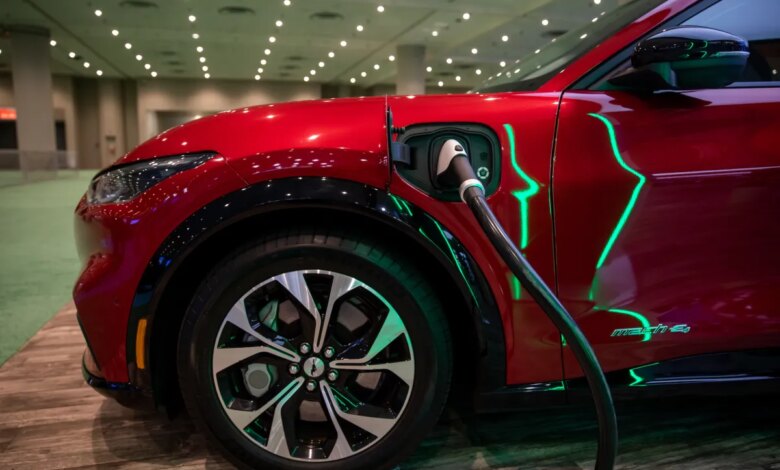
Ford entered the mass-market EV arena with the Mustang Mach-E in late 2019 and ramped up conversations about EVs as they approached its release. Following a similar trend as GM, Ford began to earmark about a third of its quarterly calls for EV discussions, especially with the launch of the F-150 Lightning in 2021.
However, starting before the 2024 election, Ford began to reduce its focus on EVs, realigning its priorities towards new EV development projects, further decreasing discussion around electric models after the shift in administration.
Despite laying out a vision for becoming a key player in affordable EVs, investors may need to remain patient for tangible outcomes, as Ford expects significant advancements to arrive only next year.