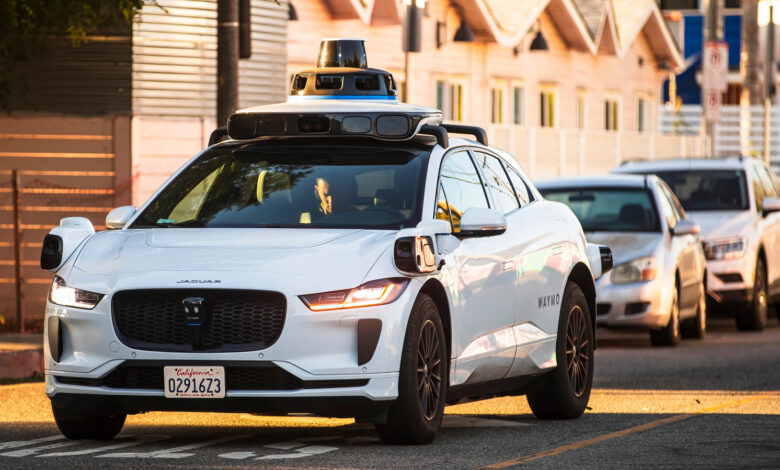
The focus isn’t solely on the technology of self-driving cars but on the environments in which they can safely operate.
Witnessing a car move seamlessly through city streets without a driver can give the impression that companies like Waymo have achieved the pinnacle of self-driving technology. For passengers, the experience appears effortless: no steering, no oversight, and no need for human intervention. The vehicle manages the entire journey independently.
However, according to the Society of Automotive Engineers (SAE), this capability qualifies as Level 4 automation, not the ultimate Level 5. The distinction lies not in the independence of the driving itself but in the specific conditions under which that independence is permitted. Level 4 vehicles can fully manage driving tasks without human input, but only within specified parameters. In contrast, Level 5 automation eliminates these restrictions entirely.
Understanding Why Waymo is Classified at Level 4

bluestork/Shutterstock
Specifically, it is Waymo’s automated driving system, known as the Waymo Driver, that is recognized as Level 4. Their safety research indicates that this classification explains why an unoccupied driver’s seat does not imply a transition to Level 5.
The SAE defines six levels of automation, ranging from Level 0, where human drivers control everything—even with some safety systems that may briefly intervene, to Level 5, where there is complete automation under all conditions. Level 1 permits continuous assistance with either steering or braking, while Level 2 can manage both simultaneously, although the driver remains responsible at all times.
Level 3 indicates that the car can handle driving tasks under certain conditions, but the driver must be prepared to take control when asked. Level 4 removes this requirement altogether, allowing the automated system to operate independently within its designated conditions, meaning passengers no longer need to be ready to take over.
This is why Waymo describes its service as fully autonomous without making claims to Level 5. While its vehicles can drive without anyone in the driver’s seat, they still operate within defined limits.
The Differences Between Level 4 and Level 5 Automation

Oselote/Shutterstock
These limits are often referred to as the operational design domain (ODD), which outlines the specific environments and conditions a self-driving system is intended to function within. This includes geographical areas, road types, and weather conditions. According to the SAE, Level 4 systems are designed to perform driving tasks autonomously within these specified conditions.
In Level 4, the system manages every aspect of driving within its designated ODD. Conversely, Level 5 automation is characterized by its ability to operate universally, without limitations concerning location or conditions. Thus, Level 5 isn’t simply a more autonomous version of maneuvers that Level 4 vehicles can already perform; it signifies a broader operational scope.
This is why Waymo can continuously enhance its systems while remaining classified as Level 4. For instance, their latest Driver generation improves capabilities to adapt to diverse environments, including challenging winter weather. As long as it adheres to these defined operating limits, it cannot be considered Level 5.
The Challenges of Achieving Level 5

Ward Dewitt/Getty Images
Expanding a Level 4 system gives developers clear parameters to work within. They can determine where the system is expected to function, recognize the relevant environmental conditions, and test the system’s response to various scenarios. However, achieving Level 5 means removing those parameters, which significantly complicates the challenges developers must address.
This complexity is already reflected at Level 4. Waymo’s research from 2026 on collision avoidance identified the numerous operational scenarios that could lead to dangerous situations as a significant challenge. Their methodology includes examining human driving behavior, data from their own automated-driving tests, and expert insights.
Weather demonstrates these limitations well. For example, in May 2026, Waymo halted operations in specific cities due to flooded streets, indicating that their system needed further enhancements to handle such conditions.
Currently, there’s no clear timeline for when Level 5 will be achieved. The NHTSA states that Level 5 technology isn’t yet available in consumer vehicles, and the SAE levels focus on the capabilities of the technology rather than a definitive path to its development.