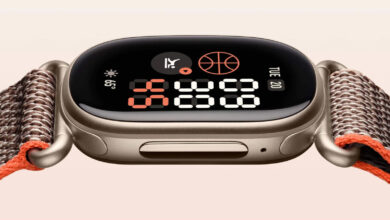
OnePlus smartwatches deliver exceptional battery life for their price, but they miss some features found in competing models.
While OnePlus has garnered a loyal following, its devices have often remained somewhat niche. Similarly, the company’s smartwatches rival others in performance yet have yet to achieve wider popularity. With the recent announcement regarding the cessation of OnePlus device sales in the US and Europe, it might seem like an unusual time to consider purchasing a new smartwatch, but options do exist.
Currently, OnePlus smartwatches are unavailable for purchase directly through the official store in the US; however, alternative options are still accessible. Retailers like Amazon still stock the complete lineup of OnePlus smartwatches. Therefore, the question arises: what advantages or disadvantages come with choosing a OnePlus smartwatch over other brands, especially given the potential unavailability of stock in the near future?
Battery life and build quality stand out
One of the primary advantages of OnePlus devices has long been their impressive battery life, and this holds true for their smartwatches as well. For instance, the OnePlus Watch 4 can last up to five days on a single charge in smart mode and up to two weeks in power saver mode.
Charging is also notably fast, with tests showing that the OnePlus Watch 3 can reach 80% charge in just 30 minutes. In comparison, the Apple Watch Series 10 achieves 50% in the same timeframe, while the Samsung Galaxy Watch Ultra reaches only 36%. This means that the likelihood of your OnePlus Watch running out of battery is minimal with proper attention.
Additionally, OnePlus smartwatches are priced more competitively than many similar devices without compromising on quality. These watches feature robust construction and vibrant AMOLED screens. Their proprietary software, OHealth, is functional although not exceptional, but users do have access to the complete range of Google apps.
The durability of OnePlus watches is another important benefit, designed for active wear. They emulate traditional watches in appearance, making them generally more attractive compared to other smartwatches, although this is ultimately subjective.
Size and software may deter some users
Conversely, OnePlus smartwatches lack some essential features that may be a drawback for potential buyers. Notably, there is no cellular support, meaning the device must pair with a smartphone to function properly. Since the watches operate on Wear OS, they are limited to compatibility with Android devices. Furthermore, due to the lack of required FDA approval, US models do not include ECG trackers, and earlier models lack fall detection capabilities.
While the solid construction of OnePlus watches is a benefit, it can also be a drawback. The chunky design may be too prominent for users preferring sleeker options. The size may pose a challenge for those with slender wrists, and the added weight could become uncomfortable during prolonged wear.
OnePlus has committed to ongoing software updates for current users, but it’s uncertain how accessible support will be. Smartphone users may notice the effects of this sooner than smartwatch users, as watches generally rely less on software updates. It’s something potential buyers should keep in mind before becoming overly accustomed to using OnePlus watches.