Distinguishing Android Auto from Android Automotive: Key Differences Explained

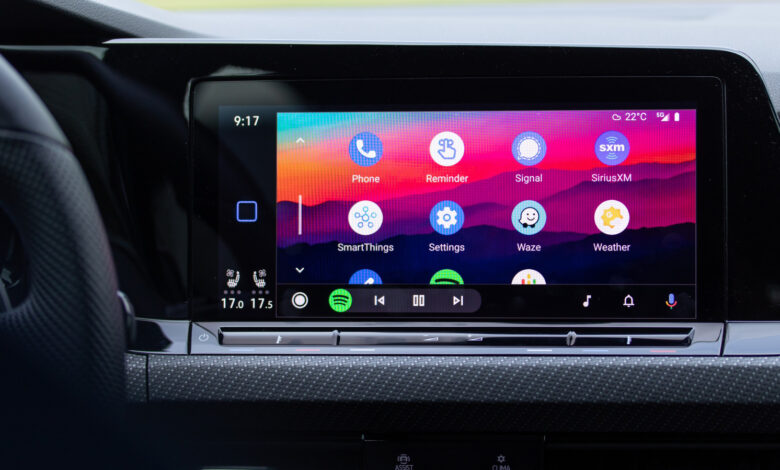
One relies on your phone, while the other operates independently.
Android Auto and Android Automotive may sound similar, but they serve distinct purposes. The differentiation is quite straightforward.
Most users are likely familiar with Android Auto. This system is powered by your Android device and uses the car’s display to create a user-friendly interface for navigation, music, messaging, and other compatible applications. It operates similarly to Apple CarPlay and can connect via USB or wirelessly, contingent upon both your phone and vehicle capabilities.
In contrast, Android Automotive OS (AAOS) functions directly on a vehicle’s hardware. This means no reliance on a smartphone for operation. The introduction of Google services adds to the complexity, but that’s another facet altogether.
Android Auto Requires Your Smartphone

Think of your smartphone as the brain while the car’s dashboard serves as a less distracting platform to access everything while driving.
Android Auto is not a substitute for your vehicle’s built-in software. Instead, it showcases a simplified version of your phone’s interface on the vehicle’s screen, enabling the use of compatible apps like Google Maps, Spotify, and messaging services without needing to physically handle your phone.
This dependence on a smartphone is appealing. You can connect to different compatible vehicles and easily transfer your apps, accounts, and settings. The car may operate on Android, another operating system, or a unique proprietary software.
A similar concept is found in Apple CarPlay, where even the advanced CarPlay Ultra still necessitates an iPhone for functionality.
Moreover, Android Auto capable apps can potentially access certain vehicle data, like battery level or estimated range, given that the car manufacturer supports it.
Android Automotive Is Integrated Within the Vehicle
Android Automotive OS transcends being a mere interface; it is an embedded software platform within the vehicle itself that enables car manufacturers to integrate it with infotainment systems, instrument displays, climate controls, electric vehicle data, and various other vehicle functions beyond just mirroring a connected device.
Is Google built-in synonymous with Android Automotive?
The answer lies in the distinction between the two. AAOS is open-source, whereas Google built-in is a licensed suite of Google Automotive Services that can offer native access to Google Maps, Google Play, and Google’s voice assistant, without needing the driver’s smartphone. Google considers these services as an additional package rather than an inherent part of AAOS.
This distinction is crucial when interpreting specifications. For example, while Rivian builds its own software experience on AAOS, it does not support Android Auto or CarPlay projections.
Polestar exemplifies flexibility; its vehicles powered by AAOS can feature Google built-in while also supporting Android Auto and Apple CarPlay, demonstrating that compatibility is not a matter of choosing one over the other. The Polestar 2 was notably the first production vehicle to showcase Android Automotive OS in 2020.