Frontier AI Labs Claims Their Models Disprove the Exponential Time Hypothesis: What’s the Implication?

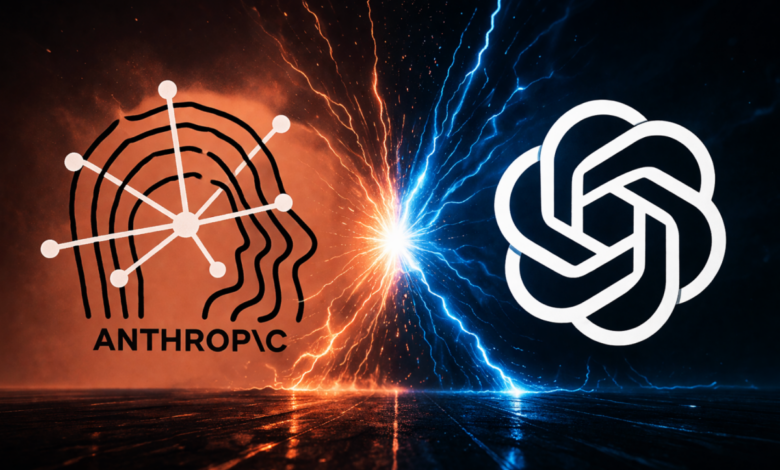
OpenAI has unveiled solutions to three significant mathematical challenges that have stumped experts for years. One notable revelation was a rejection of the Exponential Time Hypothesis (ETH), a steadfast principle in computer science that informs our grasp of computational difficulty.
Similar to past announcements from OpenAI, the scientific community’s reactions ranged from excitement to skepticism. Levent Alpöge, a mathematician with Anthropic, indicated that OpenAI’s findings may be based on pre-existing research. Following this, Anthropic released its own rebuttal to the ETH.
OpenAI’s methodology, however, is progressing. For the latest release, the lab adopted varied strategies across three fields: mathematicians received their findings on GitHub, computer scientists formed a collaborative group to request public sharing of the proofs and funding for a conference, and physicists created a team to decide how to present their results.
Ryan Williams, a professor at MIT, is guiding the computer science community’s response to these new developments. Williams, whose research delves into computational complexity, previously criticized OpenAI’s method, likening an earlier proof release to a “DDOS attack on mathematicians.”
Nonetheless, he agreed to work alongside the lab to navigate essential ideas for the discipline. OpenAI invited him to help elucidate the findings, along with UC San Diego researchers Russell Impagliazzo and Ramamohan Paturi, who originally proposed the ETH in 1999.
Their initial step involved issuing an open letter to solicit input from scientists interested in these topics, aiming to foster discussions about the role of AI in their fields.
“Some elements of OpenAI’s proof might be considered routine, yet there are certainly portions that appear unconventional, which is why I believe this is an issue that requires collective effort from the community,” Williams stated.
Understanding P versus NP
The ETH is part of a larger set of problems collectively known as P versus NP, which have captivated computer scientists and other researchers for decades. In simplified terms, the debate centers on whether issues that can be verified rapidly (NP) can also be solved quickly (P).
For instance, consider Sudoku: verifying a completed puzzle is straightforward, but finding the solution can be quite challenging. This dynamic extends to many significant problems, forming the foundation of cryptographic systems — possessing the key to an encoded message allows for quick decryption, whereas deciphering the code itself can be prohibitively time-consuming.
To date, no one has definitively proven whether this principle holds universally. “When we say P = NP, we’re asserting that not only can Sudoku solutions be verified quickly, but they can also be produced just as easily,” explained Williams. “This seems almost too advantageous to be true.”
As a result, many scientists operate under the assumption that P ≠ NP. The ETH substantiates this belief, suggesting that the swiftest algorithms require exponentially increasing time to find solutions as the complexity of the puzzles rises.
Both OpenAI and Anthropic claim their models can develop algorithms that resolve these puzzles in “sub-exponential” time, which is quicker than previously anticipated. If validated, they may have successfully invalidated the ETH and potentially paved the way for algorithms demonstrating P = NP.
“Every computer scientist ought to give more credence to the possibility of P = NP, although individual perspectives may differ,” Williams remarked. “This challenges many of our established intuitions regarding the tractability of difficult NP problems. I suspect this is not the final word on the matter, though; I doubt that OpenAI’s algorithm will be the ultimate solution available.”
Challenges Ahead for Computer Scientists
The resilience of the ETH has led to its incorporation in numerous academic papers over recent years, which may require revision if the AI labs’ assertions prove to be accurate, according to Williams.
“This is partly why I urged OpenAI to help sponsor a conference on these findings — the implications could significantly impact many researchers’ studies, and we need to determine what steps we should take next, beyond merely grasping the algorithms. It’s essential to reconsider how foundational principles ought to evolve,” he noted. Before addressing scientific issues, cybersecurity risks must also be considered. Williams raised a crucial point with OpenAI’s science lead, Dan Roberts, inquiring whether their findings posed any threats to cryptographic systems. They assured him they had assessed the situation and felt confident that there were no immediate security implications.
As this new paradigm of AI-driven scientific exploration develops, Williams strikes an optimistic tone, though he acknowledges real concerns, particularly regarding the education of future scientists. His background as a computer scientist with advanced mathematical skills may have eased his adaptation compared to those specialized solely in mathematics.
Nevertheless, he believes AI is compelling researchers to elevate their ambitions and encourages them to consider how to raise the standard for scientific inquiries in an era where many previous topics may now be considered manageable by AI.
When you purchase through links in our articles, we may earn a small commission. This doesn’t affect our editorial independence.