Datadog Alumni Unveil Niteshift: A New AI Coding Venture Challenging Big AI Dependence

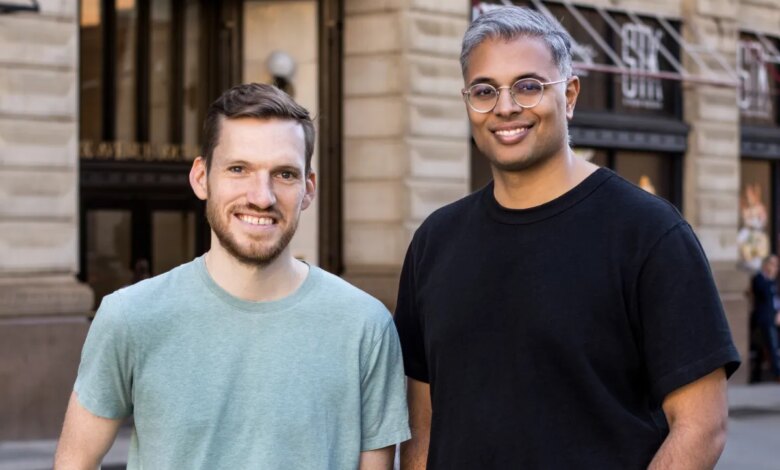
Niteshift, a startup focused on AI coding, has successfully secured $7 million in seed funding, led by investor Jerry Chen from Greylock. While this amount is modest in the AI sector, the company, established by two former early engineers from Datadog, has garnered interest from high-profile investors, including Reid Hoffman and Olivier Pomel of Datadog, Ankur Goyal of Braintrust, and Misha Laskin of Reflection AI.
Founded by Sajid Mehmood and Conor Branagan, who played key roles in Datadog’s rise to a multi-billion dollar valuation, Niteshift aims to carve its niche in the competitive AI coding landscape. The startup raises an essential question: Why should companies trust their critical assets—code that underpins their products—to AI developers like OpenAI and Anthropic, especially when such entities have a tendency to undercut new businesses with rival applications?
Mehmood, who serves as CEO, draws parallels with Datadog’s early days, highlighting how the monitoring firm appealed to e-commerce clients hesitant to utilize Amazon Web Services, given that Amazon was simultaneously threatening the existence of many retail businesses in what became known as the “retail apocalypse.”
Mehmood believes that a similar scenario is emerging in the AI sector, where companies like Anthropic and OpenAI are rapidly encroaching into niche software markets, a phenomenon some are dubbing the “SaaSpocalypse.”
“At Datadog, we recognized this trend early on,” Mehmood explained. “A significant portion of our multicloud business originated from e-commerce firms that were wary of operating on Amazon… We anticipate seeing a similar trend as Anthropic expands into legal, healthcare, finance, and other sectors.”
Niteshift is banking on the notion that businesses will increasingly prefer an infrastructure solution that decouples the coding platform from the overall orchestration needed to validate and maintain AI-generated code, while also seeking vendors without conflicting interests.
It’s important to note that Niteshift does not aim to replace existing coding models like Claude Code or Codex but instead seeks to lessen reliance on them.
The company’s AI coding cloud will facilitate interactions between these various models—including open-source alternatives—tailored to the specific requirements of each project.
“The flexibility to switch between GPT and Claude models is crucial,” Mehmood remarked. “There’s a significant apprehension about being overshadowed by these tech giants.”
This perspective was a key factor in attracting Chen’s investment.
“As leading research organizations advance up the technology stack, there’s a chance to provide clients with an alternative route: separating their coding agents from the underlying infrastructure,” Chen said. “Niteshift is developing a platform that allows for this, empowering customers to invest in their development tools without being locked into a single model or vendor.”
Furthermore, Niteshift does not operate by selling tokens but rather provides software infrastructure, charging clients based on usage like a traditional cloud service.
“Whereas others are primarily offering labor-replacement intelligence, our focus is on delivering software for agents, rather than humans—we’re in the business of selling software,” Mehmood stated.
Despite its innovative approach, Niteshift enters a saturated market filled with AI coding solutions. The concept of model independence is not entirely groundbreaking, and the startup faces competition from well-established players like Cursor, which may soon be acquired by SpaceX; Cognition, which recently raised $1 billion at a valuation of $26 billion; Amazon Bedrock; and OpenRouter, a platform that just secured $113 million at a $1.3 billion valuation.
Mehmood believes that the expertise of the founding team provides a competitive edge. He and Branagan have firsthand experience addressing the challenges that larger engineering teams encounter with AI-generated code, including the necessity for teams to autonomously run, test, and validate software in live environments. They advocate for infrastructure crafted by those who have successfully navigated growth at scale.