Chinese Auto Manufacturers Follow Tesla’s Lead, Banking on Robots as the Future Profit Powerhouse

The excitement surrounding humanoid robots is not a recent phenomenon, largely fueled by Tesla’s CEO Elon Musk and the Optimus robot, as well as numerous showcase videos of Boston Dynamics’ Atlas robot.
However, beneath this excitement lies significant progress. The physical abilities of robots are advancing rapidly, and researchers believe that AI technologies similar to those used in large language models can empower complex robots to learn nearly any task.
This momentum has spurred a new wave of companies eager to capitalize on the prospect of profits associated with humanoid robots, especially from various Chinese automakers.
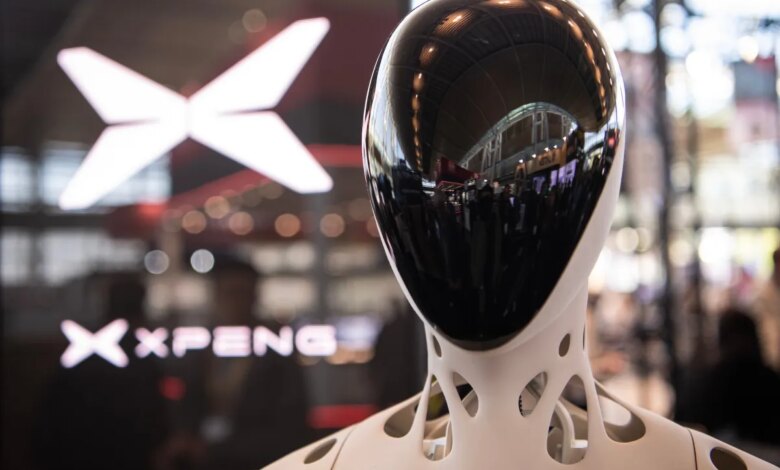
Recently, Xpeng’s robotics division secured over $900 million, achieving a post-money valuation exceeding $6.3 billion. This funding round, led by IDG Capital with contributions from Gaorong Ventures, Tencent, and Alibaba, has been touted as the largest single round of private financing ever recorded in China’s “embodied AI” sector, which pertains to AI systems integrated directly into physical machines.
This month, AiMOGA, the robotics branch of China’s Chery Automobile, reportedly began preparations for a public offering, while BYD introduced a humanoid robot named Xiao Di. Other Chinese manufacturers such as Changan, GAC, Li Auto, SAIC, and Seres are also progressing in their development of humanoid robots.
Xpeng, in particular, is recognized for closely monitoring Tesla’s strategies, according to Michael Dunne, CEO of Dunne Insights, which operates from San Diego and Singapore.
Dunne remarked, “Xpeng is the most dedicated to autonomy and the first to commit significantly to humanoid robots,” noting that the company’s founder, He Xiaopeng, is a tech mogul known for his adaptability and quick decision-making. “With the narrow profit margins in automotive expected soon, robots appear to be a far more profitable venture.”
Both Xiaopeng and Xpeng co-president Brian Gu are optimistic enough to have invested personal funds into the robotics unit, reportedly contributing around $100 million to the recent funding round.
Xpeng’s venture centers around Iron, a humanoid robot designed for commercial settings and resembling a human form.
Chinese automakers like Xpeng benefit from strong manufacturing capabilities.
Dunne emphasized, “They possess all the hardware required for success; the real challenge lies in matching Tesla in the AI domain.”
Other firms are also advancing in the humanoid robot space, including Agility Robotics, Apptronik, and Figure, all aiming for large-scale commercial deployment.
Hyundai-owned Boston Dynamics is making strides toward this goal as well. Hyundai intends to integrate the Atlas humanoid robot into its Georgia manufacturing facility this year, with plans to use the robots for tasks such as parts sequencing by 2028. The South Korean automotive giant, which has teamed up with Google’s AI research division DeepMind to expedite Atlas’s development, will soon open a U.S. center called the Robot Metaplant Application Center aimed at teaching robots to perform movements like lifting and turning.
Other automotive firms are joining the race, including the supplier Mobileye, which acquired humanoid robot startup Mentee Robotics earlier this year for $900 million. Additionally, Rivian is exploring robotics through its Mind Robotics subsidiary, though its robots are expected to differ from the humanoid designs being pursued by other players.