Samsung Galaxy Watch 9: Enhanced Speed and Features, Yet Uncomfortably Familiar

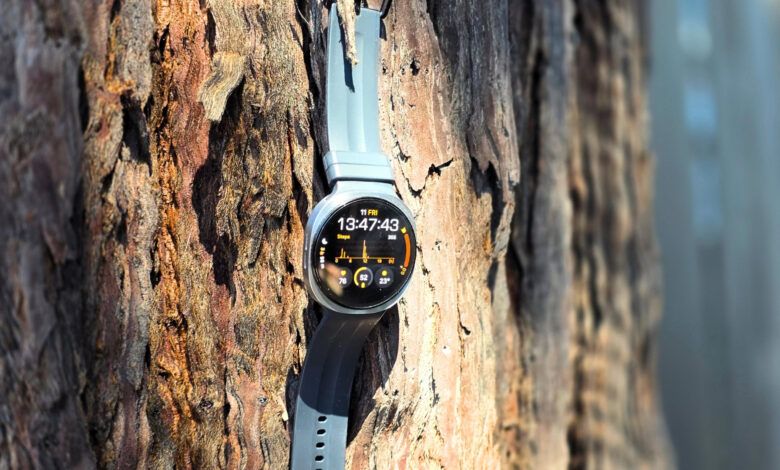
The Galaxy Watch 9 is remarkably comfortable and boasts an impressive, vibrant display. It offers extensive health and fitness tracking, providing more valuable insights than its predecessors. However, its battery life constitutes a significant drawback, necessitating nightly charging to fully utilize its features.
Having used the Galaxy Watch 7 for two years, I was keen to see how the Galaxy Watch 9 ($379.99) would impress me. Samsung had previously offered trade-ins for the Watch 8, but I opted to stick with my older model, which served my needs well. With a two-generation gap, my anticipation was high for the new device.
After three weeks with the Watch 9, I’ve come to the conclusion that while it is indeed a solid smartwatch, I can’t fully endorse it without a notable caveat.
Comfortable Design
I’ve been using the 44mm Bluetooth version of the Galaxy Watch 9, priced at $409.99, while the 40mm model starts at $379.99. Notably, all variations are approximately $30 more than their Watch 8 counterparts at launch. Unlike prior releases, there isn’t a Galaxy Watch 9 Classic available, as Samsung alternates the release of models with a mechanical bezel.
Initially, upon switching from a Watch 7, the first thing that strikes you is the unique squircle design that Samsung adopted. This design, first seen in the Galaxy Watch Ultra, gives it a squarish body with a round display, leaving the corners of the chassis protruding.
While this design might seem off-putting at first glance, it becomes less distracting during use as your focus remains on the circular screen. However, personally, I still prefer the previous design. The darker Graphite variant also seems to better camouflage the pronounced corners compared to the Silver model I tested.
The updated shape enhances comfort, providing extra internal space around the corners that wouldn’t exist in a completely circular design. At 34g, the 44mm Watch 9 is only slightly heavier than my previous 33.8g Watch 7, yet it’s thinner at 8.6mm compared to 9.7mm, which may be attributable to the added space around the edges. A flatter backside allows it to fit more comfortably against the wrist, and Samsung’s Dynamic Lug System facilitates a more natural strap orientation.
Switching bands is straightforward, as bands from the Watch 8 are compatible, but older bands from the Watch 7 or earlier versions will not work with this model.
Surprisingly comfortable, you’ll scarcely know it’s on your wrist.
It’s worth noting that these design elements were introduced with the Watch 8 last year, but they certainly contribute to the Watch 9’s comfort. I’ve worn it through various activities, including work, workouts, and even sleep, and it has never felt heavy or troublesome.
The right side of the watch retains Samsung’s familiar Home and Back buttons, with a slight improvement to prevent accidental presses that paused workouts, a frequent issue with my Watch 7. Fortunately, I have not encountered that problem with the Watch 9.
Exceptional Display
The 44mm Watch 9 features a 1.47-inch Super AMOLED display with a resolution of 480 x 480, identical to the previous models. The standout improvement is its brightness.
The maximum brightness has been raised to 3,000 nits, an enhancement carried over from the Watch 8. Coming from my Watch 7, the increase in visibility, especially in direct sunlight, is immediately noticeable, requiring less effort to glance at the screen outdoors.
Protected with sapphire crystal, the display remains scratch-free, and the watch body features durability ratings of 5ATM, IP68, and MIL-STD-810H, allowing for comfortable wear during workouts, showers, and swimming. However, a lack of raised edges leaves the screen potentially vulnerable to impacts, so a screen protector may be advisable for outdoor activities.
Robust Performance
The most significant update in the Watch 9 series is the shift to Qualcomm’s Snapdragon Wear Elite platform, replacing the previously used Exynos chips. The performance benefits from this transition are tangible, with smoother navigation and quicker app launches.
Although the performance upgrade is noticeable, transitioning from a Watch 7, I wouldn’t classify it as revolutionary. My two-year-old device remains functional enough for everyday use. The new chip’s advantages may come with implications, as I’ll address shortly.
The Watch 9 operates on Wear OS 7 with Samsung’s One UI 9 Watch interface, promising five major updates and five years of security patches, an improvement over prior models. The interface remains intuitive for anyone accustomed to recent Galaxy Watches.
The Galaxy Watch combines excellent hardware and software.
While I’m not particularly fond of Samsung’s watch face designs, the diverse options available do allow for high information density, enabling quick access to vital stats such as steps, sleep, battery status, heart rate, and more at a glance. This aligns perfectly with my needs from a smartwatch.
A new feature I found surprisingly useful is Raise to Talk, which allows users to bring the watch close to their mouth to engage the assistant, bypassing the need for physical buttons or wake phrases. While it occasionally struggled to activate, the overall reliability surpassed my expectations for a new feature.
Advanced Health Tracking
The health hardware remains consistent with the Watch 8, utilizing Samsung’s BioActive Sensor that covers diverse functionalities like heart-rate monitoring, ECG, and body composition measurements. Additional sensors include temperature, accelerometer, barometer, gyroscope, geomagnetic sensor, ambient-light sensor, and dual-frequency GPS.
Samsung Health enhances its offerings, now tracking an extensive range of metrics including sleep, blood oxygen, stress, body composition, and ECG, along with newer metrics like Heart Health Score and Blood Pressure Trends (requiring an external cuff).
While many users may find extensive metrics useful, I’m still navigating how to react to each metric provided. However, the Vitals feature simplifies this by monitoring key indicators—heart rate, heart-rate variability, respiratory rate, skin temperature, and blood oxygen during sleep—and highlights any anomalies against my established baseline.
When it comes to sleep and activity tracking, I have few complaints. The watch can recognize basic activities without manual initiation, and it supports a vast array of workout types.
It remains a reliable activity companion.
Though I wouldn’t treat the figures from any smartwatch as laboratory-precise, my experience with Galaxy Watches has shown consistent results, indicating whether I’ve been active or sedentary throughout the day.
It’s important to note that while basic Samsung Health functions work on any Android phone, some advanced features like ECG and irregular heartbeat notifications require a Galaxy phone, limiting access for users with devices from other brands.
Battery Life Concerns
Despite having a slightly larger battery (445mAh) than its predecessors, the real-life performance remains disappointing.
Under daily use with the always-on display off and moderate workout tracking, the watch lasts about 30 to 35 hours. Active days, however, can significantly drain the battery, dropping to 15% after a DJ session and 20,000 steps in merely 24 hours.
Additionally, the watch appears to deplete more battery overnight, leading me to lose multiple nights of sleep data due to unexpectedly draining power.
Overall, the battery life has not improved from earlier models, which is frustrating, especially after skipping a generation.
Battery performance continues to be the primary flaw.
Improving charging speed could alleviate some battery life issues, but there hasn’t been significant progress here either, as a full charge still takes over an hour and a half, with minimal gain from brief charging sessions.
This stands in stark contrast to alternatives like the Pixel Watch 5, which supports quicker charging and offers significantly better battery life.
It’s critical to note that I only evaluated the 44mm version of the Watch 9. The smaller 40mm model has received a more substantial battery upgrade to 390mAh from 325mAh, but Samsung claims both versions have the same expected runtime.
Final Thoughts on the Galaxy Watch 9
The Galaxy Watch 9 ($379.99) is undeniably a commendable smartwatch. It provides incredible comfort, a bright display, smooth performance, and a comprehensive health tracking platform, all backed by strong long-term software support from Samsung.
For first-time smartwatch users, or those upgrading from a significantly older model, the improvements will likely make a compelling case for purchase.
However, it’s disappointing that the key improvement many users sought, enhanced battery life, was not delivered. My main request for the Watch 7 was better battery endurance, something the Galaxy Watch 9 fails to address.
It’s conceivable that the new chipset might require further optimization, potentially yielding longer usage times in future updates, but as it stands now, recommending this watch comes with reservations concerning its battery experience.
The Watch 9 excels as a versatile smartwatch but does not rectify the most critical drawbacks of its predecessors.
If you consider alternatives to the Watch 9, the Galaxy Watch 8 ($349.99) remains highly competitive, offering much of the same experience for a lower price. While it lacks the latest processor and extended software promises, it fulfills the core functionalities well without significant drawbacks.
Beyond Samsung, the Pixel Watch 5 ($399) stands as a strong alternative, featuring faster charging and solid performance. Other brands like OnePlus and Amazfit also provide options with substantial battery life, catering to those prioritizing power longevity.
Lastly, for a truly long-lasting option, the Galaxy Watch Ultra 2 ($699.99) offers impressive battery life but at a premium price point.
Thank you for reading. Please keep our Comment Policy in mind when posting your thoughts.