Despite advancements in technology, public perceptions of artificial intelligence (AI) are declining. A memo from the National Republican Senatorial Committee highlighted that U.S. data centers may negatively affect the party’s prospects in a significant Ohio election. Concurrently, a Pew Research study indicated a rising unease among Americans regarding AI, with 52% expressing greater concern than excitement, an increase from 37% in 2021.
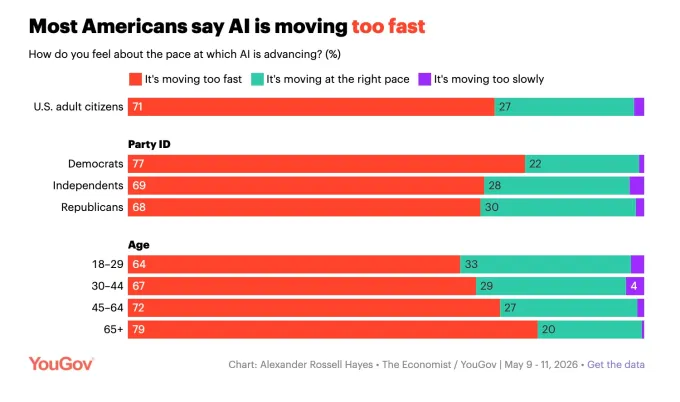
A recent poll by CNBC targeting individuals aged 18 to 34 revealed that most respondents lack trust in prominent leaders within the AI industry, showing concern about their ability to use the technology responsibly. A May survey from Economist/YouGov found that over 70% of Americans believe that the pace of AI advancement is too fast.
This growing dissatisfaction is starting to affect the financial health of tech companies. According to recent reports, firms are confronting a public relations dilemma regarding their plans to establish AI data centers across the country. In response, they are enhancing their offers with job guarantees, investments in clean water, and other incentives, including substantial bonuses for educators in certain areas.
Consumers are increasingly questioning the benefits of AI in their lives while bearing the associated costs. For an industry that has garnered significant financial backing with the expectation of AI becoming indispensable, this shifting public attitude is evolving into a serious business challenge. Industry leaders are beginning to recognize this trend.
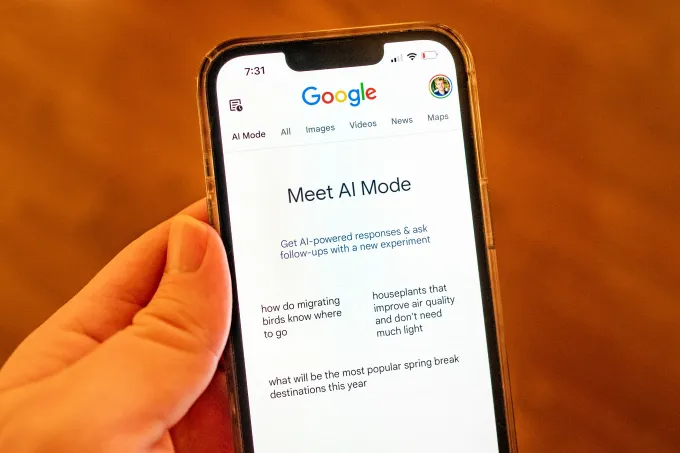
Many consumers currently perceive AI through a limited lens, associating it with chatbots or AI-enhanced search engines. They notice AI features infiltrating their daily products without much choice. Concerns are rising about AI contributing to academic dishonesty and the implications of machine-generated content, which traditionally belonged to human creators.
It’s not surprising that AI is encountering more pushback from consumers compared to other transformative technologies like smartphones or personal computers at similar adoption stages.
Some industry insiders seem perplexed by this sentiment, mistakenly believing increased AI adoption would lead to greater acceptance among consumers. They expected that its widespread integration into various tech products and services would result in a favorable attitude towards the technology.
However, current trends reveal that younger audiences are gravitating toward retro technology, showing interest in outdated devices like simple phones, point-and-shoot cameras, and even cassette players. Items like non-digital iPods are fetching high prices online, while hobbies associated with hands-on creativity and community interactions are experiencing a revival.

Some within Silicon Valley attribute this backlash to a failure in communication, believing that executives need to better articulate AI’s advantages to the public.
In truth, consumers may understand AI to a significant extent and simply conclude that the drawbacks are unacceptable. Instead of reaping the benefits of improved job conditions, they perceive AI as a threat to their employment, particularly when its features seem less appealing, offering only minor conveniences.
This realization is dawning on several industry leaders.
For instance, Airbnb CEO Brian Chesky recently acknowledged the legitimacy of the AI backlash, noting its relationship to the lack of user-friendly products being developed.
Chesky stated, “I think part of it’s a narrative issue that we’re not talking about AI correctly. But part of it is we need to actually be developing more products that just regular people can use and say, ‘I love AI because AI allows me to have a doctor on demand and I can’t have that. I can’t afford that.’ And so I think we need more regular things.”
Even Dario Amodei, a leading figure in the AI sector, recognized in a recent post that a lack of public trust represents a significant challenge, describing it as a “crisis of trust.” He emphasized that skepticism arises from perceived malfeasance by companies, governments, and the tech sector.
Amodei suggested that the path forward involves fulfilling AI’s promises, such as significant advancements in healthcare.
He remarked, “I think by far the most accurate criticism of AI companies, including Anthropic, is that we haven’t yet delivered on our big promises to benefit the world. That is totally on us.”