Serve Robotics Unveils Ambitious Venture Aiming to Be the AWS for Robotics Solutions

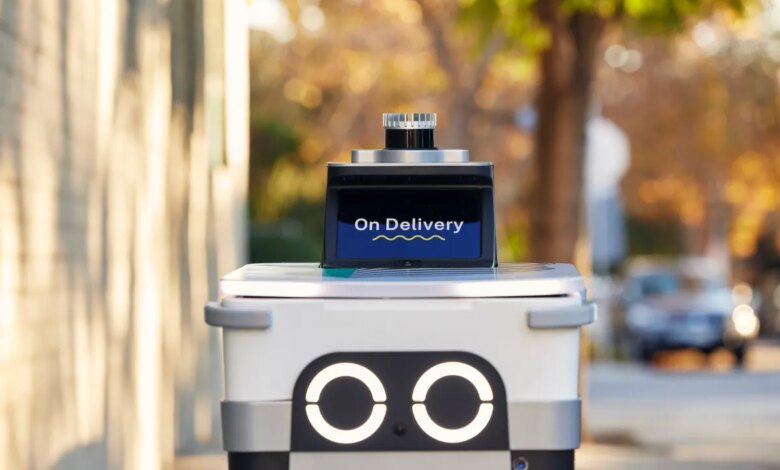
Serve Robotics, a company that develops autonomous delivery robots for sidewalks, is broadening its scope to act as a technology provider for other robotic enterprises.
Emerging from Uber’s acquisition of Postmates in 2021, Serve Robotics went public in 2024 and announced on Thursday the introduction of a new division called Physical AI Services.
This division will offer its connectivity and data solutions to various clients. Currently, Bedrock Robotics, which is working on self-driving systems for construction machinery, is among its customers. Additionally, Serve is collaborating with T-Mobile to enhance AI computing capabilities close to the robots, as revealed during its third-quarter earnings report on Thursday.
“Our focus is on addressing the challenges robots face in human environments,” remarked Ali Kashani, the CEO and co-founder of Serve Robotics, in an interview.
Serve Robotics currently manufactures two types of robots: a friendly sidewalk delivery robot and a hospital-oriented model acquired from Diligent Robotics.
Kashani stressed that these existing businesses will continue, while the company seeks to market its technology to firms creating robots for various sectors, including agriculture and warehousing.
“This is akin to what AWS did; we’re taking our in-house technology and offering it to a broader audience,” he explained, noting this expansion would not have been practical without their established robot fleet.
The move comes as Serve’s delivery operations grow, transitioning from a reliance on Uber to partnerships with other firms like DoorDash and Wonder.
The new Physical AI Services division will roll out three offerings. Serve Link enables robots to connect with AI systems housed in data centers, allowing firms to leverage advanced AI models without the need for extensive local computing resources.
“Every robotic solution requires a connection to some external intelligence, be it for data collection or managing exceptions,” Kashani explained. “We focus on ensuring high-performance connectivity, capable of handling unreliable networks effectively.”
Additionally, the company will introduce a data curator tool designed to help organizations identify edge cases in the extensive data collected by robots, which can be utilized to enhance training models. The third product is a foundational data catalog based on the real-world experiences of Serve’s sidewalk robots, assisting AI systems in understanding complex human settings.
Kashani has been contemplating this concept, inspired by Amazon’s approach, for several years.
“Initially, when technology is in its infancy, you need to develop the entire application to grasp what to create, but over time, as technology matures, more entities will likely seek to build similar solutions,” he stated. “Your goal should be to provide your technology for others to use alongside yours.”