In 2024, Microsoft unveiled its Copilot+ PCs, which it claimed to be the “fastest and most intelligent Windows machines ever created.” These PCs came equipped with several new features, including the controversial Recall and AI-enhanced image editing, among other additions.
In a recent revelation, Nvidia introduced its RTX Spark lineup, designed specifically for AI applications in both laptops and desktops. These RTX Spark machines are positioned as the actual embodiment of what Copilot+ PCs aspired to be.
Copilot+ PCs Fall Short of Expectations
Branding Misalignment
Upon launching Copilot+ PCs, Microsoft mandated that every device include a neural processing unit (NPU) capable of executing 40 trillion operations per second (TOPS) or more to qualify. The major flaw in the Copilot+ PCs was the exaggerated emphasis on the “AI PC” concept. At the time, only a limited number of AI models could effectively utilize an NPU with so little processing power, and none stood out as impressive selling points for potential buyers.
The more advanced AI features were predominantly tied to the cloud-based Copilot, making these “AI PCs” as ordinary as any other computer with access to cloud services like Claude or ChatGPT.
The certification for Copilot+ overlooked existing GPUs (including integrated graphics) that already met the needed specifications. For instance, a mobile RTX 4050 nearly achieved 200 TOPS—almost four times the minimum required to qualify as an AI PC. While AMD and Intel GPUs lagged in software support, many were also capable of surpassing the demands set by Copilot+ certification.
Moreover, the configuration for Recall and the AI image editing features didn’t easily leverage the dedicated GPU; users had to implement complex workarounds that were likely to fail after updates.
As a result, millions of PCs were excluded from accessing Microsoft’s premier AI features due to an arbitrary NPU requirement, despite the fact that their GPUs could meet performance standards.
AI Models Were Not Prepared
Recall faced significant public criticism upon its launch, and the AI image editing functions were largely eclipsed by superior web-based tools and specialized applications. This situation illustrated a broader challenge in local AI applications—while cloud-based models showed promise, local AI models struggled to justify their use due to high memory consumption and limited capabilities.
These local models often produced unreliable outcomes, with many users experiencing frustrating inconsistencies. However, as of now, even moderately priced GPUs can run useful AI applications, albeit typically restricted to smaller models executed one at a time. Microsoft, in an attempt to be the first in the market, may have overhyped AI PCs prematurely, leading to widespread disappointment.
RTX Spark: The Hardware That AI Demands
Powerful GPU with Ample Memory
The RTX Spark range addresses the shortcomings inherent to Copilot+ systems effectively. Each RTX Spark device incorporates either of two system-on-chip (SoC) configurations: the higher-end version features a 20-core CPU paired with a Blackwell GPU hosting 6,144 CUDA cores and up to 128GB of unified memory. The lower-end option offers an 18-core CPU with a Blackwell GPU containing 5,120 CUDA cores and up to 32GB of memory.
The premium model employs the same architecture found in Nvidia’s DGX Sparks, their individual AI computing machines, albeit with memory performance roughly 10% superior to that of the DGX variants.
These specifications illustrate a clear advantage: these PCs excel at running local AI applications.
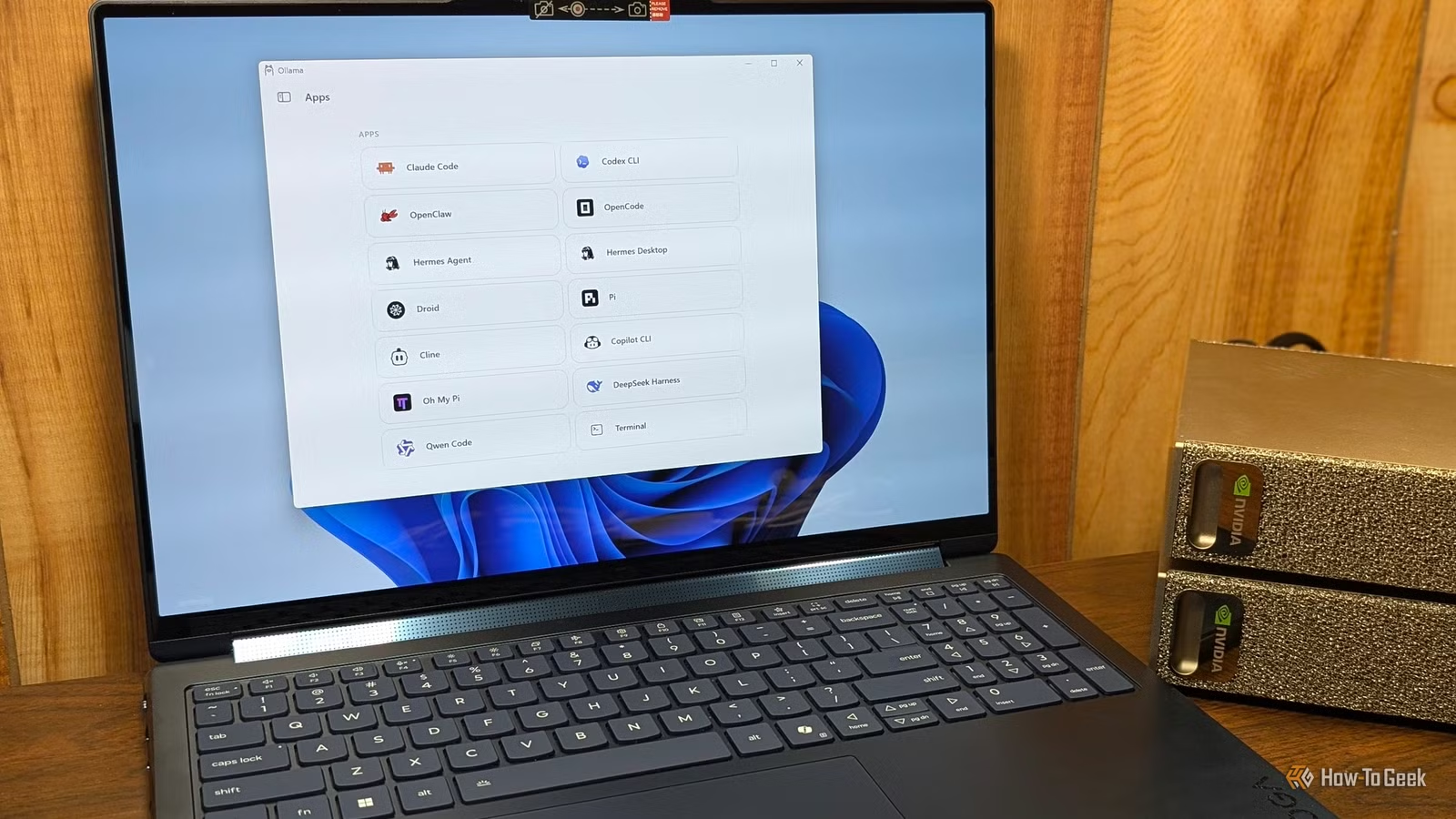
During my evaluation of an RTX Spark (the 64GB, 20-core variant), it consistently exceeded expectations with every AI model manageable within its memory. It even outperformed a previously tested DGX Spark by approximately 10% regarding LLM output (measured by tokens per second) and accommodated models significantly larger than what I could execute on my 16GB 5070 Ti.
Contrary to Copilot+ PCs that confined AI functionalities to low-powered NPUs, RTX Spark machines possess the necessary hardware and memory to run practical AI models locally.
Simultaneous Model Operations
My local AI workflow typically requires a primary AI model along with several specialized ones functioning in tandem, which is precisely what makes the RTX Spark systems so attractive.
On the 64GB RTX Spark laptop I’ve been testing, I can seamlessly operate a 30B parameter model (with 4-bit quantization) fitting comfortably within less than 30GB of memory, even with context included. Concurrently, additional specialized models manage speech-to-text, image descriptions, editing, and OCR tasks, while a trial plain-language-to-PowerShell translator operates in the background.
This entire setup requires less than 40GB of memory, leaving 24GB for the operating system, general applications, and supplementary models, all without relying on cloud-based solutions.
Users can customize these local models based on their specific roles, whether in writing, editing, graphic design, data analysis, or computer science, liberated from the limitations of a low-capacity NPU and the minimal AI features limited to Windows.
RTX Spark Realizes the True Potential of AI PCs
Microsoft has devoted substantial discussion to AI PCs in 2024, emphasizing features that ultimately fell short of realization. In contrast, the RTX Sparks available in stores today represent a significant leap in power, flexibility, and genuine capabilities for hosting practical AI models. The 64GB and 128GB editions stand out, capable of managing an intelligent 30B parameter model that can coordinate multiple smaller models or utilize quantized versions of 100B parameter models, often comparable to premier cloud-based options.
These higher-end variants also offer sufficient memory to fine-tune smaller AI models to meet personalized demands, a flexibility that previously wasn’t achievable.
The AI application ecosystem remains in its infancy—while the best tools available are geared toward enthusiasts and can be cumbersome to set up—the infrastructure necessary for an authentic AI PC has finally emerged.
However, a caveat remains: RTX Spark devices begin at roughly $2,600, with many configurations exceeding $4,000. AI PCs may now be closer to reality, but affordability remains a pressing concern.