Investing in a more expensive graphics card now may be a wise choice rather than delaying your purchase.
Rising demand for AI infrastructure throughout the year has strained the global memory supply, leading to challenges for gamers looking to upgrade their hardware. Graphics cards are part of the ongoing memory shortage influencing prices for RAM and SSDs. AI data centers are consuming much of the capacity that would typically be allocated for GDDR memory.
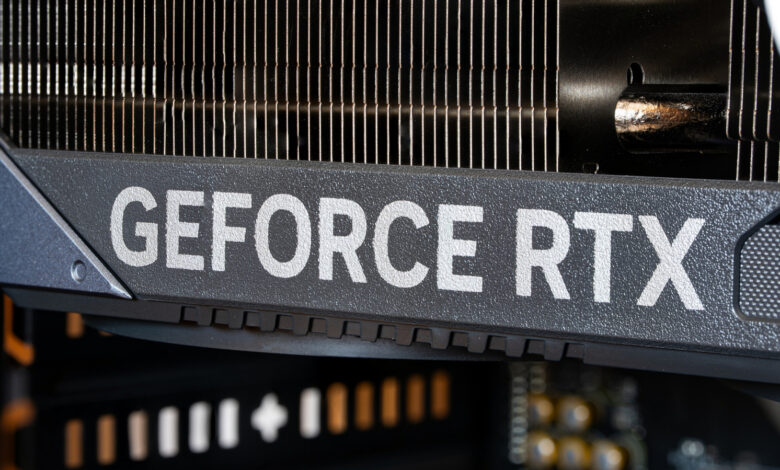
Higher-capacity graphics cards are feeling the pinch the hardest, with AMD recently increasing prices by $10 for every 8GB of VRAM. As VRAM costs are expected to continue rising, now may be the best time to purchase a new card and hold onto it for the foreseeable future. If possible, aim for a minimum of 16GB of VRAM to ensure compatibility with upcoming titles over the next five years.
Impacts of Graphics Card Memory
NVIDIA offers the RTX 5060 Ti in both 8GB and 16GB models that utilize the same architecture and clock speeds. Tests have shown that the 8GB variant falls 2.3% short compared to its 16GB counterpart at 1080p medium settings, with the gap widening to 12% under ultra settings. Minimum frame rates were also 16% lower for the 8GB model, particularly affecting performance in ray-traced games, demonstrating the significance of VRAM capacity.
Additional evaluations revealed even more pronounced performance discrepancies in certain titles, such as The Last of Us Part II, where the 8GB card achieved only 67 frames per second at 1080p very high settings, a stark contrast to the 16GB version’s 109 FPS. In some cases, games that require more memory than available on a card may even crash or suffer from stuttering and poor texture resolution due to asset swapping over the PCIe bus.
Resolution is a critical factor in determining VRAM needs. While 8GB is largely sufficient for most 1080p games at medium and high settings, including esports and older titles, 12GB is advisable for 1440p gaming. For 4K and future-proofing, at least 16GB is recommended.
Recent tests support the claim that 8GB cards perform adequately at 1080p, but 16GB models showcase a significant advantage, especially as graphics settings intensify.
Dealing with Rising Prices
Card and memory manufacturers are taking full advantage of the boom in AI technology. Reports indicate that AMD has increased the prices on GPU and memory combinations by $10 for every additional 8GB, followed by further percentage hikes that could continue in the future.
Memory producers, including Samsung, SK hynix, and Micron, are prioritizing high-bandwidth memory for AI data centers over GDDR6 and GDDR7 for graphics cards, making 16GB models hard to find at fair prices.
NVIDIA has also reduced production of 16GB RTX 5060 Ti and 5070 Ti models to focus on 8GB variants, allowing them to produce in larger volumes at more competitive prices. This trend is reflective of adjustments seen in Valve’s Steam Deck lineup this year.
While current 8GB cards will handle most games at 1080p for the time being, the ongoing development of games geared toward users with more VRAM will continue to limit what can be achieved with 8GB. Investing in a 12GB or 16GB model now is likely to be beneficial for the next five years, especially considering the RTX 3060’s sustained popularity among gamers since its release in 2021. With prices on the rise, now may be an ideal time to make a purchase.