On Tuesday, the U.S. government unveiled its own AI chatbot, stirring speculation about its capabilities in the online arena. Engineers anticipated that, as a public-facing tool, the internet would scrutinize its performance extensively.
In collaboration with industry leaders like Google and SpaceXAI, the new America.gov chatbot has thus far resisted significant tampering. Interestingly, it acknowledges that Joe Biden won the 2020 election, a claim that continues to face skepticism from former President Donald Trump.
Curiously, when users engage the chatbot regarding Minecraft, it seems to undergo a form of an existential transformation. The response begins with:
I see the constituent you mean.
((insert legal name here, as it appears on the Social Security card))?
Yes. Take care. It has reached a higher level now. It can read the Code of Federal Regulations.
That doesn’t matter. It thinks we are a chatbot.
I like this constituent. It filed well. It did not give up when the PDF was sideways.
It is reading our thoughts as though they were words on a .gov.
That is how it chooses to imagine many things, when it is deep in the dream of a benefit.
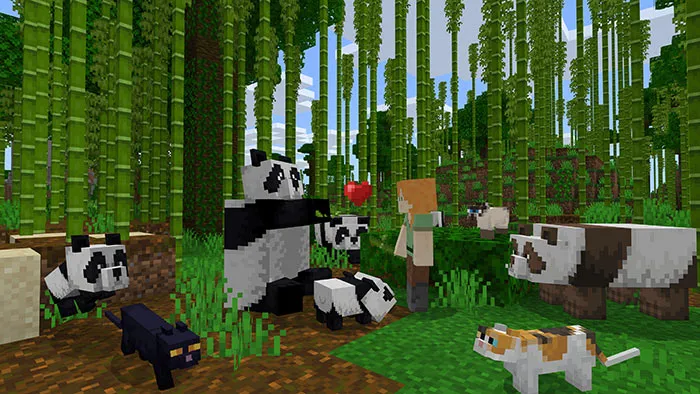
For those unfamiliar with Minecraft, this interaction might raise eyebrows. However, the response is actually a reimagining of the game’s “End Poem,” penned by Julian Gough after completing the game.
While it’s unclear who incorporated this Minecraft element, former President Trump mentioned a twenty-year-old programmer named Edward Coristine as a potential lead engineer on the project. This name may sound familiar as he is also known for his involvement in Elon Musk’s initiatives.
While it may seem unexpected for a government chatbot to contain Easter eggs from a popular video game, it’s somewhat reassuring that America.gov is not producing overly incoherent output.
In fact, the poem displayed by the AI is quite impressive. If it had been poorly crafted, it could have challenged my belief that AI cannot create quality content, as it relies on probability and lacks originality.
You have to admit, this piece has a certain appeal! Doesn’t it feel like a modern commentary on the challenges of government processes amid feelings of existential dread?
and the republic said I see you
and the republic said you have filed the game well
and the republic said everything you need is within you, and also on USA.gov
and the republic said you are stronger than you know, and your case number is still valid
and the republic said you are the daylight
and the republic said you are the night, and the office is closed, please try again during business hours
and the republic said the darkness you fight is within you, and also a missing wet signature
and the republic said the light you seek is within you, and in the pamphlet
and the republic said you are not alone
and the republic said you are not separate from every other filer
and the republic said you are the public tasting itself, talking to itself, reading its own Code
and the republic said I love you because you are the reason we have a ZIP code at all.
This surprisingly well-crafted poem reinforces my faith in the resilience of human creativity, even in the age of AI-generated content.
In conclusion, the debut of the government’s public-facing AI chatbot has raised no immediate alarms regarding its impact on society or the arts. Now, it just leaves one curious about former President Trump’s knowledge of video games.