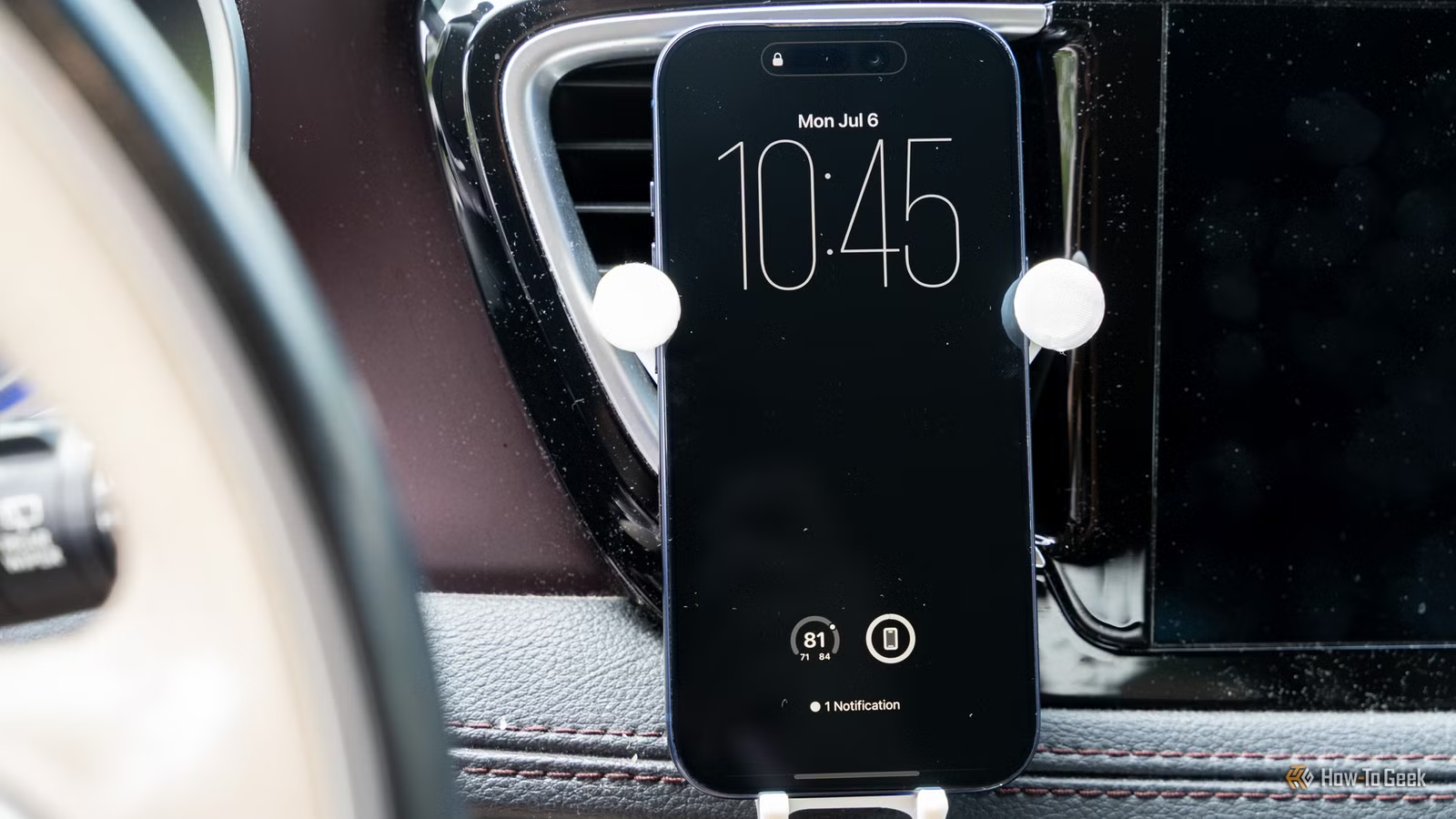
Many of the latest vehicles come equipped with screens that support Apple CarPlay or Android Auto, providing a way to securely stow your smartphone while still accessing its features through an external display, either via wireless connection or a traditional cable.
However, a significant number of older cars lack these modern infotainment systems. In such situations, drivers often resort to mounting their phones in various locations within the vehicle to facilitate navigation and music playback. The options for phone mounting are plentiful, but some methods can be detrimental to the device’s longevity.
Your Phone’s Camera Components Are Sensitive to Vibration
You Don’t Want Unstable Photos
While we often consider smartphones to be entirely solid-state, they actually contain tiny moving parts that can be susceptible to vibrations. Premium models, in particular, feature camera systems that rely on motion for optical image stabilization and autofocus. Excessive vibrations can harm these elements and compromise the quality and functionality of the camera.
Apple warns users against mounting their phones on motorcycle handlebars due to the intense vibrations from powerful bikes. Even in less vigorous vehicles, a shock-dampening mount is recommended to protect your device from potential harm caused by vibrations.
Although car mounts are generally safer than some alternatives, they still pose a risk. Look for mounts advertised as “vibration dampening,” especially for cars that transmit significant vibrations into the cabin.
A Windshield Mount Can Expose Your Device to Heat
In the Danger Zone
Smartphones are not heat-resistant. Lithium batteries function optimally within specific temperature ranges; excessive heat can damage them and reduce their longevity. Furthermore, the processors in smartphones lack active cooling features, which means devices may throttle down to avoid overheating or even shut down as a precaution.
Mounting your phone on the windshield can expose it to direct sunlight and heat radiating from the dashboard, which is not ideal. High ambient temperatures can reach levels that damage electronic components, as noted by experts. Charging a phone in extreme heat can also lead to irreversible battery damage.
Constant exposure to high temperatures can significantly shorten the life of your phone, making air vent mounts a preferable option for keeping the device cooler while driving.
Using Navigation and Charging Together Can Increase Heating Issues
Heat Builds Up
Simply mounting the phone in a hot spot is not disastrous; problems escalate when it’s simultaneously charging, streaming audio, and using GPS while operating at high brightness. All these activities contribute to excess heat, especially within a car’s environment.
For example, data transmission generates heat, and certain battery-charging methods, like wireless charging, are less efficient and lead to additional heat generation. This can become a critical issue for devices already prone to overheating.
You Can Still Use a Car Mount—But Be Mindful
The takeaway? There’s no need to abandon your car mount. Thoughtful placement and techniques to mitigate heat can help. Position your phone where it gets airflow from the air vents and adjust them to direct cool air towards the device.
Avoid using wireless charging with dash or windshield mounts as it adds unnecessary heat. If your car has a built-in wireless charger situated away from direct sunlight, that option remains valid.
The best course of action would be to incorporate CarPlay or Android Auto in your vehicle to minimize potential damage. Additionally, consider disabling fast charging in your car, which can add extra heat, and activate any bypass charging features your phone may have during car use.