The U.S. Air Force has entered into an agreement to acquire data from WindBorne Systems’ network of autonomous weather balloons, a contract valued at nearly $50 million for the innovative startup.
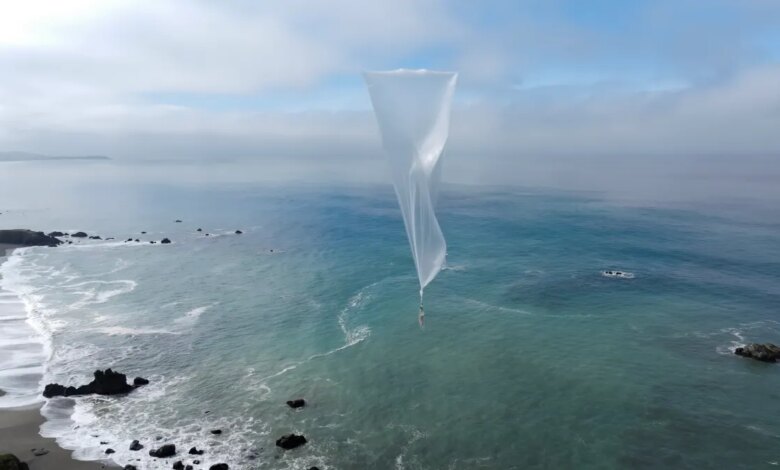
WindBorne operates around 700 weather balloons worldwide, which gather atmospheric readings that the company sells to various clients while also utilizing this data in its own AI-driven weather forecasting model. Founded in 2015 and located in Redwood City, California, WindBorne is a pioneer in integrating real-world data into advanced deep-learning weather models.
The company has had a strong collaborative history with U.S. government agencies, namely the National Weather Service, the U.S. Air Force, and the Navy. However, this new contract represents the largest engagement for WindBorne so far. Valued at up to $49 million, the Air Force will acquire data on an as-needed basis, placing orders for targeted regions and specific timeframes. To date, it has already spent $1.7 million and management anticipates further orders in the future.
Andrey Sushko, co-founder and CTO of WindBorne, explained that this contract serves primarily to support the growth of their balloon network and fund ongoing research and development to enhance the performance and technology of their systems. He noted that this contract, awarded without a competitive bidding process, signifies the government’s recognition that WindBorne is uniquely positioned to deliver this crucial global data collection capability.
In an August interview, WindBorne CEO John Dean shared that the company had successfully secured $37 million in a Series B funding round to expand its operations. This summer, WindBorne also launched the latest iteration of its forecasting model, WeatherMesh 6, claiming it offers improved accuracy over traditional forecasts produced by the European Centre for Medium-Range Weather Forecasts (ECMWF), which rely on physical simulations of atmospheric behavior.
The advent of transformer model technologies and the recent availability of extensive weather datasets from the ECMWF has made AI-driven weather forecasting a highly effective application of deep learning. Previously, meteorological predictions depended on costly supercomputers equipped to handle complex equations that mimic atmospheric behavior. Now, comprehensive learning algorithms can process decades of weather data to produce quicker predictions.
Models developed by advanced research institutions and government agencies are proving to be more reliable than conventional forecasts, although both methods remain valuable for enhancing weather comprehension. Google’s DeepMind has unveiled a new weather model that brings significant capabilities, particularly its tools for cyclone forecasting, which have become increasingly vital for the U.S. government’s hurricane preparedness strategies.
In August, WindBorne achieved a notable milestone by being the first to deploy a flight system without an engine to gather data directly from the center of a typhoon. The company navigates its balloons by adjusting their altitude using methods such as releasing air or ballast sand to direct them into the necessary winds.
Sushko remarked on this innovative approach, emphasizing the importance of possessing robust wind and weather models in combination with a sufficiently large balloon network positioned effectively for navigation. He noted that this represents one of the initial occurrences where a deep-learning model has been applied to real operational decision-making.