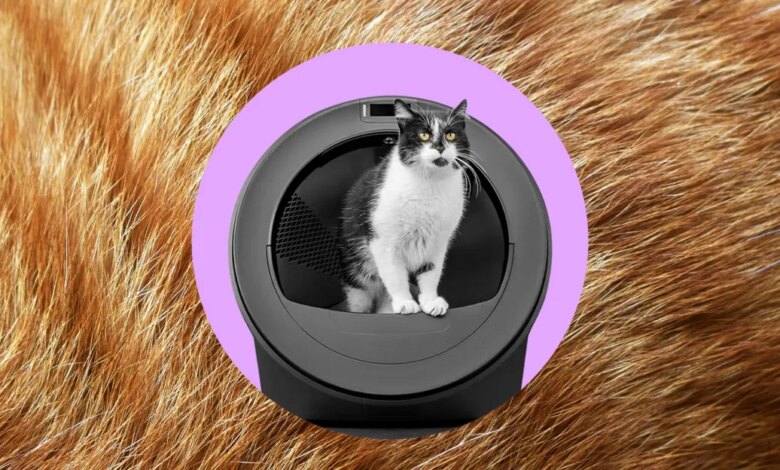
The Litter-Robot has emerged as one of the most significant advancements in pet technology, primarily designed to take away the unpleasant task of cleaning a cat’s litter box. One of its appealing features is the ability to provide data on a cat’s litter box behavior, potentially highlighting any health concerns that arise. For multi-cat households, this model comes equipped with facial recognition technology to differentiate between pets.
Enter the Litter-Robot 5 Pro, the top-tier model from Whisker, a pioneer in the robotic litter box industry. This sophisticated device claims to not only manage the waste of your felines but also closely monitor their habits using dual cameras and advanced detection sensors, all supported by AI and machine learning capabilities. Unfortunately, during testing, the device fell short of its expectations.
After six months of using the $899 Litter-Robot 5 Pro alongside its more affordable counterpart, the $599 Litter-Robot Evo, I found that while both devices utilize sensors and motors for waste management, the Pro version’s functionalities were unreliable. The design allows cats to enter a large globe filled with litter, where sensors track their presence, and once they exit, the unit rotates to clean up the mess, storing refuse in a hidden compartment below.
This system significantly reduces the daily effort of cleaning, requiring just a weekly emptying of the waste drawer and minimizing odors by concealing the litter box. An accompanying app offers remote access to various functions, including waste and litter monitoring, along with tracking the cat’s weight using an onboard scale. This gadget proves especially useful for frequent travelers, ensuring that your pets have a cleaner space while you’re away.
Despite its size—nearly 30 inches tall—the Litter-Robot Pro 5 is spacious enough to accommodate larger cats and multiple users, making it a great option for families with several pets. Currently, Whisker offers four models: the Evo, the 4, the 5, and the 5 Pro, and while all models serve the primary waste disposal function of scooping, the AI features of the Pro version are not yet dependable, leaving me hesitant to recommend its premium price tag.
Among the limitations of the Evo include the absence of litter level alerts, a smaller waste bin, and compatibility issues with accessories. The Evo’s construction felt less robust, and its waste drawer occasionally malfunctioned. While the device features a user-friendly LCD screen—an upgrade from the previous models’ LED indicators—it doesn’t meet the standards one would expect after spending nearly $900.
In terms of performance, the Litter-Robot 5 Pro excels at waste removal with its large bin and user-friendly interface. However, its smart features fall flat. As someone concerned about my older cat’s health, I looked forward to utilizing the AI capabilities to gain insights, but after many months, not a single useful suggestion emerged from the monthly subscription service. The WasteID system, meant to distinguish between different types of waste for easier management of odor, repeatedly failed to deliver accurate results.
The cameras, intended to identify individual cats, often confused my two pets, failing to differentiate between them. The functionality to remotely monitor specific activities in the litter box became a point of frustration, as only the front-facing camera captures video—not the interior cameras. Although the recording feature is limited, it proved helpful in detecting potential obstructions when the robot indicated an issue during a cleaning cycle.
As previously stated, the facial recognition functionality was particularly disappointing. It aims to identify various cats and assign their behaviors to respective profiles in the app. However, this feature struggled to accurately recognize my distinctly different cats, leading to incorrect weight measurements and misattributed behaviors.
Even with adjustments from the app to correct inaccuracies, I found maintaining the correct information was tedious. While Whisker claims improvements are forthcoming, and since the system should learn over time, I remain skeptical about relying on AI in its current form.
The introduction of a new feature called Patterns, which records daily activities such as weight and litter box visits, shows promise. However, many of these upgrades came well after the initial launch, meaning early adopters paid for features that underperformed. In conclusion, while the Litter-Robot 5 Pro offers impressive engineering and functionality for waste management, it is clear that the AI capabilities have not yet matured enough to justify the additional cost over its simpler counterparts.