Vijay Pande Discusses the Shift to Strategic Betting: ‘We’re Not Committing to 30 Deals Annually’ After Managing $4 Billion at a16z

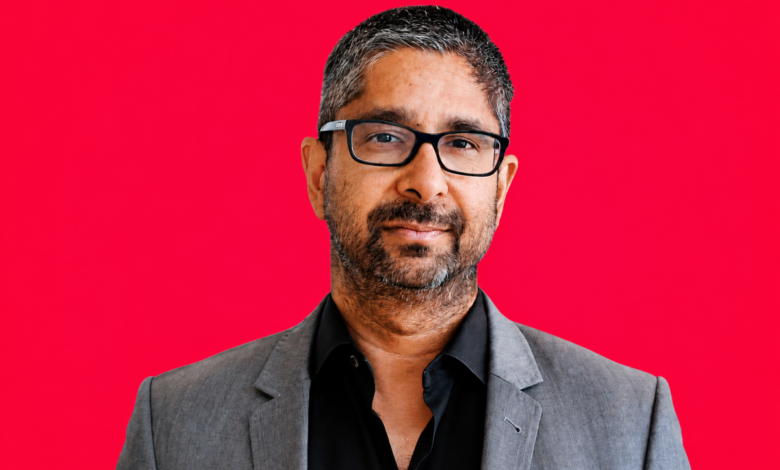
Vijay Pande, once primarily recognized in academic circles, made a notable transition into the investment arena over a decade ago. This shift began when Marc Andreessen and Ben Horowitz, founders of a prominent venture capital firm, invited Pande to lead their healthcare investments after years of avoiding the sector. Pande, a chemistry professor at Stanford renowned for his work on Folding@home—a groundbreaking project utilizing distributed computing for disease research—successfully expanded the firm’s investment portfolio to nearly $4 billion over the years.
In an unexpected move last June, Pande decided to leave this large-scale operation to launch a smaller venture, VZVC, in collaboration with fellow investor Zach Werner. This new firm focuses on making a limited number of concentrated investments each year, avoids the complexity of multiple associates, and integrates artificial intelligence into its daily functions.
To delve into Pande’s new direction, we engaged him in conversation about his strategy of making fewer, more targeted investments in today’s market, along with the unique challenges that AI-driven biotechnology faces. Notably, while textual data can often be aggregated from various online sources, biological data is typically proprietary, leading to individual companies creating isolated datasets. This raises questions about the future of AI advancements in medicine and who will have access to them.
You’ve mentioned that biology is transitioning from a “science of discovery” to being more engineering-focused. Can you explain this?
Historically, drug development has involved a significant amount of chance. However, advances in AI and machine learning now allow us to better navigate complex biological systems by identifying specific targets for drugs related to particular diseases, thereby streamlining drug creation and even optimizing clinical trials—the most expensive part of the process.
I thought the costs of clinical trials were decreasing due to the use of synthetic data, which requires fewer participants.
That perspective is aspirational. Although AI has indeed reduced the time and costs leading to clinical trials, expenses can still reach hundreds of millions of dollars, contributing to the high price of medications. Successful transitions from initial trials to later stages have only a 20% success rate. The majority of failures are often not due to errors made by biologists, but rather because animal models, commonly used for drug testing, do not accurately predict human responses. While AI models won’t be flawless, they are anticipated to significantly outperform animal testing, which opens exciting possibilities.
[The subsequent consideration is]: Is this drug the right choice for me?
You’re referring to personalized medicine, right?
Exactly. This concept is often termed precision medicine. When patients visit doctors for complex ailments, they often must endure a series of trial-and-error prescriptions. A more personalized approach, tailored to individual biological metrics instead of relying on population averages, would significantly enhance treatment outcomes.
Has the journey toward personalized medicine been gradual, or has there been a more recent surge in progress?
It’s a culmination of various advancements. Precision medicine traditionally leaned heavily on genomics, which represents the foundational blueprint of an individual. However, subsequent factors such as proteomics provide more relevant insights into a patient’s current health status. Continued automation in robotic measurements seamlessly integrates with AI, creating synergistic benefits.
The past decade has seen substantial improvements in both biology and chemistry through AI applications. While biology explores treatment avenues, chemistry develops targeted drugs aimed at specific proteins. This has led to significant progress over the last ten years.
You mentioned that biology is one of the few fields where AI cannot simply scrape data. What implications does this have for the industry’s evolution?
In biology, data isn’t as readily available for widespread training and cannot be transferred seamlessly across different models. This presents a unique challenge within the AI landscape.
Does this situation mirror issues within medicine regarding competitive silos among healthcare professionals?
Absolutely. For instance, if a patient has cancer, the oncology and endocrinology specialists often operate in isolation. The potential of AI lies in its ability to aggregate knowledge, functioning like a virtual team of top specialists collaborating in real-time, something individual practitioners struggle to achieve.
Is there sufficient data sharing to realize this vision? I understand the inclination for founders and investors to protect their discoveries…
One emerging trend is the creation of comprehensive biological information atlases. From a technological standpoint, these typically reflect foundational models. As such models become more prevalent, there’s a potential for them to have a broad impact, similar to the way open-source LLMs have outperformed proprietary solutions.
You are involved with Genesis Therapeutics, a spin-off from your Stanford lab, and Insitro, a company founded by your former colleague. What criteria do you prioritize when selecting founders and investment areas?
Currently, I am concentrating on two primary areas: AI for healthcare delivery and AI for clinical trials. It’s crucial for me to collaborate with founders who demonstrate integrity and reliability—individuals who are committed to long-term partnerships focused on collective success, rather than simply competing against one another.
Reflecting on your investing journey, what lessons have you learned?
Initially, I faced resistance when I advocated for the integration of AI in medicine, but witnessing this evolving landscape has been gratifying. Over time, I’ve recognized that while innovative technologies are enticing, the pathway to market success is equally, if not more, challenging. I advise founders, especially those from scientific backgrounds, to channel their creativity toward effective market strategies alongside technology development.
Can you describe how you are structuring your new firm differently compared to your past experiences at a16z?
At VZVC, which combines my name and that of my co-founder, Zach Werner, we are intentionally keeping the team small. Our initial plans to hire associates evolved, as our established networks allow us to operate effectively without them.
How few investments are you looking to make each year?
We aim for a very focused approach with approximately five investments annually. This contrasts sharply with larger firms, where adding a new company can be a quick decision—here, it represents a significant commitment for us.
Who are your main competitors for deals given this model?
Interestingly, our approach usually means we are not vying for the same deals as larger firms; rather, other investors often welcome our participation. Founders appreciate our deep involvement and unique insights, which align with our investment philosophy inspired by other successful concentrated portfolio approaches.
What trends in AI and biotech do you feel are overhyped currently?
AI can uncover insights beyond human capabilities. However, claims that AI will solve all challenges are premature. The underlying issue is often the quality and availability of data. While large language models excel due to abundant data, similar breakthroughs in biology are limited by data scarcity.