The Toyota RAV4 Dominates Sales, Yet This Budget-Friendly American SUV Deserves Attention

The Toyota RAV4 has been a top contender in the U.S. SUV market since it debuted in the late 1990s, and for 2026, it has made a significant shift by eliminating traditional gasoline engines and transitioning to a fully hybrid lineup.
This shift has resulted in a vehicle that not only offers enhanced power and fuel efficiency but also maintains a reasonable starting price of $33,495, which includes destination fees. Regardless of the model, the RAV4 continues to receive praise from both consumers and industry experts as a standard-bearer in the compact SUV arena.
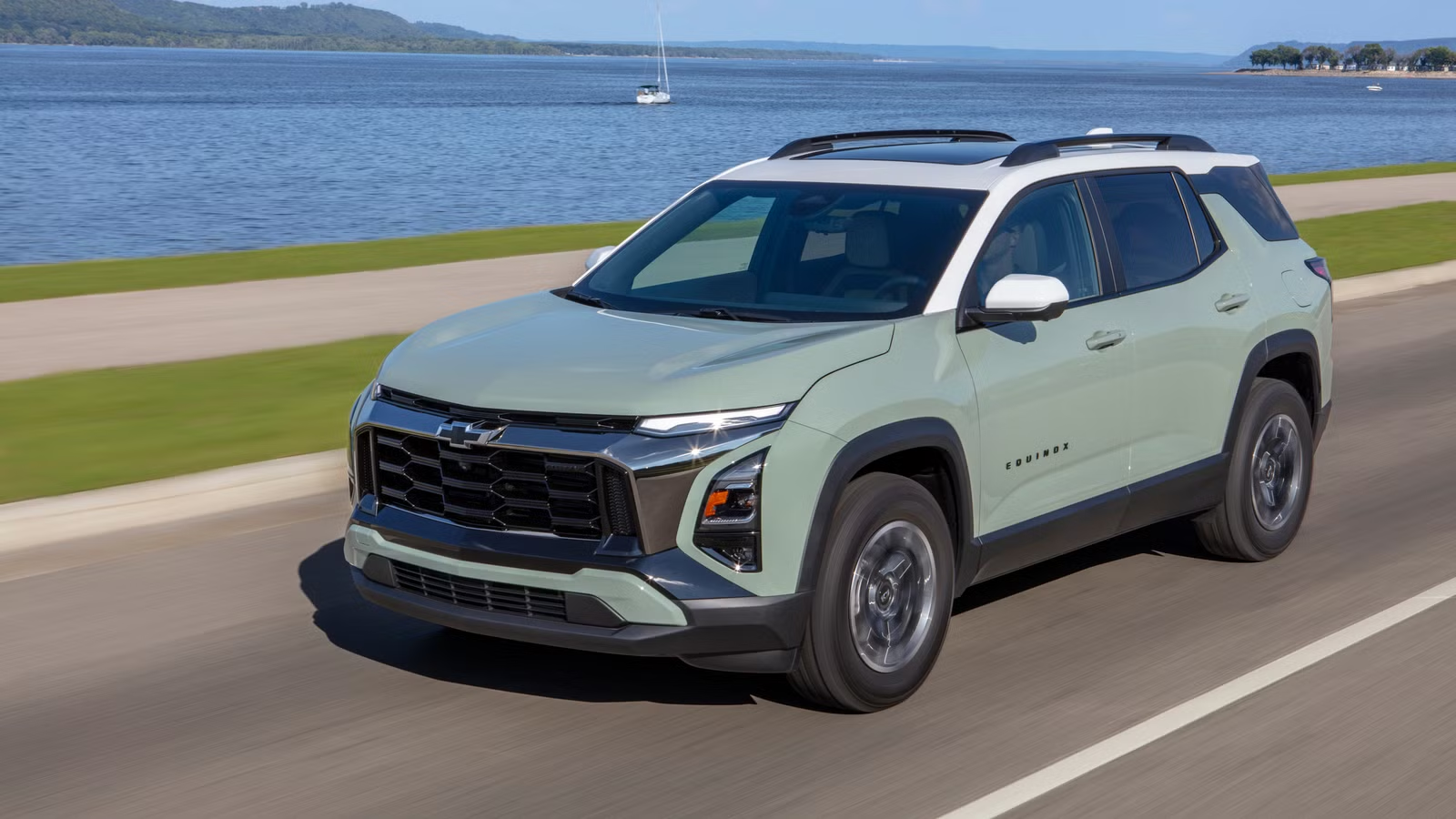
However, the new 2026 Chevrolet Equinox, starting at $30,795 (including destination), presents a noteworthy alternative. Unlike the RAV4, the Equinox does not come as a hybrid. Instead, it boasts a well-equipped and comfortable interior filled with advanced technology, providing a lower starting price point of about $2,700 less than the RAV4.
For those whose priorities extend beyond fuel efficiency, the 2026 Chevrolet Equinox is an appealing choice against the well-established RAV4.
Two Distinct Powertrain Options
Considering All-Wheel Drive
The Equinox features a 1.5-liter turbocharged four-cylinder engine that delivers 175 horsepower and 184 lb-ft of torque in the front-wheel-drive model, with torque increasing to 203 lb-ft in the all-wheel-drive version. The front-wheel-drive variants utilize a continuously variable transmission (CVT), while the all-wheel-drive models are paired with an eight-speed automatic transmission. Although the turbo engine is not classified as a performance engine, it provides responsive driving and satisfactory highway acceleration.
Conversely, the RAV4 Hybrid is equipped with a 2.5-liter four-cylinder engine integrated with Toyota’s fifth-generation hybrid technology, generating 226 combined horsepower in front-wheel drive and 236 in all-wheel drive. This gives Toyota an edge as the RAV4 hybrid offers both higher output and better fuel efficiency than the Equinox.
The RAV4’s electronic CVT seamlessly integrates with its hybrid system. For all-wheel-drive models, a dedicated electric motor independently powers the rear wheels without any mechanical link to the front wheels.
The all-wheel-drive versions of both SUVs come with added costs, which may be worthwhile for those who need improved traction in winter conditions. The Equinox LT AWD is priced at $32,795, while the RAV4 LE AWD starts at $34,895, maintaining a difference of approximately $2,100 in favor of the Equinox for both drivetrain configurations.
Fuel Economy Insights
Comparing Fuel Efficiency
The RAV4 Hybrid clearly leads in fuel economy, but the overall savings depend on annual mileage. Here are the EPA estimates:
2026 Chevrolet Equinox (EPA-estimated):
- FWD: 26 mpg city / 29 mpg highway / 27 mpg combined
- AWD: 25 mpg city / 29 mpg highway / 26 mpg combined
- Estimated annual fuel cost (FWD): $2,300
- Estimated annual fuel cost (AWD): $2,400
2026 Toyota RAV4 Hybrid (EPA-estimated):
- FWD: 47 mpg city / 40 mpg highway / 43 mpg combined
- AWD: 46 mpg city / 39 mpg highway / 42 mpg combined
- Estimated annual fuel cost (FWD): $1,450
- Estimated annual fuel cost (AWD): $1,500
The RAV4 achieves a notable advantage of 16 mpg combined over the Equinox in front-wheel-drive models. At the current average gas price of $4.05 per gallon, an Equinox driver covering 15,000 miles a year would spend about $2,250 on fuel, while a RAV4 driver would pay roughly $1,413—a $837 difference annually.
This creates a payback period of approximately 3.2 years to recover the additional $2,700 cost for the RAV4 based on projected fuel savings for drivers covering 15,000 miles. This period extends significantly for those driving less, making the Equinox’s lower price more appealing in such scenarios.
Interior Technology and Cargo Capacity
Equinox vs. RAV4: Passenger Comfort
Cargo space is another area where the RAV4 excels. It offers 37.8 cubic feet behind the rear seats, expanding to 70.4 cubic feet when the seats are folded. The Equinox, on the other hand, provides 29.8 cubic feet behind the rear seats and 63.5 cubic feet with the seats down. This highlights a significant advantage for the RAV4 regarding available cargo space.
While the RAV4 outpaces the Equinox in cargo space, the latter provides slightly more passenger room, with an EPA volume of 104.3 cubic feet compared to the RAV4’s 98.9 cubic feet—especially benefiting rear-seat passengers.
Both SUVs come equipped with modern technology, including dual-zone climate control, a backup camera, and wireless connectivity. The Equinox features an 11-inch digital instrument cluster and an 11.3-inch touchscreen, while the RAV4 includes a larger 12.3-inch digital gauge cluster and up to a 12.9-inch touchscreen in higher trims, along with the added benefit of a built-in Drive Recorder Dash Cam.
Final Thoughts: Test Drive Both Options
Ultimately, the 2026 Chevrolet Equinox is a competent SUV that offers modern technology and ample space at a lower cost. For buyers who do not prioritize fuel efficiency, it represents solid value. In contrast, the 2026 Toyota RAV4 Hybrid shines in performance, efficiency, and Toyota’s trusted reliability.
Consumers should weigh their driving habits and preferences when deciding between these two excellent options. Both vehicles come with comparable warranty packages, making a test drive beneficial to gauge which SUV suits individual needs best.