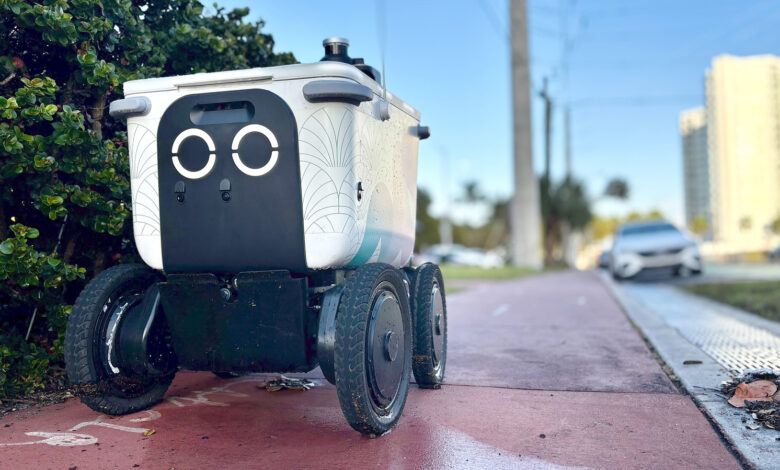
Delivery robots frequently struggle to navigate the rules of the road, whether on sidewalks or streets.
People often have mixed responses upon seeing a delivery robot moving along the sidewalk. Some find their friendly designs endearing, while others are frustrated by these “clankers” obstructing their path. Nonetheless, these robots have become a prominent feature of the delivery sector in various countries.
The journey of delivery robots began in Estonia in 2014 with the founding of Starship Technologies by Ahti Heinla and Janus Friis. Initially a modest endeavor, the project gained momentum during the pandemic, expanding to over 80 cities across North America, Europe, and Asia. Several other companies, such as Serve Robotics, Coco Robotics, and Delivers.AI, have entered the market, with DoorDash also launching its own robotic delivery vehicles. As their presence grows, so do the challenges they present.
Challenges Faced by Delivery Robots
While companies like Coco started with remote human drivers for their delivery robots, most have transitioned to autonomous vehicles that rely on a combination of cameras, sensors, and GPS for navigation, with human intervention only when necessary. However, unpredictable factors like damaged sidewalks and unexpected construction can disrupt a robot’s path, leading to malfunctions or even damage to public property, such as a delivery robot causing destruction at a bus stop in Chicago.
The impact on pedestrians is particularly concerning. Minor inconveniences may arise, such as robots obstructing outdoor dining or crowded areas, but more severe issues have also been reported. Although these robots are designed to yield to pedestrians, there have been instances where individuals felt compelled to give way to them. This poses significant problems for people with disabilities or those using wheelchairs, as the robots can impede accessibility and violate ADA regulations. There have even been reports of physical harm, including a New Jersey man suffering injuries from a collision with a delivery robot.
Looking Ahead for Delivery Robots
Despite their challenges, delivery robots are expected to proliferate. A recent forecast indicates that by 2035 there could be 559,000 automated urban delivery vehicles, a sharp increase from 28,000 in 2025. This potential growth could have substantial implications for gig economy workers. Companies like Uber Eats and DoorDash, facing scrutiny regarding fair driver compensation, might see robots as a means to boost profits. However, the current limitations of these robots—primarily serving areas within a two-mile radius—indicate that human drivers will still play an essential role for now.
Many issues related to delivery robots stem from inadequate regulations. Currently, many regions lack established guidelines for their operation, with some states even classifying them as pedestrians. However, this is slowly changing, with cities like Chicago, San Francisco, and Toronto introducing restrictions or bans on the use of delivery robots. These robots also face increasing privacy scrutiny due to their camera capabilities, possibly leading to more legislation in the future. While the presence of delivery robots seems inevitable, it’s hoped that solutions to their associated problems will evolve over time.