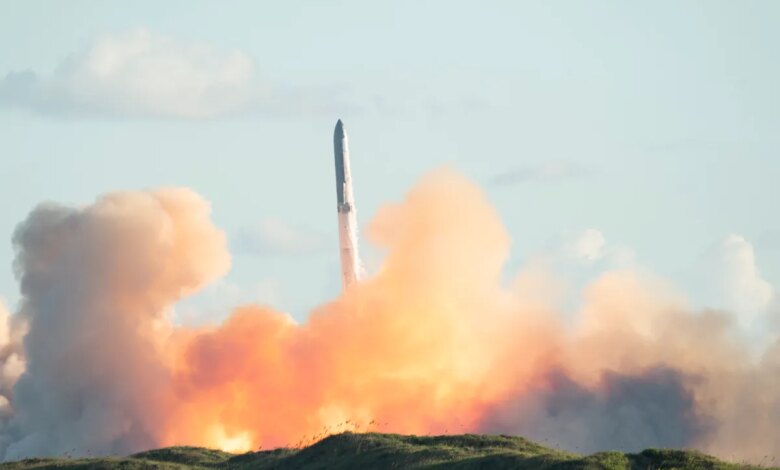
SpaceX is gearing up for the 14th test flight of its Starship rocket, aiming to successfully place the upper stage into Earth’s orbit for the first time, as announced on Tuesday.
The test is set for September 22, with a 75-minute launch window opening at 7:15 a.m. CT. During this flight, SpaceX intends to deploy the initial set of third-generation Starlink satellites into its expanding network of 10,000 internet satellites, expecting to launch 26 V3 satellites in this endeavor.
If the mission succeeds, it will mark the first revenue-generating launch for SpaceX’s launch division, even if that revenue is coming from a different part of the company.
This will be the second Starship test flight since SpaceX went public in June, which was notable for being the largest IPO ever recorded. The initial flight occurred in July, during which SpaceX successfully deployed V3 Starlink satellites, but these were strictly for testing Starship’s deployment capabilities and burned up in the atmosphere shortly afterward.
Achieving orbit with Starship’s upper stage would be a significant milestone for SpaceX, which has obtained substantial funding for the project and is looking to phase out the Falcon 9 and Falcon Heavy rockets in favor of Starship. CEO Elon Musk has stated the transition will occur once Starship demonstrates reliable flight capabilities several times a week, optimizing SpaceX’s engineering and production resources.
For SpaceX, it is essential that Starship can reach orbit, safely return, and be quickly reused to meet the ambitious launch schedule commitments made during its IPO.
However, this upcoming flight will only focus on the first phase of that goal. Musk recently retracted earlier suggestions that SpaceX might attempt to catch the Starship upper stage using its launch tower during this flight, citing that a mishap could be too damaging for the company at this stage.
Additionally, the Super Heavy booster will not be caught this time around. SpaceX has faced difficulties with the booster in recent flights and has implemented several changes to mitigate failures. Nonetheless, the booster encountered issues reigniting its engines after separating from the Starship upper stage in the previous test flight.
In contrast, the upper stage performed well during its last outing. While it did not achieve orbit, it demonstrated a smooth flight through a simulated landing in the Indian Ocean and did not explode when it capsized in the water. This success allowed SpaceX to recover the upper stage and transport it back to its Texas facility over the past few months.
On Tuesday, SpaceX announced that it has made further enhancements to the Starship’s heat shield based on findings from analyzing the recovered upper stage from the previous flight.