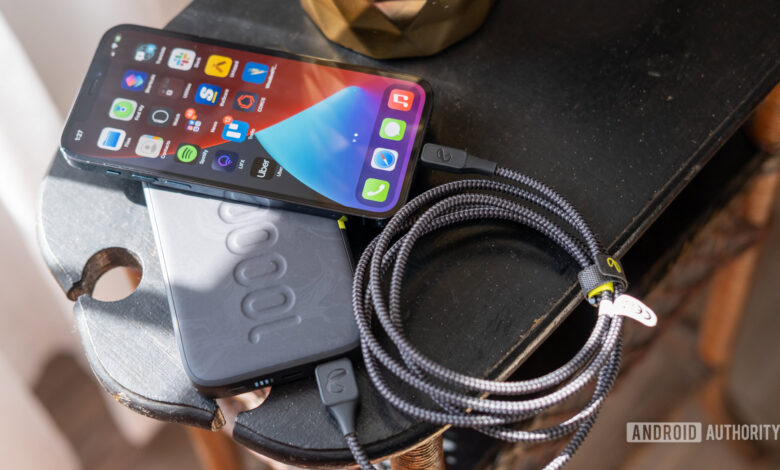
Power charging has evolved significantly, becoming a key feature in smartphone differentiation. The race towards higher charging capacities, from 40W to beyond, led to various competing technologies, such as HyperCharge, SuperVOOC, and Qualcomm’s Quick Charge. This proliferation created confusion for consumers looking to purchase compatible fast-charging accessories.
With the advent of USB Power Delivery, a standardized charging method, the situation has improved. This standard has developed enhanced capabilities for various device categories, but contentious adaptations like EDR for laptops and PPS for low-power electronics have added complexity. Today, however, it’s evident that we’ve reached a level of maturity in the charging standards, and consolidation toward a universal approach is welcome.
Is USB-C fast charging still confusing for you?
903 votes
In recent generations, fast charging technologies appear to have plateaued. Although marketing claims tout charging at over 100W, the practical range sits between 60-80W for smartphones, effectively charging even the largest 7,000 mAh batteries in roughly 40 minutes.
However, not all devices have kept pace. The Galaxy S26 Ultra from Samsung is now closing the gap, yet other brands like Apple and Google are lagging, particularly in their entry-level models.
Interestingly, the fastest charging phones are relying less on proprietary technologies and more on universal standards, which enhance compatibility across various devices and accessories.
For instance, the Xiaomi 17 Ultra offers up to 90W charging via the common USB Power Delivery PPS standard. Similarly, devices like the OnePlus 15 and OPPO Find X9 Ultra can achieve over 40W using the same specification, minimizing the impact on charging speeds.
Companies complicate a straightforward specification
Despite the advancement, issues persist in the USB charging landscape. Even with the universal capability to exceed 50W, consumers still face challenges when selecting compatible chargers and accessories. For example, Motorola’s TurboPower standard depends on specific cable requirements to achieve its maximum output, creating potential for mismatches and slow charging rates.
Furthermore, differences within manufacturers’ ecosystems can create additional hurdles. Samsung’s various charging options require different cables for optimal performance, further complicating the consumer experience. Apple’s choice to pursue a different charging protocol adds to this confusion.
The next frontier: interoperability over speed
Fortunately, there are positive developments on the horizon. The USB Power Delivery PPS standard can adapt voltage and current to closely emulate proprietary charging behaviors. Hence, manufacturers may no longer need separate systems to enable efficient charging.
However, inconsistency remains a barrier. Varying voltage profiles, current limits, and cable requirements complicate what should be a straightforward buying process for consumers. Clarity in charging capabilities must become a priority for manufacturers.
If the hardware companies cannot standardize these practices on their own, the accessory market might lead the way, as third-party products increasingly support unified charging standards.
Ultimately, the shift in focus should be toward a charging ecosystem that effectively serves multiple devices, rather than being geared solely towards individual brands. Although progress is occurring, many consumers still require an understanding of technical specifications to select the right charger.
After years of contention over charging standards, with speeds now largely stable, the industry faces its next task: ensuring that any quality USB-C charger can meet consumer expectations, independent of brand affiliation.