The Airseekers Tron: A Remarkable Mulching Robot Mower with Some Notable Shortcomings

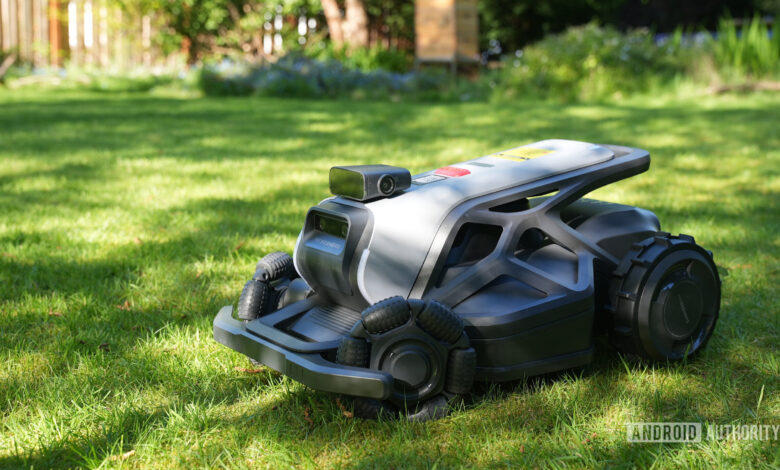
Although the Airseekers Tron offers impressive features such as autonomy, RTK precision, and mulching, its obstacle avoidance and wheel design need improvement. It effectively navigates open fields and can handle steep inclines, yet it is less adept at avoiding various objects.
Having a beautiful yard is fantastic, but spending endless hours maintaining it can be a drag. Today, we explore beyond standard solutions like automatic sprinklers or hiring help — robotics have taken the spotlight in yard maintenance.
The Airseekers Tron (priced at $1999.99) is a competent robotic lawn mower that mulches as it cuts, offering a nearly hands-free experience. However, certain limitations prevent it from being a top contender in the market.
Over several months, I tested two units of the Airseekers Tron, both provided by Airseekers. Here are my findings.
Design Overview
Jonathan Feist / Android Authority
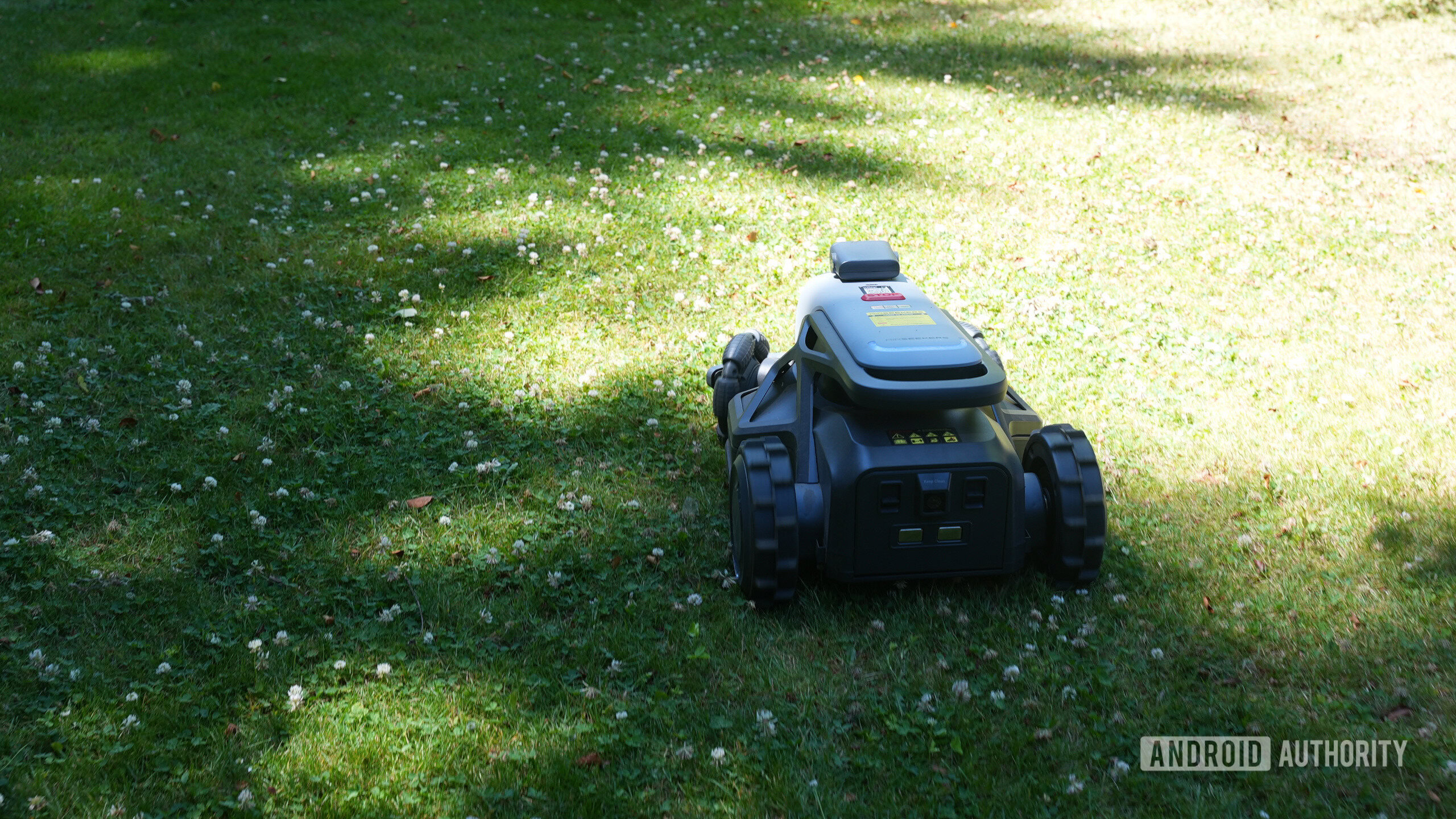
The Airseekers Tron features a four-wheel design, with the mower blade centrally located. The battery is housed in a rear compartment, and cameras are positioned in all directions. The blade consists of a rotating disk equipped with multiple sharp blades.
The real advantage of the Airseekers Tron lies in its mulching capabilities. Instead of merely cutting the grass, it creates a vortex that pulls cut grass into a secondary blade system that shreds it. When used regularly, this shredding process results in fine bits of grass that seamlessly integrate back into your lawn without any mess.
Jonathan Feist / Android Authority
The Tron comes in three versions: the SE edition manages areas up to 0.37 acres, the standard version covers 0.59 acres, and the Plus version accommodates one full acre.
It operates on rear-wheel drive, features multi-directional front wheels, and is rated IPX6 for water resistance. The swappable battery supports a cutting width adjustable from 8.66 inches to 11.8 inches and cutting heights ranging from 1.18 inches to 3.54 inches, all controlled via an app allowing for customized cutting patterns.
The mower charges automatically at a waterproof base station, which the bot drives to after use. Users can position the base before mapping the area, thus integrating it into the mower’s navigational system.

Jonathan Feist / Android Authority
Setting up the mower took about an hour, but be prepared with tools and a strategy for installation. The base station and RTK antenna both require power sources — in my case, their optimal positions necessitated two outlets in my yard.
During setup, you’ll need to secure the base plate and power tower to create the charging station, attach a mud flap to the mower, and install wiring for the RTK antenna. Ground spikes are available to stabilize the base unit.
This installation isn’t overly complicated but can be time-consuming. Also, keep in mind that the mower weighs over 40 pounds (~18 kg), so it could be wise to have a partner assist with lifting.
Operational Insights

Jonathan Feist / Android Authority
The Tron’s primary function is grass cutting. While it can manage minor weeds or flora, it is designed solely for mowing. This specialization allows it to handle various yard challenges effectively.
To configure the Tron, you drive it around the boundaries of your area, mapping the edges one at a time. The app includes two virtual joysticks for operation. Thanks to RTK functionality, the mower navigates with millimeter-level accuracy, so precision is key during initial mapping. Should the mower encounter an object, its sensors will help it avoid future collisions with that item.

Jonathan Feist / Android Authority
After outlining your yard’s perimeter, you can mark other obstacles via the app. Alternatively, the mower can autonomously identify obstacles when mowing.
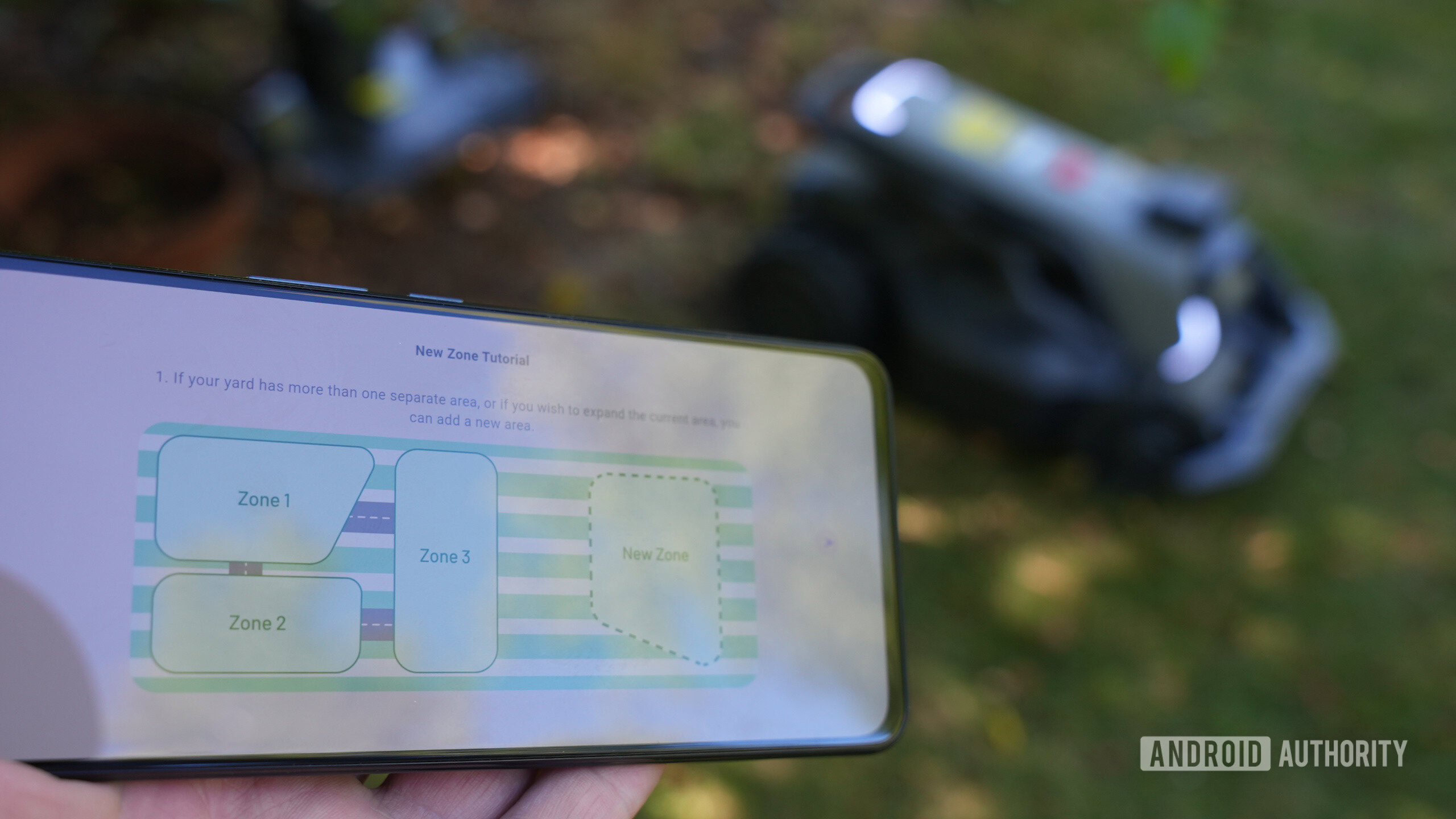
You can program the mower for multiple yards and establish no-go and transit zones, allowing for tailored schedules and cutting heights across different areas.

Jonathan Feist / Android Authority
The mower features two-wheel drive with robust rear wheels and flexible front rollers. It can tackle inclines of up to 65% and handle taller grass without much trouble. The front wheels are designed for omnidirectional motion but can sometimes hinder smooth navigation, especially on soft surfaces.
However, the angle of the front wheels can result in uneven mowing patterns, as they may trample grass and disrupt the mower’s efficiency, leading to uneven cuts across your lawn.

Jonathan Feist / Android Authority
As the mower reaches edges, it often executes a multi-point turn, which results in more stress on the grass due to its wheel design. Navigation is a mix of precision and challenges; while it accurately avoids larger obstacles, it can struggle with smaller items.
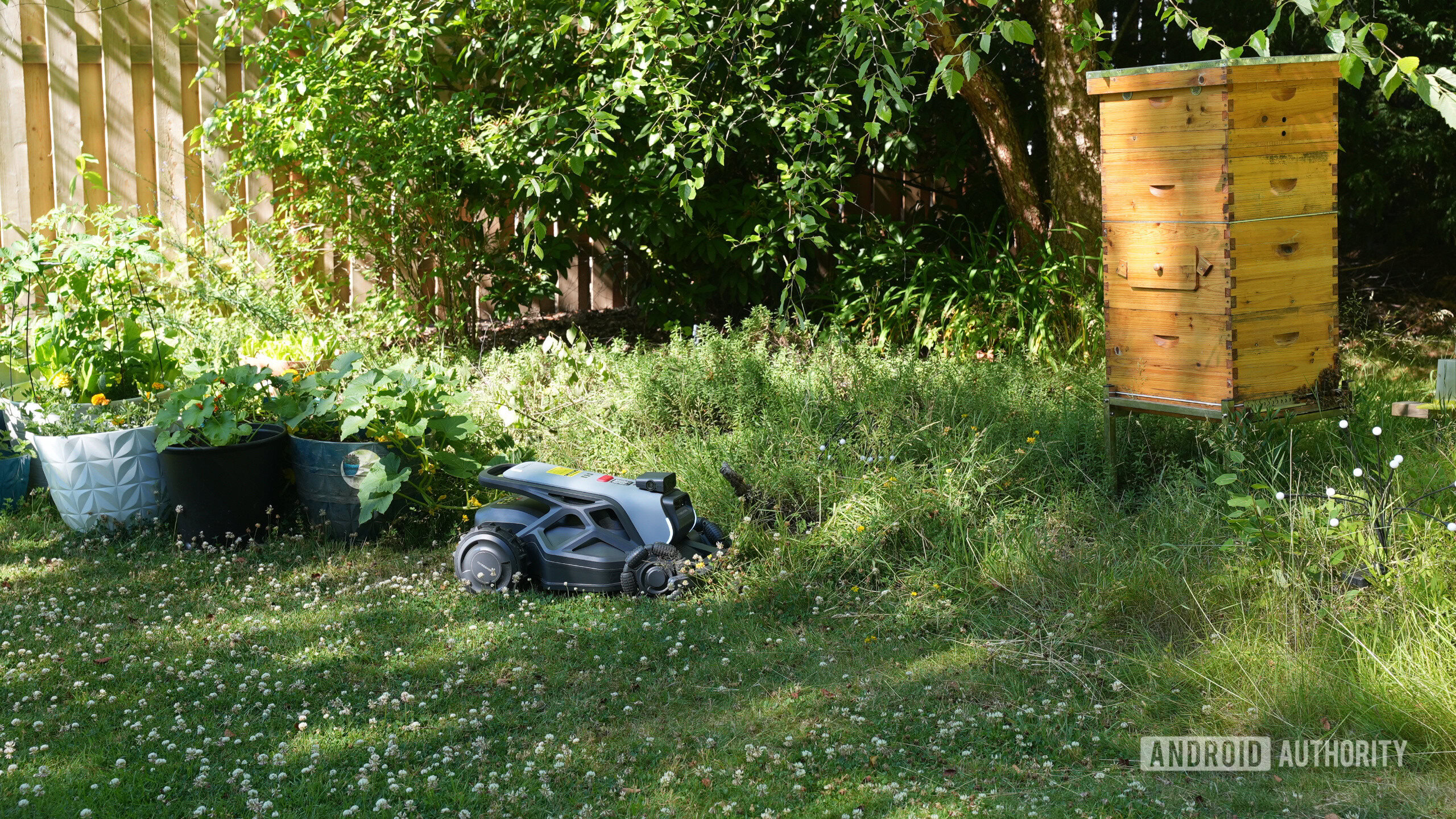
I’ve had to intervene multiple times as the Tron has gotten stuck on small branches and other debris, indicating its obstacle avoidance doesn’t always work effectively for lower-profile items. Fortunately, in most cases, the mower’s blades weren’t engaged when I had to rescue it.

Jonathan Feist / Android Authority
In terms of cutting performance, the Tron excels in efficiently cutting grass and mulching it. However, it struggles with taller clovers, unable to effectively rake in the flower heads for mulching.
When I allowed a section of grass to grow long, the mower identified these sections as obstacles, failing to cut them. The front wheels often compressed the grass, making it more difficult for the mower to engage the blades effectively.
Jonathan Feist / Android Authority
It’s worth noting that I haven’t found a way to change the mower’s cutting direction in the app, nor can I modify my time zone settings, which means I have to manually adjust the schedules. While these aren’t critical flaws, they are inconveniences.
Verdict: Is the Airseekers Tron Worth It?

Jonathan Feist / Android Authority
For homeowners managing flat, obstacle-free yards, the Airseekers Tron offers an effective solution. With automatic mapping and scheduling, it allows for minimal attention to yard upkeep. Its rain sensor, quick operation, and mulching capabilities enhance lawn aesthetics and health.
Personally, if I had a golf course, I would invest in one Tron for every acre of turf.

Jonathan Feist / Android Authority
However, I, like many other potential buyers, do not own a golf course. My yard is mostly flat but includes some garden and rock areas. The only significant challenge is an above-ground pool, which presents its own set of navigation problems for the Tron.
This pool configuration has caused the mower to get stuck on several occasions. Given that there are ongoing OTA updates, I remain optimistic that the Airseekers team will address these navigation concerns in future firmware versions. Yet, the issues with obstacle detection alongside the front wheel design are significant drawbacks for a product priced at $2,000.
Jonathan Feist / Android Authority
Comparing with the competition, I’ve also tried the eufy E15 in my yard. Though it offers fewer features on paper, I’ve found it operates reliably without encountering as many navigation issues. While the Tron can better handle taller grass, the E15 is easier to adjust for mapping.
With the arrival of newer models like the Roborock RockMow X120H, which utilizes LiDAR for navigation and performs well with obstacle avoidance, the competition fluctuates. It’s slightly pricier, but Roborock has a solid reputation in the robotic cleaning market.
Additionally, the Mammotion LUBA 3 AWD stands out as a top choice; it may be more expensive, but it is better suited for challenging terrains, which adds to its appeal.

Jonathan Feist / Android Authority
Ultimately, the design flaws with the front wheels hinder performance in my yard, leading to excessive grass damage. Although the Airseekers Tron has great mulching capabilities, the price and limitations presented in its navigation and obstacle detection make it ideal only for specific maintenance needs.